1
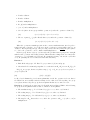
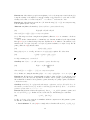
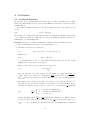
1. Base case. P(1) holds.
2. Inductive step. Given any n ∈ N, if P(m) holds for all m < n, then P(n) holds.
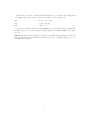
Exercise 4. Prove by induction that 13 + 23 + · · · + n3 = ((n2 + n)/2)2 for all n ∈ N.
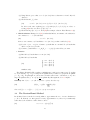
Well-Ordering Principle
Every nonempty subset of N contains a smallest element.
Exercise 5. Using the well-ordering principle, show that every nonempty subset of N that is
bounded above has a largest element.
1.3
Abstract Algebra
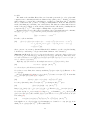
Traditionally, the subject of algebra began with the writing of The Compendious Book on
Calculation by Completion and Balancing by al-Khwārizmī during the zenith of the Abbasid
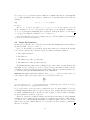
Caliphate. This is the book that introduced the idea of “solving the equation for x.” But I would
say that abstract algebra really begins with the invention of zero. What do I mean by this?
Abstract algebra is about introducing seemingly useless structural abstractions into
mathematics that pay back their worth enormously as more and more theory accumulates
around them, until their naturality and simplicity can finally be fully appreciated.
The number 0 was such a concept. If we attribute the discovery of 0 to the Indian mathematician
Pingala, circa 200 BCE, then “abstract algebra” would predate “elementary algebra!”
(To be fair, the notion of an indeterminate variable x was also a revolutionary advance. But
The Compendious Book seems to have focused on establishing the methods for solving linear and
quadratic equations in x, rather than cultivating their abstraction in the way that, say, Galois
did centuries later. The distinction is quite fine and difficult to communicate.)
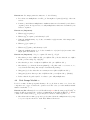
We here summarize the most important algebraic structures for this course. We will return
to them in closer detail in subsections §3.1 and §4.2.
1.3.1
Groups
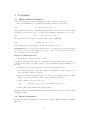
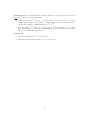
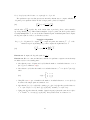
A group consists of a set G and a function ∗ : G × G → G, written (a, b) 7→ a ∗ b and called its
law or operation, such that the following hold:
1. Associativity. (a ∗ b) ∗ c = a ∗ (b ∗ c) for all a, b, c ∈ G.
2. Identity. There exists an element e ∈ G, called the identity, such that a ∗ e = a = e ∗ a for
all a ∈ G.
3. Inversion. For every a ∈ G, there exists an element b, called the inverse of a, such that
a ∗ b = e = b ∗ a.
We say that a group is abelian iff it furthermore satisfies:
4. Commutativity. a ∗ b = b ∗ a for all a, b ∈ G.
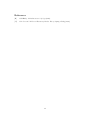
Exercise 6. Which of the following form groups? Of those that do, which form abelian groups?
6