1
How Seeing Develops:
Vision is learned in the early years. Babies are born able to see, but their vision in not precise or sharp.
During the first few months babies learn to focus, track, see colors, learn depth perception and eye-hand
coordination. By six months of age infants should be using both eyes together (binocular vision). By
about 12 month children have adult-like vision. They have more accurate eye movements and can
follow moving objects with their eyes.
Any child with an observable abnormal turning in, up, or out of one of both eyes at 12 months of
age should have a complete examination by an eye doctor.
During the toddler years vision skills continue to increase as the child develops eye-hand-body
coordination, fine motor skills and the visual motor skills necessary to learn to read.
A child’s vision continues to develop until they are about eight years old. After that, eyesight
development is complete and can’t be easily changed.
Binocular Vision:
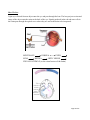
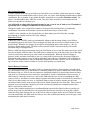
In BINOCULAR VISION, both eyes automatically adjust so that the image being viewed falls on
corresponding parts of each retina. The two images are fused and perceived as a single image by the
brain (fusion). When the two images do not fall on corresponding parts of the retina (i.e., one eye
deviates), double images result. The brain will not tolerate double vision and usually will turn the
unwanted image off (suppression).
Before a child has adequate binocular vision, the child learns to use several fine muscle processes which
must be correlated with each other. The child learns to adjust the size of the lens in the eye so that light
can be focused on the macular area in the retina (accommodation). While the child is looking at
pictures, books, and other small objects, the very young child is practicing the focusing of light rays.
Stimulation of the macular area is of utmost importance since all acute or detailed vision originates in
this area. This learned process may be adequately mastered by the time a child is five to six months of
age. Evidence of this is observed when we see the child pick up very small items.
Muscle Balance Problems:
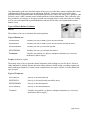
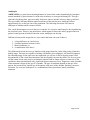
The young child must also learn control of the six extraocular muscles which position each individual
eye. Movements of the eye up and down are controlled primarily by muscles which insert at the top and
the bottom of the eye. Side to side movements are controlled primarily by muscles that insert on either
side of the eye. Rotation inward or outward is controlled by various combinations of these muscles. A
child learns to control the muscles as a pair as the child turns the eyes to look at something the child
wants to observe, and then to work the muscles against each other in order to let both focus on an object
which is less than twenty feet away. A child must learn to relate all of these actions precisely and
synchronize them exactly to the action of the muscle which controls the size of the lens. There is much
question as to just when this complexity of action is mastered, probably not completely until after a
child is well into his school years.
As part of the complete progression, a coordinated balance must be developed so that, as an object is
moved away from or toward the nose, the extraocular muscles can converge or diverge the eyeballs
while the ciliary body changes the size of the lens in order to keep the object in focus. Before the child
can read comfortably, the child must also learn to move the eyeballs horizontally across the page, while
maintaining the other muscle controls.
Page 35 of 67