1
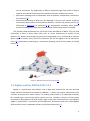
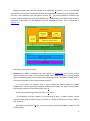
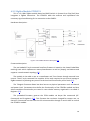
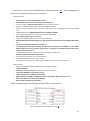
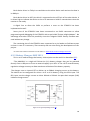
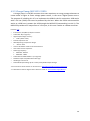
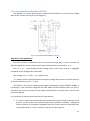
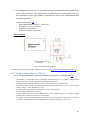
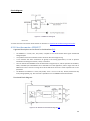
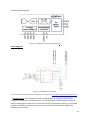
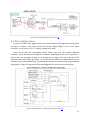
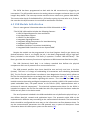
Figure 3.2c: ZigBee Network Topologies [33] ZigBee Application layer: Each ZigBee device should adhere to a specific profile that can be either public or private. Profiles define the environment of the application, the type of devices and the clusters used for them to communicate. Public profiles guarantee the interoperability of different vendors for the same application space [10]. ZigBee devices are defined by a set of endpoints (240 as maximum). Each endpoint is associated to an application object. Application objects are the different functionalities implemented by the application layer. The endpoint 0 is reserved, corresponding to the ZigBee Device Object (ZDO) which is used for the configuration and management of the entire ZigBee device. The ZDO provides access to the lower layers for their configuration and initialization. The endpoint 255 is also reserved and it is used to broadcast to all endpoints. Endpoints 241 to 254 are reserved [10, 1]. Communication is made from endpoint to endpoint and through data structures called clusters. Clusters are “shared variables” in the network that are used to connect endpoints from different nodes. Clusters are defined within the ZigBee profile. A binding process is performed in order to connect an incoming cluster from and endpoint with an outgoing cluster from another endpoint. Binding can be performed in two ways: either directly when the destination address is known or through the PAN coordinator when it is not known. In this latest case the PAN coordinator will be always required to accomplish data transmissions [10, 1]. Application messages are acknowledged in this level. This is done to increase reliability in the multi-hop communication [1]. The Zigbee specification defines the use of a “trust center” as a device within the network that distributes the security keys [10]. 10