1
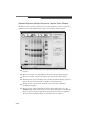
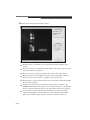
Illumination Section of the IS4000R Acquire Window
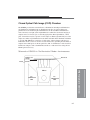
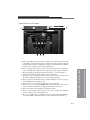
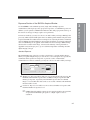
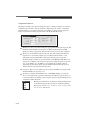
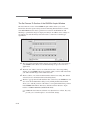
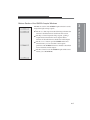
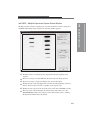
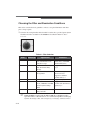
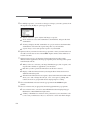
The Illumination section of the IS4000R Acquire window contains the options to select the
Illumination Source and Illumination Reference File. The IS4000R captures images for
many different applications including:
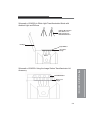
✔ Luminescence—a luminescent sample needs no additional illumination for
capture—it emits light. The amount of light emitted by the sample is directly
proportional to the limiting chemical component of the luminescent reaction,
usually an enzyme-tagged molecular target. The CCD camera captures the emitted
light and represents the signal in the image with very high fidelity (linear response
at high precision).
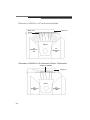
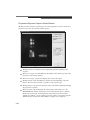
✔ UV Transillumination—a fluorescent sample requires illumination to excite
fluorescent molecules (called fluorochromes or fluorophores), which emit light.
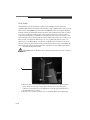
Ultraviolet transillumination is provided by the optional Image Station
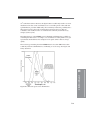
Transilluminator Lid Accessory. The spectrum of UV illumination has a peak
emission at 306 nm. The UV light excites the sample and the camera detects the
signal.
Fluorophores typically emit light in a manner that is proportional to their amount,
and the CCD camera captures the fluorescent light and represents the signal in the
image with very high fidelity (linear response at high precision).
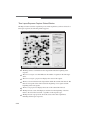
✔ UV Epi-illumination—a fluorescent sample requires illumination to excite
fluorescent molecules (called fluorochromes or fluorophores), which emit light.
Internal ultraviolet illumination is provided by the IS4000R. The spectrum of UV
illumination is between 300–400 nm. The UV illumination is designed to irradiate
the sample at a 45° angle (called epi-illumination), and requires that the light
interact with the sample in order to eventually enter the lens. Further, the CCD is
relatively insensitive to the UV, and it is covered with a filter that blocks infrared
radiation that emanates from any light source.
Fluorophores typically emit light in a manner that is proportional to their amount,
and the CCD camera captures the fluorescent light and represents the signal in the
image with very high fidelity (linear response at high precision).
3-14