1
1.3 STATEMENT OF CONFORMITY
The units listed above comply with the current legislation and, in particular, with the following
European directives :
l
l
l
l
97/23/CE
89/392/CEE
89/336/CEE
73/23/CEE
:
:
:
:
Pressurised Equipments
Machine Safety
Electromagnetic Compatibility
Low Voltage
1.4 DESCRIPTION
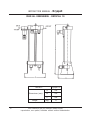
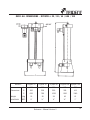
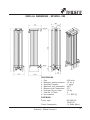
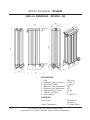
The dryer consists of :
l 2 aluminium tanks filled with desiccant
l 2 solenoid valves
l 2 exhaust silencers
l 1 regeneration nozzle
l 1 electronic control panel
l 2 aluminium blocks including air seals and non return valve
l 1 pressure gauge
l 1 sub-micron pre-filter (0.3 to 0.6 micron)
l 2 After filters
1.5 ADSORBANT MATERIAL
The desiccant takes the form of highly porous particles with surfaces which are able to retain
(adsorb) the water vapour present in the compressed air (drying phase) and restore it when
the air is at atmospheric pressure (regeneration phase). The desiccant used is activated alumina
(CD067A).
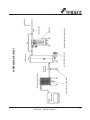
1.6 OPERATING PRINCIPLES
The two columns operate alternately in the drying and regeneration phases. Regeneration in
one tank results from the expansion to atmospheric pressure of part of the dry compressed
air in the other. The pressure reducer is responsible for this transfer. Under nominal conditions
(service pressure of 7 bars), 10% of the nominal flow is depressurised. The regeneration
phase is shorter than the drying phase in order to allow the regenerated column to return to
service pressure before a new cycle starts.
1.7 SAFETY
!
Pressurised tanks may explode if used improperly. It is therefore essential to locate
any equipment which contains one or more of such tanks in such a way that the
risks relating to incorrect use are reduced to the absolute minimum.
Reference : Manual Version 2
3