1
10
Operating principle and Theory
Operating principle and Theory
10
Operating principle and Theory
Operating principle and Theory
Theory
Theory
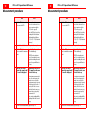
Magnetic susceptibility is defined as the degree to which a
substance can be magnetized. In mathematical terms, this the
ratio K of the intensity of the magnetization I to the magnetic
field H that is responsible for the magnetization, i.e.
Magnetic susceptibility is defined as the degree to which a
substance can be magnetized. In mathematical terms, this the
ratio K of the intensity of the magnetization I to the magnetic
field H that is responsible for the magnetization, i.e.
kH = I
kH = I
From Ampere’s law, it is known that a current (i.e. a moving
electrical charge) generates a magnetic field. The inverse
corollary to this is that a magnetic field can also influence a
moving electrical charge. Therefore, put in simple terms, an
oscillating EM field will be influenced to varying degrees by
magnetically susceptible material.
Operating principle
Operating principle
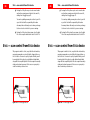
The KT-9 uses a 10 kHz LC oscillator and an inductive coil to
measure the susceptibility. The sequence required to obtain a
measurement of susceptibility is:
The KT-9 uses a 10 kHz LC oscillator and an inductive coil to
measure the susceptibility. The sequence required to obtain a
measurement of susceptibility is:
1. The frequency of the oscillator is measured in free space.
1. The frequency of the oscillator is measured in free space.
2. The oscillator frequency is next measured when the coil is
placed on the material for which the susceptibility is
required.
2. The oscillator frequency is next measured when the coil is
placed on the material for which the susceptibility is
required.
3. The frequency difference is directly proportional to the
materials susceptibility.
3. The frequency difference is directly proportional to the
materials susceptibility.
4. The susceptibility is calculated from this frequency difference
and takes into account geometric corrections to determine
the true susceptibility.
4. The susceptibility is calculated from this frequency difference
and takes into account geometric corrections to determine
the true susceptibility.