1
Overview
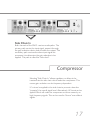
Attack Time
The compressor "attack" control adjusts the rate at which it begins to compress. If it is set to
a short time (fast attack), gain changes occur quickly. Slower attack times mean that gain
reduction hardly occurs at all before the transient has passed. Typical programme material
contains transients ("spikes") which may cause gain reduction to occur. Some of these
transients will be extremely fast and have very little effect on the sound of the signal. Setting
a long attack time means that virtually no gain reduction occurs because the transient has
passed before compression has had time to build up.
Limiting
Limiting also provides a form of compression but one with an extremely high and fixed ratio.
The RNCL has a ratio of in excess of 100:1. As with the compressor, the point at which
gain reduction occurs is variable. The limiter ratio is extremely high which means that the
threshold is effectively the maximum level that can be output and is therefore labelled
"level". The limiter behaviour is based on the "peak" value of the input signal, unlike the
compressor which uses an RMS rectifier.
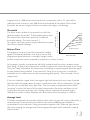
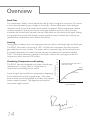
A typical signal may benefit from compression beginning
at a modest level and with a gentle slope. If the input
level exceeds a second threshold, the limiter can prevent
further output increases. The diagram shows typical
curves that might be used.
14
+25
+20
OUTPUT LEVEL (dBu)
Combining Compression and Limiting
The RNCL has been designed to provide a flexible gain
reduction tool. In many cases, a combination of
compression and limiting can be useful.
+15
Compressor threshold is -5 dBu, ratio 2:1
Limiter level is +6 dBu
Limiting
+10
+5
0
Compression
-5
-10
-15
Linear
-20
-20 -15 -10
-5
0 +5 +10 +15 +20 +25
INPUT LEVEL (dBu)