1
27
3.4 Matrices
3.4.3 Matrix Management
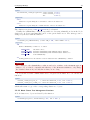
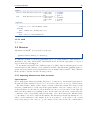
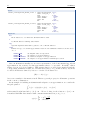
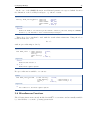
Using the following two function one can get the number of rows and columns of a specific
matrix.
Syntax
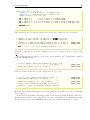
unsigned int hlib_matrix_rows
( const matrix_t A, int * info );
unsigned int hlib_matrix_columns ( const matrix_t A, int * info );
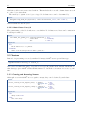
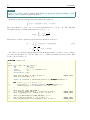
To obtain a copy of a block cluster tree associated with a matrix, the function
Syntax
blockcluster_t hlib_matrix_bct ( const matrix_t A, int * info );
is available.
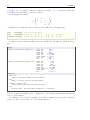
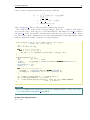
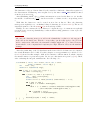
In contrast to the copy operations so far, e.g. for cluster trees and block cluster trees, copying
a matrix always creates a new matrix. The copy can be either exact or up to a given accuracy.
Both operations are done with the functions:
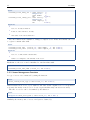
Syntax
matrix_t hlib_matrix_copy
( const matrix_t A, int * info );
matrix_t hlib_matrix_copy_eps ( const matrix_t A, double eps, int * info );
Arguments
eps
Block-wise accuracy of the copy compared to A.
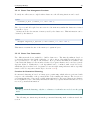
Deallocating a matrix is accomplished with
Syntax
void hlib_matrix_free ( matrix_t A, int * info );
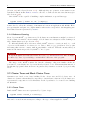
Again, please remember to only use this function and not free to prevent undefined behaviour.
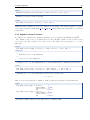
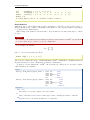
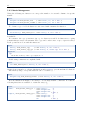
The memory usage of a specific function can be obtained by
Syntax
unsigned long hlib_matrix_bytesize ( const matrix_t A, int * info );
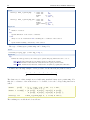
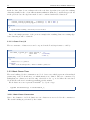
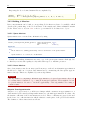
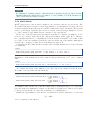
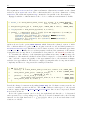
In some situations it might be necessary to access single matrix coefficients. For this the
following functions are available to return the entry Aij :
Syntax
double
hlib_matrix_entry_get
( const
const
const
int
complex_t hlib_matrix_centry_get ( const
const
const
int
matrix_t
unsigned int
unsigned int
A,
i,
j,
* info );
matrix_t
A,
unsigned int
i,
unsigned int
j,
* info );