1
CASM OPERATING PROCEDURE
4.1.13
Listing File
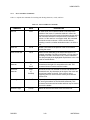
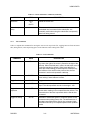
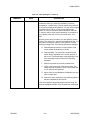
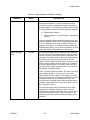
A listing file requested via RINSTALL is created during assembly. This listing file has the same name as the file
being assembled, but with the extension .LST. (Any existing file that has the same name is overwritten.) The
listing file has this format :
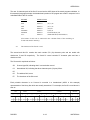
AAAA [CC] VVVVVVVV LLLL Source Code .....
The first four hexadecimal digits (AAAA) are the address of the instruction in the target processor memory.
The CC field of the format is the number of machine cycles used by the opcode. Note that this value appears only
if Cycle Cntr was turned on before assembly. Also note that the CC value, which always appears in brackets, is a
decimal value. If an instruction has several possible cycle counts and the assembler cannot determine the actual
number, the CC field shows the best case (the lowest number). An example of several possible counts is whether a
branch happens.
The next group of hexadecimal digits (VVVVVVVV) are the values put into that memory address and possibly
the next several addresses. The size of this field depends on the actual opcode.
The LLLL field, as many as four digits, gives the line count. The actual source code follows the line count.
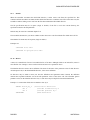
An example line of a listing file is:
0202 [05] 1608
37
bset 3,tcsr
;clear timer overflow flag
At the end of the listing file is the symbol table. This table lists every label and the value of each label.
The listing directives list and nolist affect the .LST file. If the nolist directive is at the end of the source code file,
it suppress the symbol table.
RAPID/D
4-11
MOTOROLA