1
Interrupt Request
INT1A
29
Interrupt Request #1
23
1 kΩ
Edge
Detectors
INT0A
30
Interrupt Request #0
24
Single-Interrupt Request
OR'ed Interrupt Request
INT1A
29
INT1B
23
Edge
Detectors
1 kΩ
OR'ed Interrupt Request
Interrupt Request #1
INT0A
30
INT0B
24
Interrupt Request #0
1 kΩ
OR'ed-Interrupt Request
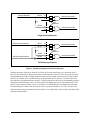
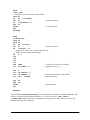
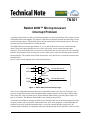
Figure 3. Workaround Options for External Interrupts
Spurious interrupts, which occur because of a failure to clear the request latch, are a possibility only if
there are other interrupts of higher priority than external interrupt #1 and #0. These can only be the result
of programming one of the on-chip peripheral interrupts to have a higher interrupt priority. This could be
the case, for example, if the external interrupts are programmed to have priority 1, and one of the serial
port interrupts is programmed to have priority 2. Spurious interrupts can always be eliminated by programming both external interrupts to have a priority equal to the highest priority used for another device. The
priority can be reduced on entry to the service routine to avoid blocking the true high-priority interrupts.
External interrupt #1 cannot cause interrupt #0 to have a spurious interrupt or vice versa. In some cases,
spurious interrupts may not disturb function, but the fix is so simple that it is not usually worth the trouble
to analyze this possibility.
022-0042 Rev. C
4