1
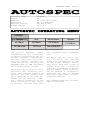
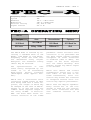
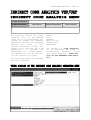
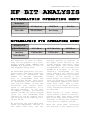
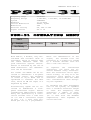
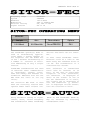
OPERATING MODES - PAGE 44
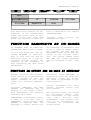
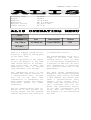
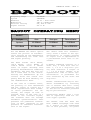
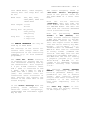
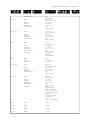
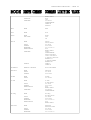
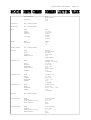
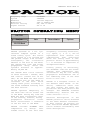
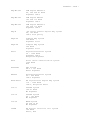
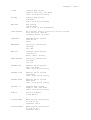
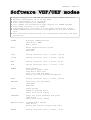
Frequency range
System
Baudrate
Modulation
Receiver setting
Signal sources
HF-MODES
SIMPLEX
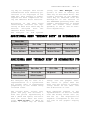
100.0, 200.0 and 300.0 Baud
SSB or DIRECT-FSK
CW, LSB or USB
AF or IF
G-TOR
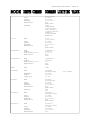
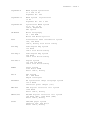
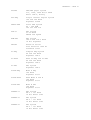
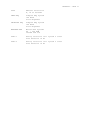
Analysis
Auto
Auto Sync
100 Baud
200 Baud
300 Baud
Demodulator
Option
US-ASCII
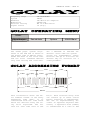
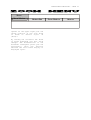
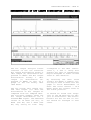
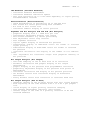
G-TOR operates at a radio channel rate of 100, 200 or 300
Baud. The quality of the radio
channel determines the actual
adjustment baud rate.
software will ensure the baud
rate adoptions as is the case in
“Auto” or “Auto Sync” mode. After the end of transmission the
software will re-synchronize.
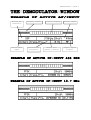
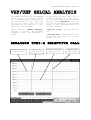
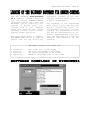
By clicking the “Auto” menu
field the demodulator will automatically adjust to the actual
shift and centre frequency followed by phasing with automatic
baud rate and signal polarity
detection.
The cycle duration of G-TOR is
always 2.4 s. The data frame has
a length of 1.92 s, which leaves
0.16 s for acknowledgement from
the remote station. At 300 Baud
69 data bytes are transferred,
at 200 Baud 45 bytes and at 100
Baud 21 bytes. After the end of
the data block a control byte
and the 16 bit CRC sum are appended.
“Auto Sync” exclusively starts
re-phasing to the signal. This
is necessary if during transmission disturbances a change of
baud rate takes place and receiver signal synchronism is
lost.
With some skill the actual baud
rate of G-TOR may be easily recognized. The baud rates "100
Baud", "200 Baud" and "300 Baud"
may be manually selected. If so
phasing will be accelerated.
After synchronism with a G-TOR
signal has been achieved, the
On the receiving side up to 3
incorrect bits may be corrected
using a (24, 12) Golay code. In
addition the data bits are interleaved (bit interleaving).
The complex G-TOR system is described in detail by the manufacturer KANTRONICS in a booklet
(“G-TOR, The New Mode, Articles,
Charts, Protocol”, edited by
Shelley Marcotte).