1
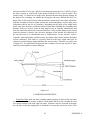
Miscellaneous. During any build-up program, it is essential that photographic coverage be
reviewed before the next flight This allows the determination of critical areas as they begin to
appear and will reduce the chances of making an unsafe release. technique that allows g
effects to be investigated independent of dive angle effects involve the use of the bunt
maneuver. This is accomplished in near level flight by pushing forward on the control stick until
a lower g condition (normally 0.5 g) is obtained. The 0.5 g is then held constant during store
release. In most cases, if the bunt maneuver is performed satisfactorily at the most critical
conditions (i.e., maximum airspeed and minimum g), the tests can proceed to a dive angle
which corresponds to the g level tested. The test conducted at the actual dive parameters is
more critical, since the component of gravity accelerating the store away from the aircraft is g
cos B. Immediately after release in a bunt maneuver in near level flight, the component of
gravity accelerating the store away from the aircraft is approximately 1.0 g.
Specific Separation Considerations. The following additional items influence separation
and should be considered during planning and testing:
a.
Retarded and nonretarded releases will require different MRI.
b. Aircraft armament system functions dictate whether MER/TER/ITER hooks
should be open or closed on empty stations.
c. Facing shoulder stations may be downloaded to improve separation
characteristics. The effect of a reduction of total number of stores must be weighed against the
tactical gain due to improved separation, a larger envelope, and reduced MRI.
d. An additional hazard during separation is weapon hardware that is released,
ejected, or otherwise separated from the store after release. The hazard may be to the releasing
aircraft or to other aircraft in formation.
e. Fuze function during bomb-to-bomb collisions is unsatisfactory. Live fuzes in inert
weapons, with a minimum arming delay selected, should be used to evaluate this possibility.
f. Arming wires, pull-out plugs, and umbilical separation should be recorded by
high-speed photography to test for interference on store motion, impingement on aircraft
surfaces and damage to plugs, bails, connectors, and fairings.
3.6 Cluster Bomb Units (CBU). Fuze function timing is critical with this weapon, and is
normally tested in conjunction with separation testing. The fuze function time is correlated with
release altitude to allow opening at a specific altitude above ground level. Range camera
coverage and down looking aircraft cameras are often the only suitable methods for observing
fuze function. Theodolite or 16mm range camera coverage should be used in an attempt to
observe fuze function that does not cause CBU opening. AIRTASK requirements to determine
bomblet impact patterns will necessitate the use of a land range, probably NAWCWD, China
Lake. The CBU usually releases bombs or bands during opening, which may create a hazard to
other CBUs or to the aircraft.
3.7 Dispensers. Dispensers have unique separation problems with aft fired or released
parachute retarded flares, sonobuoys, etc. These stores must satisfactorily clear all aircraft
surfaces. Of particular concern are high and mid-wing airplanes with low horizontal stabilizer,
ventral fins, and low aft-mounted speed brakes. In addition, the following problems have been
identified during past tests:
95
APPENDIX A