1
Macros
Macros
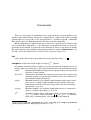
This chapter gives an alphabetical list of the standard macros that are provided
with the program PROSA. The general initialization macro init is explained in the
chapter on the command line interpreter (see p. 19).
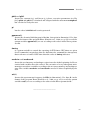
dummycal
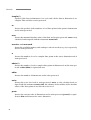
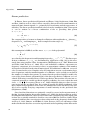
sets the system variables delta(k), ppmmax(k) and w0(k) (see p. 33/35) to default values (delta(k) = w0(k) = 1000.0 and ppmmax(k) = number of data points
in dimension k). It thus avoids that XEASY treats the spectrum as “uncalibrated.”
cfl
cfl
cfl
cfl
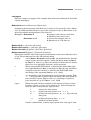
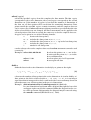
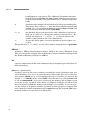
att fl att n τ baseset m [ n 0 n b ] [ φ 1 ]
att derivative n τ baseset m [ n 0 n b ] [ φ 1 ]
att iterative [{region} -] baseset m [ n 0 n b ] [ φ 1 ]
att manual [{region} -] baseset m [ n 0 n b ] [ φ 1 ]
(“convenient FLATT”) flattens the baseline in the frequency-domain of the active dimension (see p. 23) using standard base function sets. It thus provides a convenient interface to the flatten command (see p. 23). The parameters n, τ and region
have the same meaning as for the flatten command. The other parameters define
the base function set:
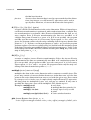
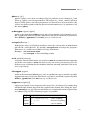
baseset
denotes the set of base functions used to represent baseline distortions. The following choices are possible:
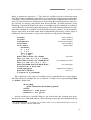
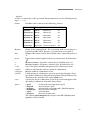
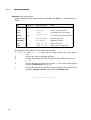
baseset
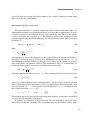
Base functions ( t = ( k – n b + 2 ) ⁄ n 0 , k = 1, …, n )
cft
1, cos 2πt, sin 2πt, …, cos 2πt ( m – 1 ), sin 2πt ( m – 1 )
rft
1, cos πt, sin πt, …, cos πt ( m – 1 ), sin πt ( m – 1 )
cftw
same as cft, plus Lorentzian functions to account for
contributions from the water line
rftw
same as rft, plus Lorentzian functions to account for
contributions from the water line
polynom
polynomial of order m
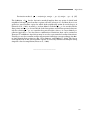
The methods cft and rft use trigonometric functions that correspond to the first m data points after complex and real Fourier
37