1
US 2011/0310285 A1
IMAGING APPARATUS
BACKGROUND
[0001] 1. Technical Field
[0002] The technical ?eld relates to an imaging apparatus
having a plurality of display units including a movable dis
play unit.
[0003] 2. RelatedArt
[0004] JP10-004509A discloses an imaging apparatus
including tWo types of display units, a vieW?nder and a moni
tor. The imaging apparatus includes an eye proximity sensor.
When the proximity of the user’s eye to the vieW?nder is
sensed by the eye proximity sensor, the monitor display is
turned off. When the eye proximity is not sensed, the vieW
?nder display is turned off. By this control, an imaging appa
ratus Which is easy to operate and capable of reducing Wasted
poWer consumption is implemented.
[0005]
In the imaging apparatus disclosed in the above
described JP10-004509A, When the display sWitching
Dec. 22, 2011
the ?rst display unit; and a controller con?gured to control the
?rst and second display units. In a case Where the position
determining unit determines that the ?rst display unit is not
positioned at the reference position, the controller performs
control to operate the ?rst display unit When the proximity
determining unit determines that the object is in proximity to
the ?rst display unit, and to operate the second display unit
When the proximity determining unit does not determine that
the object is in proximity to the ?rst display unit.
[0009] According to the imaging apparatus of the above
aspect, When the ?rst display unit (e.g., an external vieW
?nder) is moved from the reference position, the proximity
sensor is forcibly activated, and When the proximity sensor
senses the proximity of an object, the ?rst display unit is
operated. By this, for example, even if the automatic sWitch
ing function of the display unit is set to invalid, When the user
rotates the ?rst display unit (e.g., an external vieW?nder) to
use the ?rst display unit (the external vieW?nder), the auto
matic sWitching function of the display unit becomes valid.
betWeen the vieW?nder and the monitor is set to “manual
Hence, the setting for changing the display unit Which is
performed due to a change in user’s shooting style is facili
sWitching” instead of “automatic sWitching” Which is per
tated, improving the usability of the imaging apparatus.
formed based on the detection result of the eye proximity
sensor, and the setting is performed to turn off the vieW?nder
display (turn on the monitor display), even if the user looks
through the vieW?nder, nothing is displayed on the vieW
?nder. In such circumstances, When the user Wants to check a
subject by looking through the vieW?nder, he/ she needs to
take the trouble to perform an operation to turn on the vieW
?nder display. Thus, the operation becomes troublesome,
causing a problem of poor usability.
BRIEF DESCRIPTION OF DRAWINGS
[0010]
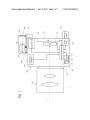
FIG. 1 is a block diagram shoWing an electrical
con?guration of a camera system.
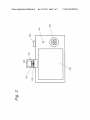
[0011] FIG. 2 is a rear vieW of the camera system.
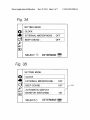
[0012] FIG. 3A is a diagram for describing a setting menu
and FIG. 3B is a diagram for describing a setting menu having
the “automatic display monitor sWitching” item added
thereto.
SUMMARY
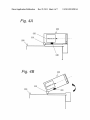
[0013] FIG. 4A is a diagram for describing a closed state of
an external vieW?nder and FIG. 4B is a diagram for describ
[0006] An imaging apparatus capable of solving the above
described problem is provided that has improved usability of
sWitching betWeen a plurality of display units.
ing a van-angle state of the external vieW?nder.
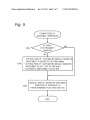
[0014] FIG. 5 is a ?owchart for describing an operation
performed When the external vieW?nder is connected to a
[0007]
camera body of the camera system according to a ?rst
embodiment.
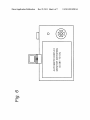
[0015] FIG. 6 is a diagram shoWing an example of a mes
sage displayed When the external vieW?nder is mounted on
the camera body.
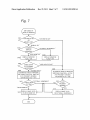
[0016] FIG. 7 is a ?owchart for describing a display moni
tor sWitching operation of the camera system according to the
?rst embodiment.
In a ?rst aspect, an imaging apparatus includes: an
imaging unit con?gured to capture a subject image to gener
ate image data; a ?rst display unit con?gured to display the
image data generated by the imaging unit and to be capable of
being positioned at a reference position and a position differ
ent from the reference position; a proximity sensor con?g
ured to sense proximity of an object to the ?rst display unit; a
position sensor con?gured to sense Whether the ?rst display
unit is positioned at the reference position; a second display
unit con?gured to display the image data generated by the
imaging unit; and a controller con?gured to perform control
such that, When the position sensor senses that the ?rst display
unit is not positioned at the reference position, the controller
activates the proximity sensor, and operates the ?rst display
unit When the proximity sensor senses the object is proximate
to the ?rst display unit, and operates the second display unit
When the proximity sensor does not sense the object is proxi
mate to the ?rst display unit.
[0008]
In a second aspect, an imaging apparatus to Which a
?rst display unit is mountable is provided. The ?rst display
unit is a display unit con?gured to display captured image
data and capable of being positioned at a reference position
and a position different from the reference position. The
imaging apparatus includes: a second display unit con?gured
to display captured image data; a position determining unit
con?gured to determine Whether the ?rst display unit is posi
tioned at the reference position; a proximity determining unit
con?gured to determine Whether the object is in proximity to
DETAILED DESCRIPTION OF PREFERRED
EMBODIMENTS
1. First Embodiment
1-1 . OvervieW
[0017]
A camera system according to the present embodi
ment includes an interchangeable lens and a camera body. An
external vieW?nder is mountable on the camera system
through a connector. The camera body includes a rear liquid
crystal monitor (hereinafter, referred to as a “rear monitor”)
and a connector for connecting the external vieW?nder (here
inafter, referred to as a “connector”). The external vieW?nder
includes an eye proximity sensor, a liquid crystal display unit
(hereinafter, referred to as a “?nder monitor”), and a detection
sWitch that detects a state of the external vieW?nder.
[0018] The folloWing embodiment describes a camera sys
tem to Which an external vieW?nder is mounted, that is, a
camera system including tWo display monitors (a rear moni