1
On architectures that don’t support capabilities, the two types will be equivalent to intptr_t and
uintptr_t and the qualifiers will be ignored.
The header also provides versions of the __builtin_memcap functions, without the
__builtin_ prefix. The versions of these that are exposed when compiling without capability support
are no-ops for the set variants and define maximum permissions and bounds for the get variants.
Only the functions that are expected to be generic across all implementations of the CHERI model
(as opposed to the MIPS-based concrete implementation) are exposed by this header.
4.11
Compiler assistance for cross-domain calls
It is important to avoid leaking rights (and other information) when calling between security contexts.
CHERI implements cross-domain calls via a special instruction (ccall) that traps to a privileged handler (currently in the kernel) to perform the domain transition. The handler is responsible for saving and
zeroing all callee-save registers and clearing all caller-save registers. On return, the same code in the
handler will restore all callee-save registers and (again) zero caller-save registers.
The handler does not know precisely what the arguments are for any function that is involved in
a cross-domain call and so can not clear the unused argument registers on call, nor the unused return
registers on return.
On the other side of the cross-domain call, the code must determine which method to invoke. This
is done by means of a method number, which is passed in a register that is normally unused for calls.
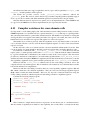
If a function is annotated with __attribute__((cheri_ccall)) then the front end will
replace calls to it with specially crafted calls to cheriinvoke, with the method number (identified
by a global variable that is initialised by the sandbox loader) in the correct register. This annotation
provides two declarations of the function, one with a suffix (specified by the cheri_method_suffix
attribute) that takes an explicit CHERI class argument and one that automatically sets the class (code and
data capability) arguments from a global variable specified by the cheri_method_class attribute.
Functions with the cheri_ccallee attribute will use the ccall calling convention, and so the
compiler will zero any return registers. This is intended to allow functions to be declared that are usable
both inside and between compartments.
Functions with the ccall calling convention have two extra capability argument registers, $c1 and
$c2, which contain the code and data capabilities. They also have an extra integer argument register
($v0), which contains the method number. These are not exposed to functions marked as using the
ccallee calling convention, which accept the normal calling convention’s argument registers.
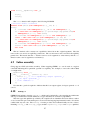
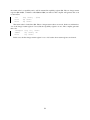
Consider the following simple program:
__capability void *data;
__attribute__((cheri_ccallee))
__capability void *cgetdata(void)
{
return data;
}
__attribute__((cheri_ccallee))
int cgetnumber(void)
{
return 42;
}
This contains two simple functions that are expected to be invoked as part of a domain transition.
The first returns a capability from inside its data capability, the second returns a constant. In the first,
28