1
Configuring an Emulated LAN
6.3.3
Data Transfer
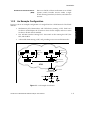
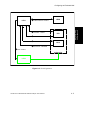
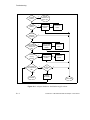
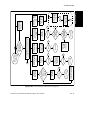
When LEC1 receives a network-layer packet from a higher layer protocol to transmit to some
destination MAC address (for example, LEC2), LEC1 initially does not know the corresponding ATM address of the destination. Consequently, LEC1 transmits an LE_ARP request to the
LES.
NOTE
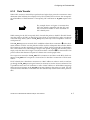
While waiting for the LES to respond, LEC1 forwards the packet to the BUS. The BUS broadcasts the packet to all LECs on the ELAN. This is done to avoid data loss, and to circumvent
connection setup latency (due to the LE_ARP process) that may not be acceptable to some network protocols.
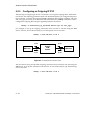
If the LE_ARP response is received, LEC1 establishes a data-direct connection ➏ to the destination address of LEC2. It is this path that will be used for subsequent data transfers. Before
LEC1 begins to use this connection, it first sends a “flush” packet via the BUS to the destination, LEC2. When LEC2 acknowledges receipt of this packet, signifying that the BUS path is
empty, only then does LEC1 begin to use the data-direct connection ➏ for data transfer. This
process ensures that the network protocol’s frames arrive in the proper order.
If no response is received to the LE_ARP, LEC1 continues to send data via the BUS, while continuing to LE_ARP until a response is received and a data-direct connection to LEC2 established.
If LEC1 already has a data-direct connection to a MAC address it wishes to reach, it need not
go through the LE_ARP process again. Instead, it continues to use the current connection. This
is possible because each LEC maintains a cache of MAC address to ATM address mappings
that it receives in response to the LE_ARPs it has sent. Entries in this cache are “aged” out over
a period of time. Data-direct connections are also cleared if they remain inactive for a period of
time.
ForeRunner™ VMA-200E ATM VME Bus Adapter User’s Manual
6-7
Configuring an
Emulated LAN
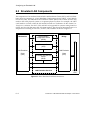
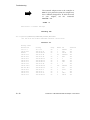
The example shown in Figure 6.2 assumes that
LEC2 has already registered with the LES, and
that connections similar to those described for
LEC1 already exist.