1
CHAPTER 4. LIFE CYCLE EVENTS
56
only integer numbers of offspring can be produced, which is problematic when
the mean of the Poisson distribution is too low (e.g. a fitness of 0.25 and a
mean fecundity of < 4 will cause many more females to have no offspring than
if the mean fecundity is 10). By having a too low mean fecundity, one looses
precision in the selective process, and selection will be stronger.
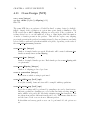
4.18
Breed-disperse (gametic migration)
name: breed disperse [integer]
age flags: adults (required) and offspring (added)
files: NA
inherits from: breed, disperse
Note: since version 2.3, the dispersal parameters that are inherited from the
disperse LCE must now be pre-pended with breed disperse instead of dispersal as
in the original LCE. For instance, dispersal rate becomes breed disperse rate, dispersal matrix becomes breed disperse matrix, etc.
This LCE performs breeding and dispersal in a single step. It inherits the parameters of the breed and disperse LCEs. For an offspring, each parent is randomly
taken from the local patch with probability 1 − m or from a different patch with
probability m, where m is the dispersal rate. The dispersal rates are thus taken as
backward migration or immigration rates in opposition to the forward emigration
rates of the disperse LCE. This corresponds to the classical Wright-Fisher model if
the mating system is hermaphroditism (mating system 6). By default, exactly K offspring are produced per patch, if K is the patch capacity, unless the patch is extinct
and the parameter breed disperse colonizers is specified, which limits the number of
individuals grown locally from two immigrant gametes. The number of offspring
produced locally can also be density-dependent and set following different growth
models using parameters breed disperse growth model and breed disperse growth rate.
The following features differ from the two base LCE’s:
• backward migration, the columns of the dispersal matrix must sum to 1
instead of the rows, because Nemo reads the immigration rates column-wise
(element dij is the probability to get a migrant gamete from deme i into deme
j, i being the row number and j the column number).
• There can be no demographic stochasticity (demes always at carrying
capacity) if the growth model is set to 1 (instant growth, default value), and
breed disperse colonizers is unset.
• Deme extinctions may cause the program to hang indefinitely if immigration into an extinct deme is impossible (e.g., because of source patch
extinction or zero immigration set in the dispersal matrix).