1
151
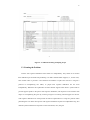
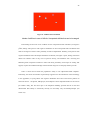
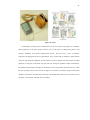
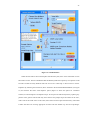
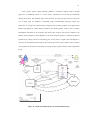
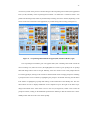
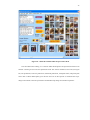
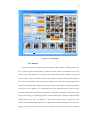
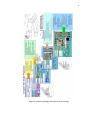
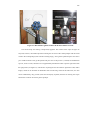
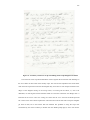
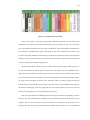
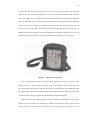
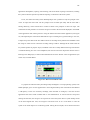
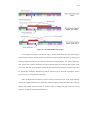
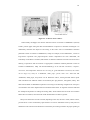
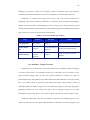
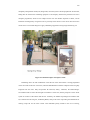
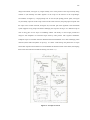
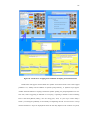
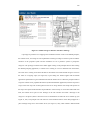
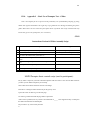
Figure 42 - A TfLea Used as a TfLiv?
What actually did happen was that the National Council of Teachers of Mathematics (NCTM)
issued a position paper stating that their recommendation in response to calculator technologies is to
dramatically transform the objectives and timing of the entire course of mathematics education
[National Council of Teachers of Mathematics, 1989]. For example, in K-4 mathematics, a focus on
long-division operations and paper-and-pencil fraction computation has been diminished, the
availability of calculators is assumed, and attention is shifted to estimation activities and a focus on the
meaning of operations and the selection of appropriate calculation methods [National Council of
Teachers of Mathematics, 1989]. The NCTM standards go on to note that “calculators, computers,
courseware, and manipulative materials are necessary for good mathematics instruction; the teacher
can no longer rely solely on a chalkboard, chalk, paper, pencils, and a text.” Note here that
“chalkboard, chalk, paper, and pencils” are all themselves TfLivs, which generated similar uproar
when introduced into Athenian culture two thousand years ago [Norman, 1993] [Plato, 2003]. This
shift from the detail of mathematical operation to focusing on the meaning of higher-level concepts is
not uncommon with TfLiv displacement of internalized TfLea skills. An argument could be made that
the widespread acquisition of reading and writing skills, which effected the end of the once common
bardic feats of recitation, led to the much wider dissemination of culture in general.
Many tools and classes of tools exist that, depending on the user, the users’ needs, and the context,
provide TfLea or TfLiv functionality. Spell checkers are seen as educational tools by many who use
feedback to both autocorrect the document on which they are working and learn the proper spelling of