1
Running PEST
5-11
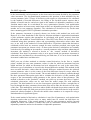
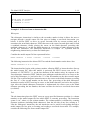
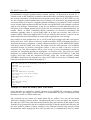
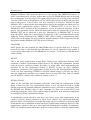
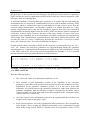
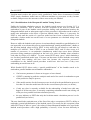
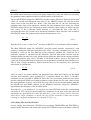
of the remaining adjustable parameters. The two-step process by which PEST judges whether
to freeze a parameter which is at its upper or lower limit is explained in Section 2.2.3. Note
that at the beginning of optimisation iteration 3, parameter “ro2” is released again in case,
with the upgrading of the other adjustable parameters during the previous optimisation
iteration, it wants to move back into the internal part of its domain.
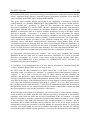
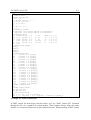
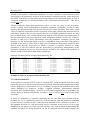
In the third optimisation iteration only a single Marquardt lambda is tested, the objective
function having been lowered to below 0.4 times its starting value for that iteration through
the use of this single lambda; 0.4 is the user-supplied value for the PEST control variable
PHIRATSUF.
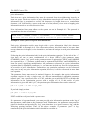
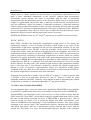
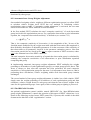
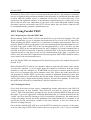
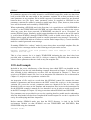
During the fifth optimisation iteration three lambdas are tested. The second results in a
raising of the objective function over the first (though this is not apparent in the run record
because “phi”, the objective function, is not written with sufficient precision to show it), so
PEST tests a lambda which is higher than the first. For the case illustrated in Example 5.1,
when lambda is raised or lowered it is adjusted using a factor of 2.0, this being the usersupplied value for the PEST control variable RLAMFAC. For optimisation iteration 6, the
first lambda tested is the same as the most successful one for the previous iteration, viz.
1.9531E-02. However, for each of the previous iterations, where the objective function was
improved through lowering lambda during the iteration prior to that, the starting lambda is
lower by a factor of 2.0 (ie. RLAMFAC) than the most successful lambda of the previous
iteration.
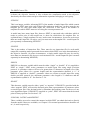
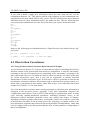
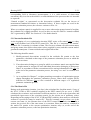
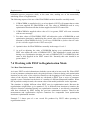
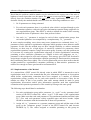
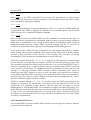
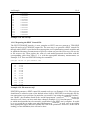
At the end of optimisation iteration 6 PEST calculates that the relative reduction in the
objective function from that achieved in iteration 5 is less that 0.1; ie. it is less than the usersupplied value for the PEST control variable PHIREDSWH. Hence, as the input variable
FORCEN for at least one parameter group (both groups in the present example) is set to
“switch”, PEST records the fact that it will be using central differences to calculate
derivatives with respect to the members of those groups from now on. Note that in Example
5.1, the use of central derivatives does not result in a significant further lowering of the
objective function, nor in a dramatic change in parameter values, the objective function
having been reduced nearly as far as possible through the use of forward derivatives only.
However in other cases, especially those involving a greater number of adjustable parameters
than in the above example, the introduction of central derivatives can often get a stalled
optimisation process moving again.
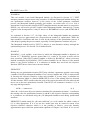
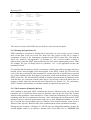
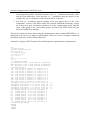
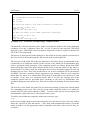
The optimisation process of Example 5.1 is terminated at the end of optimisation iteration 7,
after the lowest 3 (ie. NPHISTP) objective function values are within a relative distance of
0.01 (ie. PHIREDSTP) of each other.
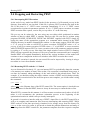
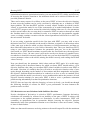
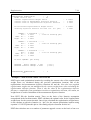
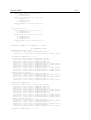
Note that where PEST lists the current objective function value at the start of the optimisation
process and at the start of each optimisation iteration, it also lists the contribution made to the
objective function by each observation group (including the observation group “group_4”
comprised solely of prior information). This is valuable information, for if a user notices that
one particular group is either dominating the objective function or is not “seen” as a result of
dominance by another contributor, he/she may wish to adjust observation or prior
information weights and start the optimisation process again.