1
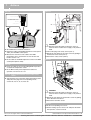
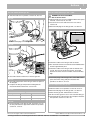
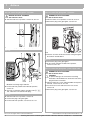
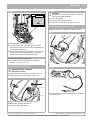
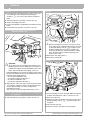
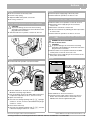
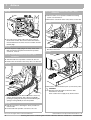
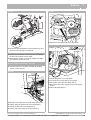
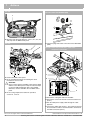
7215 3100 - 02/2005 GB/IE(EN)
For the installer
Installation and maintenance instructions
Wall-mounted condensing gas combi boiler
Buderus 500 - 24/C
Buderus 500 - 28/C
Please read thoroughly
The boiler meets the basic requirements of the
appropriate standards and directives.
Conformity has been substantiated by the proper
documents which - together with the declaration of
conformity - are filed with the manufacturer.
Subject to technical modifications!
Constant development efforts may result in minor deviations in
illustrations, functional steps and technical data.
Updating the documentation
If you have suggestions for improvement or have found
discrepancies, please do not hesitate to contact us.
Subject to modifications resulting from technical improvements!
2
Boulter Buderus Ltd. • http://www.boulter-buderus.co.uk
Installation and maintenance instructions for Buderus 500-24/C and 500-28/C • 02/2005
Contents
Preface
1
1.2
1.3
1.4
1.5
1.6
1.7
1.8
1.9
1.10
1.11
Installation . . . . . . . . . . . . . . . . . . . . . . . . . . . . . . 7
Dimensions, connections and assembly . . . . . . . . 9
Items supplied with unit . . . . . . . . . . . . . . . . . . . . 10
Hanging the boiler . . . . . . . . . . . . . . . . . . . . . . . . 10
Water circulation system . . . . . . . . . . . . . . . . . . . 11
Pipe connections . . . . . . . . . . . . . . . . . . . . . . . . . 11
Flue installation . . . . . . . . . . . . . . . . . . . . . . . . . . 15
Electrical connections. . . . . . . . . . . . . . . . . . . . . . 21
DBA wiring diagram . . . . . . . . . . . . . . . . . . . . . . . 22
Electrical wiring diagram. . . . . . . . . . . . . . . . . . . . 22
System examples . . . . . . . . . . . . . . . . . . . . . . . . . 27
These Installation and maintenance instructions apply to:
Boulter Buderus wall-mounted condensing gas combi boilers
500 - 24/C and 500 - 28/C.
2
2.1
Commissioning. . . . . . . . . . . . . . . . . . . . . . . . . . 29
Preparing the boiler for operation . . . . . . . . . . . . . 30
3
3.1
3.2
Inspection . . . . . . . . . . . . . . . . . . . . . . . . . . . . . . 40
General directions . . . . . . . . . . . . . . . . . . . . . . . . 40
Preparing the boiler for inspection . . . . . . . . . . . . 40
4
4.1
4.2
4.3
Maintenance . . . . . . . . . . . . . . . . . . . . . . . . . . . . 41
Cleaning the heat exchanger and burner . . . . . . . 41
Cleaning the condensate trap and syphon . . . . . . 42
Cleaning or replacing the plate heat exchanger . . 43
5
5.1
5.2
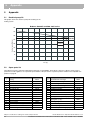
Appendix . . . . . . . . . . . . . . . . . . . . . . . . . . . . . . . 44
Residual pump lift . . . . . . . . . . . . . . . . . . . . . . . . . 44
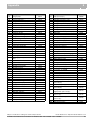
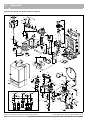
Spare parts list . . . . . . . . . . . . . . . . . . . . . . . . . . . 44
6
Index . . . . . . . . . . . . . . . . . . . . . . . . . . . . . . . . . . 47
Model:
C13(x), C33(x), C53(x), C73(x)
Type:
GB/IE II2H3P 20 mbar, 37 mbar
Power rating:
230 VAC, 50 Hz, IP X4D
Fuse rating:
1.25 Ampere slow blow
The boiler unit consists of the following components:
– 500
– 28
– C
Gas condensing boiler
Maximum output is 28 kW
Combination device (with integrated hot water
supply)
Important general instructions for use
Only use the boiler in accordance with its designated use and
the installation and maintenance instructions. Installation,
maintenance and repair must be carried out by competent
service engineers (e.g. CORGI registered). Only use the boiler
in conjunction with the accessories and spare parts indicated
in the installation and maintenance instructions. Other
accessories and consumables may only be used if they are
expressly provided for the designated use and if system
performance and safety are not affected in any way.
The boiler is suitable for connection to fully pumped, sealed
water systems ONLY. Adequate arrangements for completely
draining the system by provision of draining valves must be
provided in the installation pipework.
Pipework from the boiler is routed downwards as standard, but
may be routed upwards behind the boiler using the wall
spacing frame.
Subject to technical modifications.
G. C. Aplliance No. :
Buderus 500-24/C
Buderus 500-28/C
41-110-04
41-110-03
As a result of our policy of constant development, there may be
small differences between illustrations, functional steps and
technical data.
Other manuals available for this boiler are:
–
user manual;
–
service instructions;
–
wall spacing frame instructions.
BENCHMARK' Log Book
All Boulter Buderus gas fired boilers now include an
installation, commissioning and service record log book.
The details of the log book will be required in the event of any
warranty work being requested.
Please complete the appropriate sections on completion of the
installation and commissioning.
REMEMBER: Please hand the log book back to the user.
Subject to modifications resulting from technical improvements!
Boulter Buderus Ltd. • http://www.boulter-buderus.co.uk
Installation and maintenance instructions for Buderus 500 - 24/C and 500 - 28/C • 02/2005
3
Regulations and directives
It is a requirement that all gas appliances are installed and
serviced by a CORGI registered installer in accordance with
the regulations. Failure to install appliances correctly could
lead to prosecution. It is in your own interest, and that of safety,
to ensure the law is complied with.
It is a requirement and in your own interest, and that of safety
that this boiler must be installed by a CORGI registered
installer, in accordance with the relevant requirements of the
current Gas Safety (Installation and Use) Regulations,
The Building Regulations, current I.E.E. Wiring Regulations
and the relevant British Standard Codes of Practise.
Detailed recommendations are contained in the following
British Standard Codes of Practice:
BS. 5440:1 Flues (for gas appliances of rated input not
exceeding 70 kW).
BS. 5440:2 Ventilation (for gas appliances of rated input not
exceeding 70 kW).
BS. 5449
Forced circulation hot water systems.
BS. 5546
Installation of gas hot water supplies for domestic
purposes (2nd. family Gases).
BS. 6798
Installation of gas fired hot water boilers of rated
input not exceeding 60 kW.
BS. 6891
Low pressure installation pipes.
BS. 7593: 1992: Code of practice for treatment of water in
domestic hot water central heating
systems.
IGE/UP/1b Tightness testing and purging domestic sized gas
installations.
NOTE
When instructions aren’t followed, warranty
expires.
NOTE
Condensing boilers work more efficient if the
CH flow/return temperature is as low as
possible.
Timber Framed Buildings
If the boiler is to be fitted in a timber framed building it should
be fitted in accordance with the Institute of Gas Engineering
document IGE/UP/7:1998 and BS 5440:1.
Bathroom Installations
This appliance is rated IP X4D.
The boiler may be installed in any room or internal space,
although particular attention is drawn to the requirements of
the current IEE (BS.7671) Wiring Regulations and, in
Scotland, the electrical provisions of the building regulations
applicable in Scotland, with respect to the installation of the
boiler in a room or internal space containing a bath or shower.
If the appliance is to be installed in a room containing a bath or
shower then, providing water jets are not going to be used for
cleaning purposes (as in communal baths/showers), the
appliance can be installed in Zone 3, as detailed in BS.7671.
Compartment Installations
Health and & Safety Document No. 635.
The Electricity at Work Regulations, 1989.
The manufacturer's notes must not be taken, in any way, as
overriding statutory obligations.
The design and construction of the Boulter Buderus wallmounted condensing gas combi boiler 500-24/C and 500-28/C
conforms to the basic specifications listed in the European
directive governing gas-fired appliances 90/396/EEC, and with
respect to EN 625, EN 483 and EN 677.
NOTE
Observe the corresponding technical rules and
the building supervisory and statutory
regulations when installing and operating the
system.
WARNING!
Keep the burner-control unit housing CLOSED
when working on water-bearing components.
NOTE
It is mandatory to clean and service the system
once a year. This includes an inspection of the
entire system to see if it is in full working order.
Defects and faults must be eliminated
immediately.
Subject to modifications resulting from technical improvements!
4
A compartment used to enclose the boiler should be designed
and constructed especially for this purpose.
An existing cupboard or compartment may be used, provided
that it is modified for the purpose.
In both cases, details of essential features of cupboard/
compartment design, including airing cupboard installation,
are to conform to the following:
BS 6798 (No cupboard ventilation is required - see 'Air Supply'
for details).
It is not necessary to have a purpose-provided air vent in the
room or internal space in which the boiler is installed. Neither
is it necessary to ventilate a cupboard or compartment in which
the boiler is installed, due to the low surface temperatures of
the boiler casing during operation; therefore the requirements
of BS 6798, Clause 12, and BS 5440:2 may be disregarded.
The permanent clearances required are:
in front:
8 mm
below:
21 mm
right side:
8 mm
left side:
8 mm
above:
21 mm
The position selected for installation MUST allow adequate
space for servicing in front of the boiler. See table below:
in front:
350 mm
below:
180 mm
right side:
8 mm
left side:
8 mm
above:
200 mm
Boulter Buderus Ltd. • http://www.boulter-buderus.co.uk
Installation and maintenance instructions Buderus 500 - 24/C and 500 - 28/C • 02/2005
In addition, sufficient space may be required to allow lifting
access to the wall mounting bracket.
Wall-mounted condensing gas combi boilers must only be
operated with Boulter Buderus purpose made gas systems,
which are certified for this type of boiler.
Observe the relevant standards, regulations and legislation of
the country or region of final use.
CAUTION
Use this device for its intended purpose only.
NOTE:
notes relating to domestic hot water.
z The domestic hot water service must be in
accordance with BS 5546 and BS 6700.
z The boilers are suitable for connection to most
types of washing machine and dishwasher
appliances.
z When connecting to suitable showers, ensure
that:
a. The shower is capable of accepting mains
pressures and temperatures up to 65 °C.
DANGER!
notes relating to the heating system water.
Thoroughly flush the system before it is filled with
water. Use only untreated water or water
treatment product such as Sentinel X100 to fill
and top up the system. For more information
about Sentinel call 0151 420 9563.
When using water treatment, only products
suitable for use with Boulter Buderus heat
exchangers are permitted (e.g. Sentinel X100).
Your warranty is at risk if an incorrect water
treatment product is used in conjunction with this
appliance.
For more information, contact Boulter Buderus
Technical Product Support Department.
It is most important that the correct concentration
of the water treatment product is maintained in
accordance with the manufacturer's instructions.
b. The shower is ideally thermostatic or
pressure balancing.
z Where temporary hardness exceeds
150 mg/litre, it is recommended that a
proprietary scale reducing device is fitted into
the boiler cold supply with the requirements of
the local water company
CAUTION
Provision must be made to accommodate the
expansion of DHW contained within the
appliance, where a back flow prevention device
is fitted BS. 67989: §5.4.3.
Safe handling of substances
No asbestos, mercury or CFCs are included in any part of the
boiler and its manufacture.
If the boiler is used in an existing system any
unsuitable additives MUST be removed by
thorough cleaning. BS.7593:1992 details the
steps necessary to clean a domestic central
heating system.
In hard water areas, treatment to prevent lime
scale may be necessary - however, the use of
artificially softened water is NOT permitted.
Under no circumstances should the boiler be
fired before the system has been thoroughly
flushed.
Do not use artificially softened water.
Only plastic pipework containing a polymeric
barrier should be used.
It is allowed to use copper for the first 600 mm.
See also subsection 1.6: “Pipe connections” in
this manual.
Subject to modifications resulting from technical improvements!
Boulter Buderus Ltd. • http://www.boulter-buderus.co.uk
Installation and maintenance instructions for Buderus 500 - 24/C and 500 - 28/C • 02/2005
5
Hazard definitions and abbreviations
Hazard definitions
DANGER:
Indicates the presence of hazards that will cause
severe personal injury, death or substantial
property damage.
WARNING:
Indicates the presence of hazards that can
cause severe personal injury, death or
substantial property damage.
CAUTION:
Indicates presence of hazards that will or cause
minor personal injury or property damage.
NOTICE:
Indicates special instructions on installation,
operation or maintenance that are important but
not related to personal injury or property
damage.
Abbreviations
AV
=
BCT =
BDV =
CB
=
CH
=
CHF =
CHR =
CT
=
CWDO =
DHW =
DV
=
E
=
L
=
LSV
=
MCW =
N
=
JB
=
PL
=
Prog =
PRV =
RT
=
RV
=
T
=
TRV =
WC
=
ZV
=
Air Vent
Boulter Buderus cylinder thermostat
Boulter Buderus diverter valve
Connection Block
Central Heating
Central Heating Flow
Central Heating Return
Cylinder Thermostat
Condensate water drainage outlet
Domestic Hot Water
Diverter Valve
Earth
Live
Lock Shield Valve
Mains Cold Water
Neutal
Junction Box / RTH Relay
Permanent Live
Programmer
Pressure relief valve (safety valve)
Room Thermostat
ModuLink 250 RF Receiver
Timer
Thermostatic Radiator Valve
Wiring Centre
Two Port Zone Valve
Subject to modifications resulting from technical improvements!
6
Boulter Buderus Ltd. • http://www.boulter-buderus.co.uk
Installation and maintenance instructions Buderus 500 - 24/C and 500 - 28/C • 02/2005
Installation
1
1
Installation
1.1
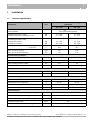
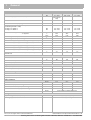
Technical specifications
Dimensions
Unit
500 Series wall-mounted condensing gas
combi boiler
500 - 24/C
500 - 28/C
GB/IE II2H3P 20 mbar, 37 mbar
(natural gas H and propane P)
Type of gas supply as established in
EN 437 (GB/IE)
Rated thermal load for heating
Rated thermal load for preparing hot water
kW
kW
5.7 - 23.0
5.7 - 23.0
5.7 - 23.0
5.7 - 28.5
Rated heating capacity for system temperature
(modulating from 30° to 100°)
Heating curve 75/60 °C
Heating curve 40/30 °C
kW
kW
5.3 - 22.0
6.0 - 24.0
5.3 - 22.0
6.0 - 24.0
%
%
90.3
92.3
90.3
92.3
Max. gas rate for heating
m3/h
2.43
3.02
Max. gas rate preparing hot water
m3/h
2.43
2.43
Heating water temperature
°C
30 - 80
30 - 80
∆T at residual head of 200 mbar
°C
< 20
< 20
Max. operating pressure of boiler
bar
3.0
3.0
Pump over run time
min
5
5
l
7.5
7.5
bar
1.0
1.0
l/min
9.4
11.7
Adjustable hot water temperature
°C
40 - 60
40 - 60
Minimum connection pressure
bar
0.8
0.9
Maximum connection pressure
bar
10.0
10.0
Seasonal efficiency (SEDBUK)
for natural gas
for propane
Central heating installation
Expansion vessel
Capacity of expansion vessel
Admission pressure of expansion vessel
Plate heat exchanger
DHW flow rate at 35 °C rise
Pipe connections
Gas on installation frame (compression fitting)
Ø mm
22
CH flow/return (compression fitting)
Ø mm
22
MCW inlet / DHW outlet (compression fitting)
Ø mm
15
Condensate-water outlet
Ø mm
21.5
Pressure relief valve (compression fitting)
Ø mm
15 (adapter supplied with boiler)
Subject to modifications resulting from technical improvements!
Boulter Buderus Ltd. • http://www.boulter-buderus.co.uk
Installation and maintenance instructions for Buderus 500 - 24/C and 500 - 28/C • 02/2005
7
1
Installation
Dimensions
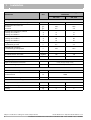
Unit
500 Series wall-mounted condensing gas
combi boiler
500 - 24/C
500 - 28/C
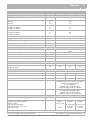
Flue gas values
Condensate water quantity, natural gas, 40/30 °C
l/h
1.6
1.6
Exhaust-fume mass-flow rate
Full load
Part-load
g/s
g/s
10.6
4.3
10.6
4.3
Exhaust-fume temperature, full load
Heating curve 75/60 °C
Heating curve 40/30 °C
°C
°C
77
55
77
55
Exhaust-fume temperature, partial load
Heating curve 75/60 °C
Heating curve 40/30 °C
°C
°C
60
35
60
35
CO2 full load, natural gas
standard test gas G20
%
9.2
9.2
CO2 full load, natural gas
standard test gas G31 propane
%
10.3
10.3
Standard emission factor CO
mg/kWh
<22
<22
Standard emission factor NOx
mg/kWh
<30
<30
Flow pressure available for use
Pa
75
75
Flue-gas system
Type of exhaust-fume connection
C13(X), C33(X), C53(X), C73(X)
Diameter of flue gas system
mm
60/100 (accessory)
Mains connection voltage
V
230 (50 Hz)
Electrical power consumption
Full/Partial load
W
110/88
Electrical data
Electrical protection rating
IP X4D
Boiler dimensions and weight
Height x Width x Depth
mm
780 x 460 x 330
780 x 460 x 330
Weight (without casing)
kg
31
31
Casing
kg
3
3
Subject to modifications resulting from technical improvements!
8
Boulter Buderus Ltd. • http://www.boulter-buderus.co.uk
Installation and maintenance instructions for Buderus 500 - 24/C and 500 - 28/C • 02/2005
Installation
1.2
1
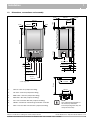
Dimensions, connections and assembly
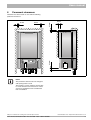
8 mm
330 mm
460 mm
230 mm
8 mm
21 mm
150 mm
Ø100 mm
8 mm
35 mm
780 mm
Ø60 mm
21 mm
6
92 mm1
3
5
4
2
(3-4) 70 mm
7
(1-2-5) 85 mm
152 mm
(7) 93 mm
157 mm / 162 mm
(6) 108 mm
222 mm
282 mm / 287 mm
352 mm
403.8 mm
328 mm
outside edge frame
721 mm
376 mm
200 mm
1.
CH flow = Ø22 mm (compression fitting)
2.
CH return = Ø22 mm (compression fitting)
3.
DHW outlet = Ø15 mm (compression fitting)
4.
MCW inlet = Ø15 mm (compression fitting)
5.
Gas = Gas connection Ø22 mm (compression fitting)
NOTE
6.
CWDO = Condensate water drainage outlet Ø21.5 mm O/D
7.
PRV = Pressure relief valve Ø15 mm (compression fitting)
See wall-mounting template for
the necessary clearances.
The wall spacing frame may not
always be necessary.
Subject to modifications resulting from technical improvements!
Boulter Buderus Ltd. • http://www.boulter-buderus.co.uk
Installation and maintenance instructions for Buderus 500 - 24/C and 500 - 28/C • 02/2005
9
1
1.3
Installation
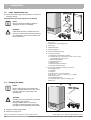
Items supplied with unit
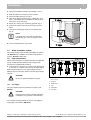
z Check the contents against the packing list to ensure that
nothing is missing.
2
Requirements to be met by the place of installation
6
NOTE
Observe all statutory building regulations
applying to the place of installation.
7
4
DANGER!
Inflammable materials or liquids must not be
stored or used near wall-mounted condensing
gas combi boilers. The site of installation must
be frost-protected.
5
1
3
fig. 1
Items supplied with unit
Key to fig. 1:
1: Wall-mounted condensing gas boiler
2: Wall bracket
3: Manifold Assembly
4: Wall spacing frame
5: Bracket for ModuLink 250 RF
6: Technical documents:
1 x Installation and maintenance manual
2 x User manuals (one is A4 format, the other one is located
on the bottom frame of the boiler)
1 x Wall mounting template
1 x Benchmark Logbook
1 x Warranty card
1 x Wall spacing frame instruction
1 x Envelope for Warranty card
7: Plastic bag containing the following accessories:
4 x wall fixing screws
4 x wall plugs
4 x washers
8 x fixing screws for wall spacing frame
Seals (1 x G½“ - 1“, 2 x ¾“ - 22 mm, 2 x ½“ - 15 mm)
Initial start-up sticker
Second identification plate
Pressure Relief Valve compression fitting + pipe
Radiator key
1.4
Hanging the boiler
NOTE
Refer to manual of the wall spacing frame,
which is supplied with the unit, for the correct
mounting instructions when using a wall
spacing frame.
2
CAUTION
1
DO NOT remove the polystyrene foam bottom
slab until lifted into position.
During installation work, cover the wallmounted condensing gas boiler and the flue
gas adapter to prevent site dirt from entering.
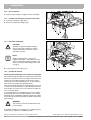
z Hang the wall mounting template.
fig. 2
z Drill the necessary holes.
Subject to modifications resulting from technical improvements!
10
Installation
Boulter Buderus Ltd. • http://www.boulter-buderus.co.uk
Installation and maintenance instructions for Buderus 500 - 24/C and 500 - 28/C • 02/2005
Installation
1
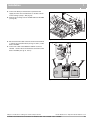
z Attach the manifold assembly to the wall (fig. 2, item 1).
z Make the pipework connections to the manifold.
z Attach the wall bracket (fig. 2, item 2).
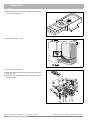
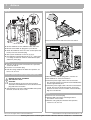
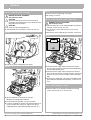
z Open the locking mechanism using a radiator key (fig. 3,
item 1). The radiator key is included in the delivery of the
boiler in the accessories bag.
z Detach the casing of the condensing gas boiler (fig. 3).
z Remove the polystyrene foam piece from the top of the
boiler.
z Hang the condensing gas boiler onto the wall bracket
(fig. 2).
NOTE
If the boiler isn't connected to the pipework
immediately, place caps on the pipe connections.
z Connect manifold unions to the boiler.
fig. 3
1.5
Remove casing
Water circulation system
The central heating system should be installed in accordance
with BS.6798 and, in addition, for smallbore and microbore
systems, BS.5449 or EN 12823.
1.6
Pipe connections
Pipework from the boiler is routed downwards as standard, but
may be routed upwards behind the boiler using the wall
spacing frame (supplied with the boiler).
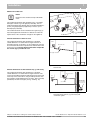
z Connect pipes as shown in fig. 4. Ensure that all pipework
is routed so as to minimise any strain on the boiler fittings.
Boulter Buderus advises to use copper piping for the first
600 mm, then it is allowed to switch to another approved pipe
material.
1
CAUTION!
Do not use galvanised radiators or pipes.
fig. 4
2
3
4
5
Pipe connections
Key to fig. 7:
1: CH flow
2: DHW outlet
1.6.1
Gas Supply
The gas installation must be installed in accordance with
BS.6891.
3: Gas
4: MCW inlet
5: CH return
CAUTION!
Pipework from the meter to the boiler MUST be
of adequate size, generally at least Ø22 mm.
The complete installation MUST be tested for gas tightness
and purged as described in IGE/UP/1b.
Subject to modifications resulting from technical improvements!
Boulter Buderus Ltd. • http://www.boulter-buderus.co.uk
Installation and maintenance instructions for Buderus 500 - 24/C and 500 - 28/C • 02/2005
11
1
1.6.2
Installation
Gas connection
z Connect to gas supply according to relevant standards.
1.6.3
Compression fitting pressure relief valve outlet
z Insert the small piece of pipe (fig. 5).
z Attach the compression fitting (fig. 6).
1.6.4
fig. 5
Insert pipe
fig. 6
Compression fitting
Hot-water temperature
CAUTION!
DO NOT use galvanised pipes or fittings.
The hot water heat exchanger is made of
copper and is liable to suffer the effects of
electrolytic corrosion.
NOTE
When using plastic pipes, observe the
supplier’s instructions - especially those referring to recommended jointing techniques and
the notes relating to the heating system water
on page 5.
z Connect pipes free of strain (fig. 4).
1.6.5
Condensate removal
Positioning and termination of the condensate drain pipe
The condensate pipe should be run and terminate internally to
the house soil and vent stack or waste pipe. Alternatively, the
condensate can be discharged into the rainwater system if
connected to a foul water draining system, or into a purposemade soak away (condensate absorption point).
All connecting drainage pipework should generally have a fall
of at least 2.5° to the horizontal, or approximately 50 mm per
metre of pipe run. If this is can not be achieved, consider the
use of a condens pump.
If an external pipe run is unavoidable then the run should be
insulated with water proof insulation limited to 3 m in length.
Should this be exceeded then the pipework diameter should be
increased to 32mm and the pipework insulated using weather
proof materials.
WARNING!
Any external run must be insulated with water
proof insulation.
It should be noted that the connection of a condensate pipe to
a drain may be subject to local building controls.
Subject to modifications resulting from technical improvements!
12
Boulter Buderus Ltd. • http://www.boulter-buderus.co.uk
Installation and maintenance instructions for Buderus 500 - 24/C and 500 - 28/C • 02/2005
Installation
1
Material for condensate
NOTE
Ensure that the condensate trap is filled with
water.
The condensate drainage pipe should be run in a standard
drain pipe material, e.g. PVC (polyvinyl chloride), PVC-U
(unplasticized polyvinyl chloride), BS (acrylonitrile-butadienestyrene), PP (polypropylene polyprolene) or PVC-C (crosslinked polyvinyl chloride).
The condensate drain can be attached to the syphon (fig. 7).
Any internal pipework should be of a diameter to match the
requirements of the condensate exit pipe on the appliance.
fig. 7
Condensate outlet
Internal termination to internal stack
The condensate drainage pipe should have a minimum
outside diameter of 21.5 mm with no length restriction. It
should incorporate a trap with a 75 mm condensate seal and
be connected to the stack at a point at least 450 mm above the
invert of the stack. The trap built into the boiler will provide
this 75 mm (fig. 8) condensate seal.
Boiler
internal soil
and vent stack
Ø21.5 mm min.
450 mm min.
No length restriction
invert
fig. 8
Internal termination of condensate drainage pipe to
internal stack
External termination via internal branch (e.g. sink waste)
The condensate drainage pipe should have a minimum
outside diameter of 21.5 mm with no length restriction. The
connection should preferably be made downstream of the sink
waste trap. If the connection is only possible upstream, then
the air break is needed between the two traps. This is normally
provided by the sink waste pipe (see fig. 9 and fig. 10).
Boiler
No length restriction
Sink
Ø21.5 mm min.
fig. 9
Subject to modifications resulting from technical improvements!
Open end of pipe
direct into gully,
below ground but
above water level
External termination of condensate drainage pipe via
internal discharge branch (e.g. sink waste) and
condensate syphon
Boulter Buderus Ltd. • http://www.boulter-buderus.co.uk
Installation and maintenance instructions for Buderus 500 - 24/C and 500 - 28/C • 02/2005
13
1
Installation
Boiler
Ø21.5 mm min.
Sink
Open end of pipe
direct into gully,
below ground but
above water level
No length restriction
fig. 10 External termination of condensate drainage pipe via
internal discharge branch (e.g. sink waste – proprietary
fitting) and condensate syphon
Condensate absorption point
The condensate drainage pipe should have a minimum
outside diameter of 21.5 mm and the external pipe length
should not be more than 3 m. The condensate absorption point
should be sited in a convenient position as close as possible to
the boiler but not in the vicinity of other services. See fig. 11 for
information.
External length of
pipe 3m max.
Ø21.5 mm min.
500 mm min.
Ground
(either/or)
Ø100 mm min.
plastic tube
bottom of
tube sealed
limestone
chippings
300 mm min.
When discharging condensate to an outside
drain caution must be taken to ensure
blockage cannot occur during freezing conditions. If this is likely to occur, the use of a
syphon trap is recommended.
25 mm min.
NOTE
hole depth
400 mm min.
Two rows of three
12 mm holes at 25 mm centres
50 mm from bottom of tube and
facing away from house
fig. 11 External termination of condensate drainage pipe to
absorption point
Subject to modifications resulting from technical improvements!
14
Boulter Buderus Ltd. • http://www.boulter-buderus.co.uk
Installation and maintenance instructions for Buderus 500 - 24/C and 500 - 28/C • 02/2005
Installation
1
1.7
Flue installation
1.7.1
Siting the flue terminal
Terminal Position
O
A. Directly below, above or alongside
an opening window, air vent or
other ventilation opening
B. Below guttering, drain pipes or soil
pipes
C. Below eaves
N
A
C
N
B,C
B,C
M
A
F
G
E
G
under carport
D
J
H, I
K
K
F
F
M
G
L
K
F
K
L
D. Below balconies or a car port roof
Not recommended!
E. From vertical drain pipes or soil
pipes
F. From internal or external corners
Minimum
Spacing
300 mm
200 mm
200 mm
200 mm
150 mm
300 mm
G. Above adjacent ground, roof or
balcony level
H. From a surface facing the terminal
600 mm
I.
1200 mm
From a terminal facing a terminal
J. From an opening in a car port (e.g.
door or window) into dwelling.
Not recommended!
K. Vertically from a terminal on the
same wall
L. Horizontally from a terminal on the
wall
M. Adjacent to opening
300 mm
1200 mm
1500 mm
300 mm
300 mm
N. Above intersection with roof
300 mm
O. From a vertical structure on the roof
500 mm
G
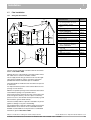
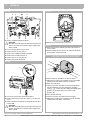
fig. 12 Flue terminal position
table 1
Balanced flue terminal position
The flue must be installed in accordance with the recommendations of BS. 5440-1:2000.
Pluming will occur at the terminal so terminal positions where
this could cause a nuisance should be avoided.
The air supply and the flue gas exhaust must meet the applicable general regulations. Please consult the instructions
provided with the flue terminal kits prior to installation.
The boiler MUST be installed so that the terminal is exposed
to external air.
It is important that the position of the terminal allows the free
passage of air at all times.
Minimum acceptable spacing from the terminal to obstructions
and ventilation openings are specified in table 1.
If the lowest part of the terminal is less than 2 metres above the
level of the ground, balcony, flat roof or place to which any
person has access, the terminal must be protected by a guard.
Ensure that the guard is fitted centrally.
The flue assembly shall be so placed or shielded as to prevent
ignition or damage to any part of the building.
The air inlet/products outlet duct and the terminal of the boiler
MUST NOT be closer than 25 mm to combustible material.
Detailed recommendations on the protection of combustible
material are given in BS. 5440- 1:2000.
Subject to modifications resulting from technical improvements!
Boulter Buderus Ltd. • http://www.boulter-buderus.co.uk
Installation and maintenance instructions for Buderus 500 - 24/C and 500 - 28/C • 02/2005
15
1
Installation
NOTE
It is absolutely essential to ensure, in practice,
that products of combustion discharging from
the terminal cannot re-enter the building or any
other adjacent building through ventilators,
windows, doors, other sources of natural air
infiltration, or forced ventilation/air-conditioning.
If this could occur the appliance MUST be turned off (with the
owners permission), and labelled as unsafe until corrective
action can be taken.
DANGER!
Only use Boulter Buderus flue gas systems.
As other flue gas systems are not tested with
this appliance.
1.7.2
Air supply and flue gas exhaust in a closed
installation
A ventilation cover is integrated into the 500 Series condensing
gas boilers. This cover houses a number of components, such
as the burner and the heat exchanger. Since this ventilation
cover is part of the air supply system, it is vital that it is always
installed correctly.
1
2
3
To ensure optimal operation, the 500 Series appliances must
be connected to a Boulter Buderus horizontal or vertical flue
terminal. These terminals have been developed specifically for
Boulter Buderus condensing gas boilers and have been
comprehensively tested for trouble free operation when
correctly installed.
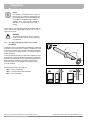
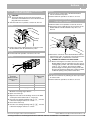
fig. 13 Standard horizontal flue pack
Standard horizontal flue pack (fig. 13):
–
item 1: Flue turret 60/100;
–
item 2: Horizontal flue terminal 60/100;
–
item 3: Flue finishing kit.
L
415 mm
8 mm
fig. 14 Side flue and rear flue installation
Subject to modifications resulting from technical improvements!
16
Boulter Buderus Ltd. • http://www.boulter-buderus.co.uk
Installation and maintenance instructions for Buderus 500 - 24/C and 500 - 28/C • 02/2005
Installation
1
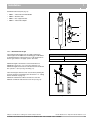
Standard vertical flue pack (fig. 15):
–
item 1: Vertical flue terminal 60/100.
–
item 2: Weather collar
–
item 3: Flue support bracket
–
item 4: Vertical flue adaptor
2
3
1
4
fig. 15 Standard vertical flue pack
1.7.3
Maximum Flue length
The maximum pipe length of the air supply and flue gas
exhaust pipes for the 500 Series condensing gas combi boilers
is determined by the total pressure loss of all components in
the flue gas exhaust / air supply system. See table.
Flow pressure available for use [Pa]
Buderus 500 - 24/C
75
Buderus 500 - 28/C
75
table 2
Maximum length of horizontal or vertical extensions for
60/100 flue system is L = 12 m (see fig. 16 and fig. 17).
Maximum length of horizontal or vertical extensions for 80/125
flue system L = 35 m (see fig. 16 and fig. 17).
Take the flue pipe clearances into account when planning the
layout of the place of installation (see subsection 1.7.1: "Siting
the flue terminal" on page 15).
Maximum wall thickness without extensions is 415 mm.
Maintain a minimum side clearance of 8 mm (see fig. 14).
L
fig. 16 Vertical flue length
Subject to modifications resulting from technical improvements!
Boulter Buderus Ltd. • http://www.boulter-buderus.co.uk
Installation and maintenance instructions for Buderus 500 - 24/C and 500 - 28/C • 02/2005
17
1
1.7.4
Installation
Additional flue parts
L
The additional flue parts listed can be ordered from your
supplier.
Flue size 60/100:
60/100 flue system
For every bend or extension
the max. flue length (L) has
to be reduced by:
500 mm extension
0.5 m
1000 mm extension
1.0 m
90° bend
1.4 m
45¯ bend
0.7 m
A
fig. 17 Horizontal flue length
NOTE
The total reduction length must never exceed
the maximum flue length.
Flue size 80/125 (optional):
80/125 flue system
For every bend or extension
the max. flue length (L) has
to be reduced by:
500 mm extension
0.5 m
1000 mm extension
1.0 m
90° bend
1.6 m
45¯ bend
0.9 m
NOTE
Vertical adaptor (60/100 --> 80/125) is required
for 80/125 flue gas systems, because the flue
outlet of the boiler is 60/100.
Weathering slates for 60/100 and 80/125
Flat roof, pitched roof.
Subject to modifications resulting from technical improvements!
18
Boulter Buderus Ltd. • http://www.boulter-buderus.co.uk
Installation and maintenance instructions for Buderus 500 - 24/C and 500 - 28/C • 02/2005
Installation
1.7.5
1
Standard 100 mm flue systems
The standard concentric flue system provides for a max. horizontal straight length of upto 12.0 m for 60/100 flue connection
(see subsection 1.7.3).
Full instructions for fitting this flue are in subsection 1.7.8:
"Installation of the horizontal flue" on page 20.
IMPORTANT
Any horizontal flue system fitted to a condensing boiler must be inclined towards the appliance at an angle of 30 mm per metre length to
prevent condensate dripping from the flue
terminal. This means that the clearance above
the appliance must be increased to match the
duct length. See figure on page 9.
NOTE
When using a wall spacing frame, don’t forget
to take its measurements into account when
designing a flue system.
1.7.6
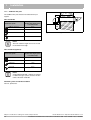
Connecting the vertical flue adaptor
z Fit the vertical flue adaptor (fig. 18) onto the appliance flue
connector.
fig. 18 Vertical flue adaptor
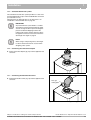
1.7.7
Connecting the horizontal flue turret
z Fit the horizontal flue turret (fig. 19) onto the appliance flue
connector.
Flue gas
testing point
fig. 19 Horizontal flue turret with flue gas testing point
Subject to modifications resulting from technical improvements!
Boulter Buderus Ltd. • http://www.boulter-buderus.co.uk
Installation and maintenance instructions for Buderus 500 - 24/C and 500 - 28/C • 02/2005
19
1
1.7.8
Installation
Installation of the horizontal flue
The standard flue is suitable for lengths upto 660 mm
(see fig. 20). For longer flue runs upto 12.0 m, extension
air/flue ducts are available.
Terminal
assembly
Maximum length
NOTE
Use the wall-mounting template to help you
mark the position of the side flue opening
Finishing kit
Outer
Wall
Flue turret
fig. 20 Installation with horizontal flue gas turret
1.7.9
Flue duct preparation and assembly
L
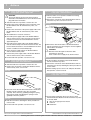
z Measure the flue length L. Refer to figures 21 and 22.
NOTE
The flue must be inclined from the boiler.
z Mark off the lengths shown onto the ducts and cut the
length. The cuts must be square and free from burrs.
Terminal assembly outer (air) duct - L-70 mm, inner (flue)
duct - L-50 mm. The measurement is made from the ridge
at the terminal indicating the outer face of the wall.
Refer to figure 23.
Extension air duct - L-70 mm, flue duct - L-50 mm.
The measurement is from the formed end.
A
fig. 21 Flue length - rear
Item A = 150 mm without the use of a wall spacing frame
Item A = 185 mm with the use of a wall spacing frame
z Assemble flue system completely. Push the ducts fully
together. The slope of the terminal outlet must be face
downwards (see fig. 23, item 1).
The assembly will be made easier if a solvent free grease
is lightly applied to the male end of the ducts.
L
NOTE
An inner flue finishing kit is provided which
should be fitted to the ducts before assembly.
fig. 22 Flue length - side
z Push the assembly through the wall and slide the turret
onto the flue connector. Refer to figure 19. Ensure that the
turret is fully entered into the socket on the boiler.
Flue Finishing Kit
z From the outside fix the flue finishing kit to the terminal and,
after ensuring the duct is properly inclined towards the
boiler, fix the finishing kit to the wall.
If the terminal is within 2 m of the ground where there is
access then an approved terminal guard must be fitted.
The guard must give a clearance of at least 50 mm around
the terminal and be fixed with corrosion resistant screws.
1
Flue Terminal
Outer
Wall
Face
Raised Ring
locating the
terminal relative
to the outside
wall face
fig. 23 Flue terminal position
Subject to modifications resulting from technical improvements!
20
Boulter Buderus Ltd. • http://www.boulter-buderus.co.uk
Installation and maintenance instructions for Buderus 500 - 24/C and 500 - 28/C • 02/2005
Installation
1.8
Electrical connections
1.8.1
Mains connection
NOTE
All Boulter Buderus boilers require a
permanent live.
1
ON
OFF
A mains supply of 230 V - 50Hz is required.
External controls are suitable for volt free or 230 V installation.
Wiring to the boiler MUST be in accordance with the current
I.E.E. (BS.7671) Wiring Regulations and any local regulations.
Wiring should be a 3 core PVC insulated cable, not less than
0.75 mm2 (24 x 0.2 mm), and to table 16 of BS.6500.
Connection must be made in a way that allows complete isolation of the electrical supply such as a double pole switch
having 3 mm contact separation in both poles, or by a three pin
connector, serving only the boiler and system controls. This
boiler is equipped with a double pole switch see fig. 24, item 1.
The means of isolation must be accessible to the user after
installation.
The electrical connection to the mains supply should be readily
accessible and adjacent to the boiler.
1
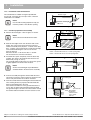
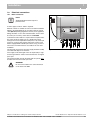
fig. 24 DBA
If the supply cord is damaged, it must be replaced by a registered Corgi installer to avoid a hazard and must be an original
spare part.
The electrical supply for both the boiler and the system must
be taken from the same fused spur outlet.
WARNING!
Do not connect 230V to the connection block
on the back of the DBA.
Subject to modifications resulting from technical improvements!
Boulter Buderus Ltd. • http://www.boulter-buderus.co.uk
Installation and maintenance instructions for Buderus 500 - 24/C and 500 - 28/C • 02/2005
21
DHW sensor
22
Gas valve
1
4
5
3
2
3WV
~
M
~
PUMP
JP4
PE
N
2
1
3
2
3
N
L
L
1
3
4
5
N
L
PE
2
1
2
3
Safety sensor
N
L
1
2
5
JP3
1
HOT surface ignitor
6
14
15
3
2
1
9
8
4
7
17
15
16
11
10
L
N
Switch contact
0 VAC
24 VAC
10
JP4
7
6
1
13
2
Flow sensor
12
JP3
Subject to modifications resulting from technical improvements!
High voltage
JP2
4
3
1
7
6
5
4
3
2
1
DBA
MAINS SWITCH
MAINS
230 VAC 50 Hz
JP1
5
4
6
Ionisation electrode
DBA
1
11
Flue gas thermostat
3-WAY VALVE (do not
use for 500-24/C and 28/C)
24 VAC
HW TANK SENSOR (do not
use for 500-24/C and 28/C)
RTH-CONVERTER OR
MODULINK 250 RF
JP4
pin 1
pin 17
pin 1
pin 1
pin 17
pin 4
pin 1
JP2
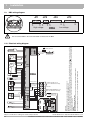
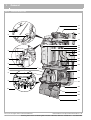
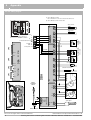
For location of individual components, see service section and the exploded views in this manual.
JP2
pin 6
JP1
IMPORTANT
The wires in this mains lead are coloured in accordance with the following code:
GREEN AND YELLOW - EARTH ; BLUE - NEUTRAL ; BROWN - LIVE
As the colours of the wires in the mains lead of of the appliance may not correspond with the coloured markings identifying the terminals in your connector proceed as follows:
The wire coloured green and yellow must be connected to the terminal on the connector marked with the letter E or by the earth symbol
or coloured green or green-andyellow. The wire coloured brown must be connected to the terminal marked with the letter L or coloured red. The wire coloured blue must be connected to the terminal marked
with the letter N or coloured black.
WARNING
THIS APPLIANCE MUST BE EARTHED
Ensure that your appliance is connected correctly - if you are in any doubt consult a qualified electrician.
JP1
MAINS
230 VAC 50 Hz
1.9
M
FAN
1
Installation
DBA wiring diagram
JP3
Low voltage
WARNING!
Do not connect 230V to the connection block on the back of the DBA.
1.10 Electrical wiring diagram
Boulter Buderus Ltd. • http://www.boulter-buderus.co.uk
Installation and maintenance instructions for Buderus 500 - 24/C and 500 - 28/C • 02/2005
Installation
1
1.10.1 External controls
The wall-mounted condensing gas combi boiler can be fitted
with the following external controls.
–
a ModuLink 250 RF (see subsection 1.10.2) or other
recommended Boulter Buderus 24V controls;
–
a room-temperature control device at 230V connected to
the rth-converter (see subsection 1.10.3);
–
or an ON/OFF temperature controller, volt free
(see subsection 1.10.4).
1.10.2 ModuLink 250 RF connection
The ModuLink 250 RF thermostat modulates on room
temperature.
The Boulter Buderus boilers work most efficient with Boulter
Buderus thermostats. Therefore these thermostats are recommended by Boulter Buderus.
NOTE
See the instructions of the other Boulter
Buderus thermostats for installation instructions.
Receiver bracket installation
1
NOTE
The receiver is not waterproof. Avoid water
coming into contact with the receiver when
servicing the boiler.
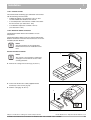
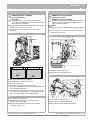
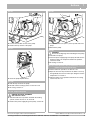
z Remove the casing of the receiver (fig. 25, item 1).
fig. 25 Receiver bracket
z Connect the thermostat's cable (supplied with the
thermostat) to the receiver (fig. 26).
z Refit the casing (fig. 26, item 1).
1
230V
fig. 26 Connect cable
Subject to modifications resulting from technical improvements!
Boulter Buderus Ltd. • http://www.boulter-buderus.co.uk
Installation and maintenance instructions for Buderus 500 - 24/C and 500 - 28/C • 02/2005
23
1
Installation
z Slide the receiver into the bracket (supplied with the boiler)
so that it is secured (fig. 27).
fig. 27 Place receiver into bracket
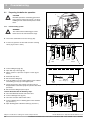
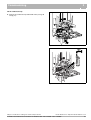
z Remove the boiler's casing.
fig. 28 Remove casing
z Remove the user manual.
z Slide the receiver in the guide rails on the bottom part of the
boiler (fig. 29).
z Fold the user manual and place between the frame and the
receiver bracket.
fig. 29 Place receiver
Subject to modifications resulting from technical improvements!
24
Boulter Buderus Ltd. • http://www.boulter-buderus.co.uk
Installation and maintenance instructions for Buderus 500 - 24/C and 500 - 28/C • 02/2005
Installation
1
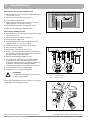
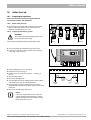
z Connect the black pre-wired lead to a permanent live
supply (from the same fused isolator as all other controls
on the heating system), L N E (fig. 24).
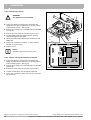
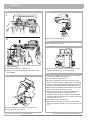
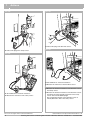
z Remove the securing screw of the DBA and lower the DBA
(see fig. 30).
1
2
fig. 30 Lower the DBA
z Disconnect the twin cable of the rth-converter from terminal
1 and 2 of the connection block (see fig. 31, item 1) on the
back of the DBA.
1
z Connect the cable of the ModuLink 250 RF receiver to
terminal 1 and 2 of the room thermostat connection on the
back of the DBA (see fig. 31, item 1).
RTHconverter
fig. 31 Room thermostat connection on DBA
Subject to modifications resulting from technical improvements!
Boulter Buderus Ltd. • http://www.boulter-buderus.co.uk
Installation and maintenance instructions for Buderus 500 - 24/C and 500 - 28/C • 02/2005
25
1
Installation
1.10.3 External 230V controls
WARNING!
This appliance must be earthed.
z Connect the black pre-wired lead to a permanent live
supply (from the same fused isolator as all other controls
on the heating system), L N E (fig. 24).
z Remove the securing screw of the DBA and lower the DBA
(see fig. 30).
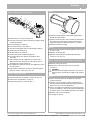
z Remove the cover of the rth-converter (fig. 32, item 1).
z Feed the 230V switch live and neutral (from external
controls) through the cable gland.
1
z Identify the 230V terminal block by the shaded area and
230V label.
2
3
z Connect the switch live to terminal "1" and a neutral to
terminal "2" (fig. 32, item 2).
z Replace covers.
NOTE
Terminal 3 (fig. 32, item 2) is not used.
1.10.4 Volt free external control device connection
z Connect the black pre-wired lead to a permanent live
supply (from the same fused isolator as all other controls
on the heating system), L N E (fig. 24).
z Remove the securing screw of the DBA and lower the DBA
(see fig. 30).
z Remove the cover of the rth-converter (fig. 32, item 1).
fig. 32 Connection box - 230 Volt and Volt free connection
z Lead the control device wire through the cable lead.
z Fix the wire to terminal 1 and 2 of the volt free connection
(fig. 32, item 3).
Subject to modifications resulting from technical improvements!
26
Boulter Buderus Ltd. • http://www.boulter-buderus.co.uk
Installation and maintenance instructions for Buderus 500 - 24/C and 500 - 28/C • 02/2005
Installation
1
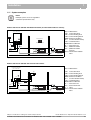
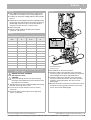
1.11 System examples
NOTE
Example systems are to be regarded as
schematic representations only.
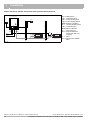
Buderus 500-24/C or 500-28/C with ModuLink 250 RF (or other Boulter Buderus controls)
Condensing gas boiler
500 – 24C / 28C
RT/programmer
CB
PL
ModuLink 250 RF
JB
RV
CHF
CHR
DHW
TRV
LSV
radiator
MCW
LSV
radiator
LSV
other rooms
reference room / main living area
Key to abbreviations:
CB = Connection Block
CHF = Central Heating Flow
CHR = Central Heating Return
DHW= Domestic Hot Water
JB = Junction Box/RTH Relay
LSV = Lockshield Valve
MCW=Mains Cold Water
PL = Permanent Live
RT = ModuLink 250 RF
RV = ModuLink 250 RF
Receiver
TRV = Thermostatic Radiator
Valve
fig. 33
Buderus 500-24/C or 500-28/C with external 230V controls
Condensing gas boiler
500 – 24C / 28C
Key to abbreviations:
RT
CB
PL
JB
T
CHF
DHW
CHR
TRV
LSV
radiator
MCW
LSV
reference room / main living area
radiator
LSV
other rooms
CB = Connection Block
CHF= Central Heating Flow
CHR = Central Heating Return
DHW= Domestic Hot Water
JB = Junction Box/RTH Relay
LSV = Lockshield Valve
MCW=Mains Cold Water
PL = Permanent Live
RT = Room Thermostat
T = Timer
TRV = Thermostatic Radiator
Valve
fig. 34
Subject to modifications resulting from technical improvements!
Boulter Buderus Ltd. • http://www.boulter-buderus.co.uk
Installation and maintenance instructions for Buderus 500 - 24/C and 500 - 28/C • 02/2005
27
1
Installation
Buderus 500-24/C or 500-28/C with external Volt Programable Room thermostat
Condensing gas boiler
500 – 24C / 28C
PRT
CB
PL
JB
CHF
DHW
CHR
TRV
LSV
radiator
MCW
LSV
reference room / main living area
radiator
LSV
other rooms
Key to abbreviations:
CB = Connection Block
CHF= Central Heating Flow
CHR = Central Heating Return
DHW= Domestic Hot Water
JB = Junction Box/RTH Relay
LSV = Lockshield Valve
MCW=Mains Cold Water
PL = Permanent Live
PRT = Programable Room
Thermostat (Volt Free
Contacts)
T = Timer
TRV = Thermostatic Radiator
Valve
fig. 35
Subject to modifications resulting from technical improvements!
28
Boulter Buderus Ltd. • http://www.boulter-buderus.co.uk
Installation and maintenance instructions for Buderus 500 - 24/C and 500 - 28/C • 02/2005
Commissioning
2
2
Commissioning
When a boiler starts up there are a couple of things that
happen. Below is a short process description:
When there is a heat demand:
The fan starts up and the glow ignitor turns on.
When there is a DHW request then the three-way-valve
switches from CH operation to DHW operation.
The pump starts up as soon as the three-way-valve is in the
right position.
Once all the requirements are met (glow ignitor is hot enough,
fan is operating at the correct speed and the pump is on) then
the gas valve will open.
Now a flame may or may not develop, but the glow ignitor
extinguishes. A flame will establish and the glow ignitor extinguishes. The operating controls are released once a flame is
sensed. After a possible check, the boiler will deliver the
requested output.
Should the flow check fail, the boiler will shut down for a short
while and then try to start up again.
If no flame develops then the gas valve closes and the fan
continues to run to post purge. The boiler will try to start up
three times. If there still is no flame developing after three
times, then the boiler will lock-out.
When the heat demand stops:
The gas valve closes.
The fan will keep going for a short while to post purge the
appliance.
The pump will continue for a while to disperse any remaining
heat energy from the boiler to the heating system.
If there has been a heat request then the three-way-valve will
switch back to the central heating setting.
Follow the steps described in this chapter to properly commission the boiler and fill out the commissioning log book.
NOTE
If a fault occurs, then refer to the servicing
manual or contact Boulter Buderus.
Subject to modifications resulting from technical improvements!
Boulter Buderus Ltd. • http://www.boulter-buderus.co.uk
Installation and maintenance instructions for Buderus 500 - 24/C and 500 - 28/C • 02/2005
29
2
2.1
Commissioning
Preparing the boiler for operation
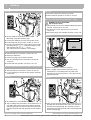
1
CAUTION
DO NOT operate the condensing gas boiler if
large amounts of dust are present, e.g. due to
building work in and around the place of installation.
2.1.1
Fill the heating system
WARNING
The wall-mounted condensing gas combi
boiler must not be activated at this stage.
z Loosen the automated air vent one turn (fig. 36).
fig. 36 Automatic air vent
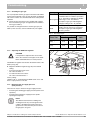
z If necessary open the CH flow and CH return servicing
valves (fig. 37, item 1 and 2).
3
MCW
inlet
CH
flow
Gas
DHW
outlet
CH
return
1
2
fig. 37 servicing shut off valves
z Connect filling loop (fig. 38).
z Open both stop valves (fig. 38).
z Fill the system to a pressure of approx. 1.5 bar (fig. 37,
item 3).
stop
valve
z Shut both stop valves.
double
check
valve filling loop
z Disconnect the filling loop.
z Vent all radiators from air starting with the lowest radiator
and working your way up to the highest point.
z Check the pressure after venting. If the pressure has
dropped under 1.0 bar then top up the system as described
previously.
stop
valve
MCW
inlet
CH
return
fig. 38 Connecting filling loop
z Disconnect the filling loop and cap off.
To drain the boiler take the following steps:
z Close the MCW inlet and the CH return valve.
1
z Connect drainage hose (fig. 39).
z Close the CH return and CH flow valves.
z Connect draining hose to draining point on the manifold
(fig. 39, item 1).
drainage hose
stop valve
stop
valve
z Open draining point to drain the boiler (fig. 39, item 1).
CH
flow
MCW
inlet
CH
return
drain
Drain
fig. 39 Draining the boiler
Subject to modifications resulting from technical improvements!
30
Boulter Buderus Ltd. • http://www.boulter-buderus.co.uk
Installation and maintenance instructions for Buderus 500 - 24/C and 500 - 28/C • 02/2005
Commissioning
2
Fill the condensate trap
z Remove the condensate trap and fill with water (see fig. 40
and fig. 41).
fig. 40 Disconnect hose from condensate trap
fig. 41 Remove the condensate trap and fill with water
Subject to modifications resulting from technical improvements!
Boulter Buderus Ltd. • http://www.boulter-buderus.co.uk
Installation and maintenance instructions for Buderus 500 - 24/C and 500 - 28/C • 02/2005
31
2
2.1.2
Commissioning
DBA adjustments
The boiler is equipped with a DBA. This is the internal control
of the boiler. The DBA is located behind the access panel.
3
4
5
6
The DBA allows you to operate the boiler and to make adjustments in its settings.
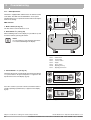
DBA overview:
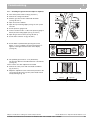
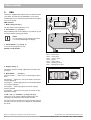
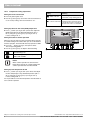
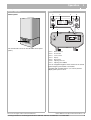
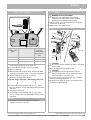
1. Mains switch (see fig. 42)
Use this switch to turn the boiler on or off.
2. Reset button "B" (see fig. 42)
2
1
7
When a blinking code is in the display, it is possible to try and
restart the boiler by pressing this button.
NOTE
It is not possible to reset the boiler when there
is no fault code blinking in the display.
fig. 42 DBA
item 1:
mains switch
item 2:
"reset" button
item 3:
"service" button
item 4:
display
item 5:
"menu" button
item 6:
adjusting arrow up
item 7:
adjusting arrow down
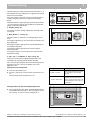
3. Service Button "A" (see fig. 42)
The boiler will operate on partial load when the Service button
"A" is pressed once. An open-end spanner "F" appears in the
top left hand corner of the display (fig. 43).
fig. 43 DBA with open-end spanner
Press the C button if you want to make sure that the boiler is
actually operating at partial load ('Lo' appears in the display,
fig. 44).
fig. 44 DBA display Lo
Subject to modifications resulting from technical improvements!
32
Boulter Buderus Ltd. • http://www.boulter-buderus.co.uk
Installation and maintenance instructions for Buderus 500 - 24/C and 500 - 28/C • 02/2005
Commissioning
2
The boiler operates at full load when the Service button "A" is
pressed again. An open-end spanner "F" appears in the top left
hand corner of the display.
Press the C button if you want to make sure that the boiler is
actually operating at full load ('Hi' appears in the display,
fig. 45).
The boiler returns to regular operation when the Service button
"A" is pressed once again or after the boiler has operated at
partial- or full load for 30 minutes.
fig. 45 DBA display Hi
4. Display (see fig. 42)
The display visualizes settings, adjustments and fault codes
(see fig. 46).
5. Menu button "E" (see fig. 42)
The menu button "E" allows you to scroll through the menu
items.
Pressing the E button once, the current warm start function setting is displayed.
Pressing the E button again gives the current DHW temperature setting is displayed.
fig. 46 DBA display
Pressing the E button again gives the current setting of
summer operation.
Pressing the E button once more gives the current CH flow
temperature setting.
6. and 7. Up "C" and Down "D" keys (see fig. 42)
These keys can be used for adjusting temperatures and
activating or de-activating certain summer operation.
The C key when pressed gives the current operating status of
the boiler. Press the D key once to display the current
DHW flow in l/m.
Setting the warm start function
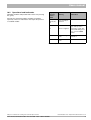
Setting
Meaning
H - ECO / cold start
More energy efficient, less chance
of calcification, longer waiting
periods.
I - comfort / warm start
Maximum comfort due to short
waiting period for warm water.
Not as energy efficient as the cold
start and there is more chance of
calcification.
z Press the menu button once.
z Use the C and D keys to turn the warm start function on or
off.
Factory setting: warm start function is "on".
table 3
Warm start function
Setting the domestic hot water (DHW) temperature
z Press E button twice then adjust the DHW temperature to
the desired temperature (40 °C - 60 °C) using the C and D
keys (see fig. 47, item 1). Factory setting is 48 °C.
1
2
fig. 47 DBA – adjusting arrows
Subject to modifications resulting from technical improvements!
Boulter Buderus Ltd. • http://www.boulter-buderus.co.uk
Installation and maintenance instructions for Buderus 500 - 24/C and 500 - 28/C • 02/2005
33
2
Commissioning
Setting the boiler to summer operation
When you want to make sure that your boiler will not operate
for central heating in the summer then you can set the boiler to
summer operation. The boiler will then only operate for DHW.
z Press the E button (see fig. 47, item 2) three times.
The current setting blinks.
z Use the C or D keys to adjust to desired setting.
Central heating is on.
Central heating is off (summer operation).
DHW is still available.
NOTE
When summer operation is active then the
boiler will not operate for central heating until
summer operation has been deactivated.
Setting the flow temperature
z Press E button (see fig. 47, item 2) four times then adjust
the flow temperature to the desired temperature
(30 °C – 80 °C) using the C and D keys (see fig. 42,
item 1). Factory setting is 80 °C.
It is not possible to set the flow temperature when the boiler is
set to summer operation.
Frost protection
The boiler has an automatic frost protection. When the CH flow
temperature drops below 7 °C then the boiler will start up.
2.1.3
Checking for gas leaks
Use a suitable pressure gauge for the different pressure readings. It should be able to handle pressures up to 50 mbar with
an accuracy of 0.01 mbar minimum.
z Disconnect the system from the power supply.
z Check all sections of gas pipework and connections for
signs of leaks before starting up the system for the first
time. If a leak is detected during tightness testing, use an
approved leak detector to check all connections for
possible escapes. The product must be certified as a gas
leak-testing agent. DO NOT allow the product to come into
contact with electrical wiring.
The test pressure of the gas pipe when the gas shut off valve
is open may not exceed 150 mbar.
ATTENTION
Check the used measuring nipples for gas
tightness.
Subject to modifications resulting from technical improvements!
34
Boulter Buderus Ltd. • http://www.boulter-buderus.co.uk
Installation and maintenance instructions for Buderus 500 - 24/C and 500 - 28/C • 02/2005
Commissioning
2.1.4
Checking the gas type
It is very important that the gas type to which the boiler will be
connected corresponds to the gas type the boiler is equipped
with. If this is not the case, then the boiler must not be put into
operation.
2
Type of gas
When delivered ready for operation and set
to Wobbe index 14.1 kWh/m3 (referred to
15 °C, 1013 mbar), applicable for Wobbe
Natural gas H index range 11.3 to 15.2 kWh/m3.
z Check the gas type with your gas supplier and compare
this to the boiler's gas type as registered on the identfication tag (see table 5).
It is possible to change the boiler to another gas type (see
table 4). This accessory can be ordered from your supplier.
Inscription on gas-type indicating label:
Category setting: G 20 - 2E_20 mbar
After adaptation by a CORGI registered
installer, the unit can be run on propane.
Inscription on gas-type indicating label:
3P G 31_37 mbar
LPG P
table 4
Gas-supply types
Type of gas
Gas injectors ∅ [mm]
Buderus 500
24/C
28/C
Venturi
tubes
Natural gas H
(G20)
4.45
4.45
Standard
Propane P
(LPG)
3.45
3.45
Standard
table 5
2.1.5
Factory settings of gas burners
Gas injector diameter
Adjusting the DHW flow regulator
CAUTION
It is important to adjust the flow of hot water,
due to the resistance of the pipes in the installation and the differences in water pressure.
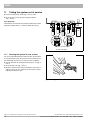
The DHW flow regulator is located on the bottom frame of the
boiler (see fig. 48).
z Adjust the DHW flow regulator (fig. 48) to the desired
setting:
–
To increase the flow of hot water:
turn valve clockwise “+”.
–
To reduce the flow of hot water:
turn valve counterclockwise “-”.
fig. 48 DHW flow regulator
Factory setting:
10 l/min of 48 °C, assuming that the DHW cold is 10 °C and
there is a pre-pressure of 2.5 bar.
2.1.6
Measuring the gas-supply pressure
(flow pressure)
There are two ways to measure the gas-supply pressure:
–
measuring the standing gas-supply pressure (boiler not in
operation);
–
measuring the working gas-supply pressure (boiler
operating at full power).
NOTE
The difference between the standing and
working pressure may never be greater than
5 mbar. If the difference between the two is
greater than 5 mbar then the pressure loss in
the gas pipe is too great.
Subject to modifications resulting from technical improvements!
Boulter Buderus Ltd. • http://www.boulter-buderus.co.uk
Installation and maintenance instructions for Buderus 500 - 24/C and 500 - 28/C • 02/2005
35
2
Commissioning
Measuring the standing gas-supply pressure
z Take the boiler out of service by pressing the mains switch
(fig. 49, item 1) to "0".
z Close the gas shut off valve (fig. 50, item 1).
z Set the pressure gauge to "0".
z Attach a tube from the pressure gauge to the gas test
nipple (the lower one, see fig. 51, item 2).
z Slowly open the gas shut off valve (fig. 50, item 2).
z Measure the standing gas-supply pressure.
1
2
Measuring the working pressure
z Take the boiler out of service by pressing the mains switch
(fig. 49, item 1) to "0".
fig. 49 DBA front
z Close the gas shut off valve (fig. 50, item 1).
z Set the pressure gauge to "0".
z Attach a tube from the pressure gauge to the gas test
nipple (the lower one, see fig. 51, item 2).
z Slowly open the gas shut off valve (fig. 50, item 2).
z Open at least two radiators.
z Set the mains switch (fig. 49, item 1) to "1".
z Create a heat demand by pressing the service button "A"
(fig. 49, item 2), until an open-end spanner "F" appears in
the top left hand corner of the display.
z Measure the working gas-supply pressure.
drain
z The working gas-supply pressure should be between:
a minimum of 17 mbar and a maximum of 25 mbar
(nominal connection pressure of 20 mbar) for Natural gas.
a minimum of 30 mbar and a maximum 50 mbar
(nominal connection pressure 37 mbar for Propane "P"
z Pull off the tube from the gas testing nipple.
1
z Tighten the screw of the gas testing nipple.
2
ATTENTION
If the required connection pressure is incorrect,
contact your gas supplier.
fig. 50 Gas valve
item 1:
Gas valve closed
item 2:
Gas valve open
Ensure that all disturbed joints and connections are checked
for gas tightness on completion of tasks.
fig. 51 Measuring the gas-supply pressure
Subject to modifications resulting from technical improvements!
36
Boulter Buderus Ltd. • http://www.boulter-buderus.co.uk
Installation and maintenance instructions for Buderus 500 - 24/C and 500 - 28/C • 02/2005
Commissioning
2.1.7
2
Checking the gas/air ratio and adjust as required
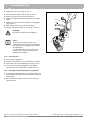
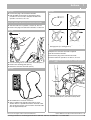
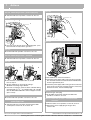
z Turn mains power switch to "0" (fig. 49, item 1).
z Remove the casing of the boiler.
z Shut the gas shut off valve underneath the boiler
(see fig. 50, item 1).
z Open at least two radiators.
z Open the top measuring nipple (see fig. 52, item 1) with
two turns.
z Set the pressure gauge to "0".
z Connect a tube from the "+" side of the pressure gauge to
burner-pressure testing nipple (see fig. 52, item 2)
z Open the gas shut off valve (see fig. 50, item 2).
z Set the mains switch to "1" (fig. 49, item 1).
fig. 52 Check the gas/air ratio
z Set the boiler to partial load by pressing the service
button "A" once. A symbol of an open-end spanner "F"
appears in the upper left hand corner of the display
(see fig. 53).
fig. 53 DBA with open-end spanner
z The optimum gas/air ratio is - 5 Pa (-0.05 mbar).
The pressure difference should be between -10 and 0 Pa
(see fig. 54).
wrong
correct
wrong
If this is not the case then adjustment is needed:
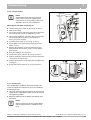
z Remove the safety screw with a flat head screwdriver
(fig. 55, item 1).
z Adjust the adjustment screw of the burner pressure to the
correct gas/air ratio using a (4 mm) socket head wrench
and by referring to fig. 54.
-15
-0.15
-10
-0.10
left turn
-5
-0.05
0
0.00
5 (Pa)
0.05 (mbar)
right turn
fig. 54 Pressure difference of gas/air ratio at partial load
Subject to modifications resulting from technical improvements!
Boulter Buderus Ltd. • http://www.boulter-buderus.co.uk
Installation and maintenance instructions for Buderus 500 - 24/C and 500 - 28/C • 02/2005
37
2
Commissioning
z Replace the safety screw (fig. 55, item 1).
z Set mains power switch to "0" (see fig. 49, item 1).
z Shut the gas shut off valve (see fig. 50, item 1).
z Remove the tube from from the burner-pressure testing
nipple.
z Tighten the screw on the burner-pressure testing nipple
(fig. 52, item 1).
z Open the gas shut off valve (see fig. 50, item 2).
z Turn the mains power switch to "1" (see fig. 49, item 1).
CAUTION
Check the test nipples for gas tightness.
NOTE
Technically it is not necessary to use a
combustion analyzer for CO2 measurements.
The CO2 level is secured by the gas/air ratio as
described above.
A combustion analyzer, if available, can be
used to confirm CO2 levels (see technical
specifications on page 7).
2.1.8
fig. 55 Adjust gas/air ratio
Gas rating test
z Isolate all other appliances.
z Press the service button "A" to set the boiler to full load.
z Ensure that there is no modulating of the fan gas valve.
z Carry out the Gas Rating procedure as described in
"Essential Gas Safety' 3rd edition on pages 169-176.
2.1.9
Checking for leaks while boiler is in operation
z Use an approved leak detector to check all connections for
possible leaks. The product must be certified as a gasleaktesting agent.
z Do not allow the product to come into contact with the
electrical wiring.
Subject to modifications resulting from technical improvements!
38
Boulter Buderus Ltd. • http://www.boulter-buderus.co.uk
Installation and maintenance instructions for Buderus 500 - 24/C and 500 - 28/C • 02/2005
Commissioning
2
2.1.10 Function testing
NOTE
During initial start-up and annual servicing,
make sure that all control, regulating and
safety devices are in full working order and, if
applicable, check for correct adjustment.
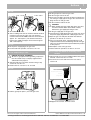
Measuring the ionisation current (fig. 56)
z Turn the mains power switch to "0" (see fig. 49, item 1).
z Remove the casing.
z Loosen the connector-and-socket connection of the ionisation electrode and connect the multimeter in series.
z On the measuring device, select the µ-direct current range.
The measuring device must have a resolution of at
least 1 µA (1 micro ampere).
z Set mains power switch to "1" (see fig. 49, item 1).
z Set the boiler in to partial load by pressing the Service
button "A" once.
fig. 56 Measuring the ionisation current
z Measure the ionisation current. The ionisation current
being checked must measure >2 µA (>2 micro ampere)
direct current.
z Enter the reading on the report form.
z Set the mains power switch to "0" (see fig. 49, item 1).
z Remove multimeter and restore the connector-and-socket
connection to its original state.
z Refit the casing and secure the boiler with the radiator key
(see fig. 57).
z Set the mains power switch to "1" (see fig. 49, item 1).
fig. 57 Refit casing
2.1.11 Handing over
After completing the installation and commissioning of the
system the installer should hand over to the householder by
the following actions:
z Hand over all relevant documentation to the end user and
explain his/her responsibilities under the relevant national
and regional regulations.
z Explain and demonstrate the lighting and shutting down
procedures.
NOTE
Always keep the user manual and installation
and servicing instructions available for feedback.
Subject to modifications resulting from technical improvements!
Boulter Buderus Ltd. • http://www.boulter-buderus.co.uk
Installation and maintenance instructions for Buderus 500 - 24/C and 500 - 28/C • 02/2005
39
3
Inspection
3
Inspection
3.1
General directions
z Do a visual and functional test of the installation.
3.2
Preparing the boiler for inspection
z Disconnect the boiler from the mains power supply.
DANGER OF FATAL INJURY
due to electric shock when system is opened.
z Before opening the system:
disconnect the heating unit at the emergency OFF switch or the corresponding
circuit breaker of the house power supply.
z Ensure that the heating system cannot be
reconnected by accident.
z Remove the burner housing or cover from the heating
boiler.
NOTE
If the gas supply pipes are to be disconnected
from the burner, the housing MUST ONLY be
removed by a qualified service technician and
checked for tightness on reassembly.
3.2.1
Internal leak test
z Disconnect the boiler from the mains power supply.
Do not allow the product to come into contact with the electrical
wiring.
3.2.2
Check the combustion chamber and heat
exchanger for pollution
3.2.3
Check the burner
3.2.4
Check the functioning and safety of the flue gas
exhaust
3.2.5
Check the pre-pressure of the expansion vessel
3.2.6
Check the hot water cylinder for leakage
3.2.7
Check the programming of the room thermostat
Subject to modifications resulting from technical improvements!
40
Boulter Buderus Ltd. • http://www.boulter-buderus.co.uk
Installation and maintenance instructions for Buderus 500 - 24/C and 500 - 28/C • 02/2005
Maintenance
4
4
Maintenance
NOTE
The described cleaning of the burner and heat
exchanger is only necessary when the boiler is
heavily soiled. Otherwise it is sufficient to clean
the burner and heat exchanger with a soft
brush or compressed air without disassembling them.
4.1
Cleaning the heat exchanger and burner
z Switch the boiler off by setting the mains switch to "0"
(see fig. 49, item 1).
z Close the gas shut off valve (see fig. 50, item 1).
z Unlock the securing screw with a radiator key and remove
the casing.
z Loosen the gas connection between the gas supply and
the gas air unit (fig. 58).
1
fig. 58 Loosen gas connection
z Remove the connectors (fig. 59, item 1, 2 and 3) from the
gas air unit.
z Remove the air silencer from the gas air unit
(fig. 59, item 4).
z Then remove the connectors of the ionisation electrode
(fig. 59, item 6) and the glow ignitor (fig. 59, item 5).
6
1
5
2
3
4
fig. 59 Remove connectors of the gas air unit
z By turning the unit a quarter turn (fig. 60, step 1), the unit
can be removed by lifting it out of the boiler (fig. 60, step 2).
2
z Clean the burner when necessary. The burner may only be
cleaned with a soft brush or compressed air.
CAUTION
Replace the burner seal after removing the
burner from the gas air unit.
z Now the front cover of the heat exchanger can be removed
by opening the latches (fig. 58, item 1).
1
fig. 60 Remove gas air unit
Subject to modifications resulting from technical improvements!
Boulter Buderus Ltd. • http://www.boulter-buderus.co.uk
Installation and maintenance instructions for Buderus 500 - 24/C and 500 - 28/C • 02/2005
41
4
Maintenance
z Remove the restrictor baffle from the heat exchanger
(fig. 61, item 1).
z Inspect the heat exchanger. When needed clean the heat
exchanger with a soft brush or compressed air.
1
NOTE
Only when a heat exchanger is heavily soiled
is it recommended to drain the system, to
remove the heat exchanger for cleaning.
z Check the seal for damage. Always replace the seal when
in doubt.
fig. 61 Remove restrictor baffle
z Reassemble in reverse order.
4.2
Cleaning the condensate trap and
syphon
z Remove the condensate trap (fig. 62 and fig. 63).
1
fig. 62 Disconnect hose from condensate trap
z Clean the condensate trap with tapwater and a brush.
z Fill the condensate trap with water and reassemble.
z Undo the condensate drain connection (see fig. 62, item 1)
and remove the syphon.
z Rinse and refit the syphon.
fig. 63 Remove the condensate trap
Subject to modifications resulting from technical improvements!
42
Boulter Buderus Ltd. • http://www.boulter-buderus.co.uk
Installation and maintenance instructions for Buderus 500 - 24/C and 500 - 28/C • 02/2005
Maintenance
4.3
4
Cleaning or replacing the plate heat
exchanger
z Disconnect the boiler from the mains power supply.
z Drain the system (see page 30).
z Remove the condensate trap and the syphon
(see page 31).
z Remove the two screws of the plate heat exchanger
(see fig. 64).
fig. 64 Remove screws of plate heat exchanger
z Remove the plate heat exchanger (fig. 65).
z Hook up a descaling device and clean the plate heat
exchanger.
z Thoroughly rinse the plate heat exchanger before reassembly.
z Replace the o-rings when necessary.
z Open a hot water faucet to rinse and purge the system.
z Close the hot water faucet and reconnect the boiler to the
mains supply.
fig. 65 Remove plate heat exchanger
Subject to modifications resulting from technical improvements!
Boulter Buderus Ltd. • http://www.boulter-buderus.co.uk
Installation and maintenance instructions for Buderus 500 - 24/C and 500 - 28/C • 02/2005
43
5
Appendix
5
Appendix
5.1
Residual pump lift
This graphic shows the amount of pump lift remaining for the
heating system.
Buderus 500-24/C and 500 - 28/C series
400
350
300
Residual pump lift [mbar]
250
275 mbar
at 900 l/h
200
150
100
50
0
0
100
200
300
400
500
600
700
800
900
1000
Flow [l/h]
5.2
Spare parts list
The following are parts commonly required due to damage or expendability. Their failure or absence is likely to affect safety or
performance of this appliance. For a pictorial representation of the part see the respective position number on the exploded view
pictures on page 46.
Description
1
2
3
4
5
6
7
8
9
10
11
12
13
14
15
16
Product No.
Casing
Bracket
Grommet cover
Fan
Fan seal (set of 5 pc.)
Gas injector 2E
Gas valve
Venturi
50mm seal
Air silencer tube
Gas/air supply valve
Syphon
Gas/air supply
Burner seal (set of 2 pc.)
Burner
Heat exchanger - Gas/air supply seal
78155
38092
78145
73639
73640s
73210
73645
73641
73574
73646
73756s
78173
73663
73669s
73668
73728
Subject to modifications resulting from technical improvements!
44
Description
17
18
19
20
21
22
23
24
25
26
27
28
29
30
31
Backside heat exchanger
Gasket heat exchanger
Heat exchanger
Frontside heat exchanger
Sight glass
Combustion divider
Glow ignitor
Ionisation electrode
Ionisation electrode seal (set of 2 pc.)
Glow ignitor seal (set of 2 pc.)
Bracket ionisation electrode and
glow ignitor ( 2 pc.)
Shield glow ignitor
Concentric adapter
100mm Lipring
60mm seal (bottom flue gas pipe)
Product No.
73657
73578
73659
78125
73662
73670
78105
38320
73666s
73665s
73667s
38453
78120
78121
73563
Boulter Buderus Ltd. • http://www.boulter-buderus.co.uk
Installation and maintenance instructions for Buderus 500 - 24/C and 500 - 28/C • 02/2005
Appendix
Description
32
33
34
35
36
37
38
39
40
41
42
43
44
45
46
47
48
49
50
51
52
53
5
Product No.
78122
73736
73579
73376
73630
78123
73583
78126
73672
38618
73582s
73580s
73584s
78154
78130
78142
78133
78132
78165
73685
73686
73687
55a
55b
56
57
58
59
60
61
62
63
64
65
66
67
Flue gas pipe
60mm seal (top flue gas pipe)
Flue gas pipe seal
Flue gas thermostat (STL)
Condensate collector
Condensate trap
Connection return
Gas pipe
Connection supply
Automatic airvent
Spring heat exchanger
O-ring heat exchanger (set of 10 pc.)
Heat exchanger seal ( set of 2 pc.)
Safety sensor
Supply pipe
Pump Uper 15-50
Connection return pipe
Return pipe
Connection return combi
Internal mechanism three-way valve
Servomotor three-way valve
Securing pin of the servomotor
Discharge pipe of pressure relief
valve
Pressure relief valve 3 bar
Key to Pressure relief valve 3 bar
By-pass
Expansion vessel pipe
Expansion vessel
Connection plate heat exchanger
DHW flow regulator
DHW flow sensor
–
Flow sensor
–
Plate heat exchanger
O-ring (set of 10 pc.)
Clips (set of 2x3 pc.)
69
70
71
71
72
73
74
CH connector
Sanitary connector
DBA 24/S and 28/C
DBA 24/C
Power switch
Cable harness
Clips (set of 5 pc.)
78161
78162
78127
78199
73660
78129
73653s
54
78134
78198
78202
78143
78135
78163
78167
78138
78137
–
78136
–
78144
78158s
78156s
Subject to modifications resulting from technical improvements!
Description
Product No.
75
76
77
78
79
80
81
82
83
84
85
86
87
88
89
90
91
92
93
94
95
96
97
98
99
100
101
102
103
104
Clips (set of 5 pc.)
Condensate trap seal
Drainpipe seal (set of 5 pc.)
O-ring (set of 10 pc.)
O-ring small (set of 10 pc.)
O-ring 73 x 5
O-ring 48.9 x 2.62
O-ring (set of 10 pc.)
Screw + screwcase (set of 2 pc.)
Drain plug
RTH Converter
O-ring (set of 10 pc.)
¾" Seal (set of 10 pc.)
O-ring (set of 10 pc.)
Cover seal
Seal
O-ring (set of 2x2 pc.)
Seal (set of 10 pc.)
1" Seal (set of 5 pc.)
Casing lock
Cut off cock with pressure gauge
Valve Sanitary Hot
Gas valve
Valve Sanitary Cold
Valve CH return
Spring (set of 5 pc.)
Spring Hydroframe (set of 5 pc.)
½" Seal (set of 10 pc.)
1" Seal (set of 5 pc.)
Connection set combi
73056s
73463
73638s
78151s
78152s
78177
78178
78157s
78181s
78139
78079
38472s
15002s
38478s
78174
73561
73642s
73738s
73527s
73901
78150
75962
78201
75963
75964
73490s
78164s
15033s
73527s
73784
106
–
–
–
Drainplug
Spring gaspipe (set of 5 pc.)
LPG kit 24 kW - 28 kW
O-ring sensor (set of 10 pc.)
O-ring 16x2 pressure relief valve
(set of 10 pc.)
Fuse 2.5 AT (DBA) (set of 10 pc.)
O-ring (large) flow sensor
(set of 10 pc.)
O-ring 9.19 x 2.62 sensor
supply/return (set of 10 pc.)
Screw 4 x 20 Hydroframe
(set of 5 pc.)
Screw M5 x 30 Pump
(set of 5 pc.)
Receiver bracket
Wall spacing frame
78140
73531
73734
38434s
–
–
–
–
–
–
107
108
73729s
73739s
78153s
78175s
78179s
78180s
78200
75972
Boulter Buderus Ltd. • http://www.boulter-buderus.co.uk
Installation and maintenance instructions for Buderus 500 - 24/C and 500 - 28/C • 02/2005
45
5
Appendix
Exploded view Combi unit (Buderus 500-24/C, 500-28/C)
27
41
42
43
44
23
24
40
26
28
30
25
29
88
11
5
4
74
45
2
108
31
14
13
16
15
32
6
91
7
17
46
18
88
34
92
42 8
33
91
19
38
75
36
9
35
88
21
10
43
39
44
90
76
3
20
37
93
3
22
71
12
89
72
107
85
58
73
56
65
1
67
67
79
68
67
66
63
94
86
62
66
55b
67
78
67
84
61
67
67
88
74
55a
79
50
57
69
87
77
78
84
101
100
100
49
59
100
54
67
70
83
70
51
81
106
74
67
103
102
102
106
87
87
104
67
52
69
53
88
48
60
97
74
82
67
99
96
95
47
67
Subject to modifications resulting from technical improvements!
46
80
83
98
Boulter Buderus Ltd. • http://www.boulter-buderus.co.uk
Installation and maintenance instructions for Buderus 500 - 24/C and 500 - 28/C • 02/2005
Index
6
6
Index
A
Automatic air vent . . . . . . . . . . . . . . . . . . . . . . . . . . . . . . . . 30
B
Bracket for ModuLink 250 RF . . . . . . . . . . . . . . . . . . . . . . . 10
E
Electrical connections
Mains connection . . . . . . . . . . . . . . . . . . . . . . . . . . . . . 21
H
Horizontal flue . . . . . . . . . . . . . . . . . . . . . . . . . . . . . . . . . . . 16
I
Inspection . . . . . . . . . . . . . . . . . . . . . . . . . . . . . . . . . . . . . . 40
M
Maintenance . . . . . . . . . . . . . . . . . . . . . . . . . . . . . . . . . . . . 41
manifold assembly . . . . . . . . . . . . . . . . . . . . . . . . . . . . . . . 11
P
Pipe connections
Hot-water connection . . . . . . . . . . . . . . . . . . . . . . . . . . 12
Place of installation . . . . . . . . . . . . . . . . . . . . . . . . . . . . . . . 10
T
Technical specifications . . . . . . . . . . . . . . . . . . . . . . . . . . . . 7
Type of gas supply . . . . . . . . . . . . . . . . . . . . . . . . . . . . .7, 35
V
Vertical flue . . . . . . . . . . . . . . . . . . . . . . . . . . . . . . . . . . . . . 17
W
Wobbe index . . . . . . . . . . . . . . . . . . . . . . . . . . . . . . . . . . . . 35
Subject to modifications resulting from technical improvements!
Boulter Buderus Ltd. • http://www.boulter-buderus.co.uk
Installation and maintenance instructions for Buderus 500 - 24/C and 500 - 28/C • 02/2005
47
Heating system specialist:
30 Whitehouse Road
Ipswich
Suffolk, IP1 5JA
Telephone: 0044 (0)1473 - 241555
Fax: 0044 (0)1473 - 241321
Sales Boilers: 0044 (0)1473 - 243780
Customer Services (gas): 0044 (0)870 - 421 5933
Technical Product Support (gas): 0044 (0)870 - 421 5944
http://www.boulter-buderus.co.uk
e-mail: [email protected]
721.531A - 2219A - 02/2005
Boulter Buderus Ltd.
Magnet House
7215 3300 - 02/2005 GB(EN)
For the user
Users manual
Wall-mounted condensing gas combi boiler
Buderus 500 - 24/C
Buderus 500 - 28/C
Please read thoroughly before operating the unit
Preface
Introduction
Please read these instructions and follow them carefully for a
safe and economical use of your combi boiler.
Important general instructions for use
This device should only be used for its intended purpose and
in accordance with the regulations.
It is a requirement and in your own interest, and that of safety
that this boiler must be installed by a CORGI registered
installer, in accordance with the relevant requirements of the
current Gas Safety (Installation and Use) Regulations,
The Building Regulations, current I.E.E. Wiring Regulations
and the relevant British Standard Codes of Practise.
The device may only be used in combination with the units,
accessories and spare parts listed in the installation and
maintenance instructions.
Other combinations of units, accessories and consumables
are only to be used if they completely fulfil the specifications
involved, and if system performance and safety are not
affected in any way.
Subject to technical modifications
As a result of our policy of constant development, there may be
small differences with respect to illustrations, functional steps
and technical data.
Cleaning
For normal cleaning simply dust with a dry cloth. To remove
stubborn marks and stains, wipe with a damp cloth and soap
and finish off with a dry cloth.
DO NOT use abrasive cleaning materials.
G. C. Aplliance No. :
Buderus 500-24/C :
41-110-04
Buderus 500-28/C :
41-110-03
Subject to modifications resulting from technical improvements!
2
Boulter Buderus Ltd. • http://www.boulter-buderus.co.uk
Users manual for Buderus 500 - 24/C and 500 - 28/C • edition 02/2005
Users manual
Contents
Preface
1
Safety precautions. . . . . . . . . . . . . . . . . . . . . 4
Dear Customer,
2
Installation area / boiler room. . . . . . . . . . . . 4
3
Working in the heating system. . . . . . . . . . . 4
4
Functions of the system and operating
instructions . . . . . . . . . . . . . . . . . . . . . . . . . . 4
5
Maintenance . . . . . . . . . . . . . . . . . . . . . . . . . . 4
6
Conversion to LPG . . . . . . . . . . . . . . . . . . . . 4
7
Abbreviations . . . . . . . . . . . . . . . . . . . . . . . . . 4
8
Permanent clearances. . . . . . . . . . . . . . . . . . 5
9
DBA . . . . . . . . . . . . . . . . . . . . . . . . . . . . . . . . . 6
Your Buderus 500 Series wall-mounted condensing gas
combi boiler has been designed and built in accordance with
state-of-the-art technological standards and the recognised
safety rules. Special focus has been placed on operator convenience in this respect.
Carefully read the safety instructions and operating manual to
ensure safe, economic and ecologically beneficial use of the
unit.
Due to the high efficiency of the boiler a plume of water vapour
may form at the terminal during operation. This is normal.
10
Initial start-up . . . . . . . . . . . . . . . . . . . . . . . . . 7
10.1 Preparing for operation . . . . . . . . . . . . . . . . . . 7
10.2 Operational and fault codes . . . . . . . . . . . . . . . 9
11
Taking the system out of service . . . . . . . . 10
11.1 Draining the system in case of frost. . . . . . . . 10
Subject to modifications resulting from technical improvements!
Users manual for Buderus 500 - 24/C and 500 - 28/C • edition 02/2005
Boulter Buderus Ltd. • http://www.boulter-buderus.co.uk
3
Users manual
1
Safety precautions
3
DANGER!
If you smell gas:
DANGER!
Only a CORGI registered Engineer is to be
entrusted with the installation of this boiler, the
gas supply and the flue connection. Commissioning, Servicing and any Repairs must be carried
out by a competent person i.e.:
a CORGI Registered Engineer.
All CORGI Registered Installers carry a CORGI
identification card and have a registration
number. Both should be recorded in your boiler
logbook. You can check if your installer/Engineer
is registered by telephoning 01256 372300 or by
writing to:
CORGI, 1 Elmwood, Chineham Business Park,
Crockford Lane, Basingstoke. RG24 8WG.
1. No naked flames ! Do not smoke !
2. Avoid sparks ! Do not operate electrical
switches. Do not use the telephone, plugin devices of any kind or the doorbell!
3. Shut off the main gas supply!
4. Open windows and doors!
5. Warn building occupants and evacuate
the building!
6. Call the gas distributor (under 'GAS' in the
telephone directory) from outside the
building!
NOTE
NOTE
In the event of any other type of incident, shut off
the main gas supply and electric supply to the
appliance and seek assistance from a CORGI
registered engineer.
2
Working in the heating system
Installation area / boiler room
It is mandatory to clean and service the system
once a year ! This includes an inspection of the
entire system to see if it is in full working order.
Any faults and defects found in the course of
inspection must be rectified immediately.
It is recommended to enter into a service contract with
a specialist company.
DANGER!
The air intake and outlet openings must not be
reduced in size or closed.
4
DANGER!
Functions of the system and
operating instructions
The installer should familiarize the user with the functions and
operation of the heating system and ensure that a complete set
of technical documentation is supplied.
Do not store or use inflammable materials or
liquids near the heating boiler.
NOTE
To prevent the boiler from being damaged, care
must be taken not to contaminate the combustion
air with halogenated hydrocarbons (e. g. contained in aerosol sprays, solvents, detergents,
paints, and adhesives), or with high quantities of
dust. The room in which the boiler is installed
must be frost-proof and be well ventilated.
5
Maintenance
The appliance should be serviced at least once a year by a
CORGI registered installer.
6
Conversion to LPG
The boiler is suited for natural gas. To convert the boiler to
LPG you must contact a CORGI registered fitter.
7
Abbreviations
DBA = Control unit (Dedicated Burner Automat)
MCW inlet = Mains Cold Water inlet
DHW outlet= Domestic Hot Water warm outlet
CH flow = Central Heating flow
CH return = Central Heating return.
Subject to modifications resulting from technical improvements!
4
Boulter Buderus Ltd. • http://www.boulter-buderus.co.uk
Users manual for Buderus 500 - 24/C and 500 - 28/C • edition 02/2005
Users manual
8
Permanent clearances
8 mm
8 mm
21 mm
8 mm
21 mm
The boiler must be located in an area with the following
permanent clearances.
NOTE
The permanent clearances do not change if a
wall spacing frame is used.
The installer or service engineer must be able
to create sufficient service clearences. These
clearences should have been considered at
time of installation.
Subject to modifications resulting from technical improvements!
Users manual for Buderus 500 - 24/C and 500 - 28/C • edition 02/2005
Boulter Buderus Ltd. • http://www.boulter-buderus.co.uk
5
Users manual
9
DBA
The boiler is equipped with a DBA. This is the internal control
of the boiler. The DBA is located behind the access panel.
3
4
5
6
The DBA allows you to operate the boiler and to make adjustments in its settings.
DBA overview:
1. Mains switch (see fig. 1)
Use this switch to turn the boiler on or off.
2. Reset button "B" (see fig. 1)
2
When a blinking code is in the display, it is possible to try and
restart the boiler by pressing this button.
1
7
NOTE
It is not possible to reset the boiler when there
is no fault code blinking in the display.
3. Service Button "A" (see fig. 1)
Is used for servicing purposes only.
DO NOT use this button!
fig. 1
item 1:
item 2:
item 3:
item 4:
item 5:
item 6:
item 7:
DBA
mains switch
"reset" button
"service" button
display
"menu" button
adjusting arrow up
adjusting arrow down
4. Display (see fig. 1)
The display visualizes settings, adjustments and fault codes
(see fig. 2).
5. Menu button "E" (see fig. 1)
The menu button "E" allows you to scroll through the menu
items.
Pressing the E button once, the current warm start function
setting is displayed.
Pressing the E button again gives the current DHW temperature setting is displayed.
fig. 2
DBA display
Pressing the E button again gives the current setting of
summer operation.
Pressing the E button once more gives the current CH flow
temperature setting.
6. and 7. Up "C" and Down "D" keys (see fig. 1)
These keys can be used for adjusting temperatures and
activating or de-activating certain summer operation.
The C key when pressed gives the current operating status of
the boiler. Press the D key once to display the current DHW
flow in l/m.
Subject to modifications resulting from technical improvements!
6
Boulter Buderus Ltd. • http://www.boulter-buderus.co.uk
Users manual for Buderus 500 - 24/C and 500 - 28/C • edition 02/2005
Users manual
10
Initial start-up
10.1
Preparing for operation
Please also note the user manual supplied with the
external time controls and thermostat.
10.1.1
Check water pressure
z Check the pressure gauge (fig. 3, item 3) located at the
bottom of the boiler for the current system pressure.
Optimum system pressure is 1.5 bar.
10.1.2
Topping up the heating system
WARNING!
The wall-mounted condensing gas boiler must
not be activated at this stage.
DHW
outlet
CH
flow
The system should be filled with untreated mains water.
1
fig. 3
Gas
MCW
inlet
3
CH
return
2
Servicing valves
z Turn off the boiler by setting the mains switch to "0" .
z If necessary open the CH flow and CH return servicing
valves (fig. 3, item 1 and 2).
1
fig. 4
DBA – Mains switch
z Connect filling loop (accessory) (fig. 5).
z Open both stop valves (fig. 5).
z Fill the system to a pressure of approx. 1.5 bar (fig. 3,
item 3).
stop
valve
z Shut both stop valves.
double
check
valve
z Disconnect the filling loop.
z Vent all radiators from air starting with the lowest radiator
and working your way up to the highest point.
z Check the pressure after venting. If the pressure has
dropped under 1.0 bar then top up the system as described
previously.
stop
valve
MCW
inlet
fig. 5
filling
loop
CH
return
Filling loop
z Disconnect the filling loop and cap off.
NOTE
If there are frequent water losses, have the
system examined and repaired by a CORGI
registered installer. Have the inhibitor concentration checked every year.
Subject to modifications resulting from technical improvements!
Users manual for Buderus 500 - 24/C and 500 - 28/C • edition 02/2005
Boulter Buderus Ltd. • http://www.boulter-buderus.co.uk
7
Users manual
10.1.3
Temperature-setting adjustments
Setting
Meaning
H - ECO / cold start
More energy efficient, less chance of
calcification, longer waiting periods.
I - comfort / warm start
Maximum comfort due to short
waiting period for warm water. Not as
energy efficient as the cold start and
there is more chance of calcification.
Setting the warm start function
z Press the menu button once.
z Use the C and D keys to turn the warm start function on
or off. Factory setting: warm start function is "on".
table 1
Warm start function
Setting the domestic hot water (DHW) temperature
z Press E button (see fig. 6, item 2) twice then adjust the
DHW temperature to the desired temperature (40 °C 60 °C) using the C and D keys (see fig. 6, item 1).
Factory setting is 48 °C.
1
Setting the boiler to summer operation
2
When you want to make sure that your boiler will not operate
for central heating in the summer then you can set the boiler to
summer operation. The boiler will then only operate for DHW.
3
z Press the E button (see fig. 6, item 2) three times.
The current setting blinks.
z Use the C and D keys to adjust to desired setting.
fig. 6
DBA – control panel
Central heating is on
Central heating is off (summer operation).
DHW is still available
NOTE
When summer operation is active then the
boiler will not operate for central heating until
summer operation has been deactivated.
Setting the flow temperature for CH
z Press E button (see fig. 6, item 2) four times then adjust
the flow temperature to the desired temperature (30 °C –
80 °C) using the C and D keys (see fig. 6, item 1).
Factory setting is 80 °C.
It is not possible to set the flow temperature when the boiler is
set to summer operation.
Subject to modifications resulting from technical improvements!
8
Boulter Buderus Ltd. • http://www.boulter-buderus.co.uk
Users manual for Buderus 500 - 24/C and 500 - 28/C • edition 02/2005
Users manual
10.2
Operational and fault codes
Operating conditions and possible faults can be seen, pressing
the C key.
All codes not contained in table 2 should be noted down
separately. These are malfunctions that require the presence
of a CORGI installer.
Display after
pressing
service
button
Meaning
0A, 0C, 0E,
0H, 0L, 0U,
0Y
Boiler is ready for
operation
Rectification
6A
Burner not ignited
Press Reset button B
(fig. 6, item 3). If the
burner fails to ignite after
several unblocking operations, consult a CORGI
installer.
-H
Normal heating
mode
Maximum comfort when
set at 60 °C
=H
Normal hot water
mode
table 2
Subject to modifications resulting from technical improvements!
Users manual for Buderus 500 - 24/C and 500 - 28/C • edition 02/2005
Operational and fault codes
Boulter Buderus Ltd. • http://www.boulter-buderus.co.uk
9
Note
11
Taking the system out of service
z Push the mains power switch (fig. 4, item 1) to “0”.
z Close the gas service valve by turning it clockwise
(fig. 7, item 1).
Frost protection
The boiler has an automatic frost protection. When the CH flow
temperature drops below 7 °C then the boiler will start up.
drain
2
1
1: Gas valve closed
2: Gas valve open
11.1
fig. 7
Gas service valve
fig. 8
Draining the system
Draining the system in case of frost
It is not recommended, but if the boiler needs to be shut down
for a longer period of time, then it is necessary to drain the system. Especially when there is a chance for frost conditions.
z Turn off the boiler by setting the mains power to "0" (fig. 4,
item 1).
z Close the gas valve (fig. 7, item 1).
z Drain the system at its lowest point using the stop valves or
radiator (see fig. 8). The automatic air vent at the system’s
highest point must be open.
Subject to modifications resulting from technical improvements!
10
Boulter Buderus Ltd. • http://www.boulter-buderus.co.uk
Users manual for Buderus 500 - 24/C and 500 - 28/C • edition 02/2005
Note
Subject to modifications resulting from technical improvements!
Users manual for Buderus 500 - 24/C and 500 - 28/C • edition 02/2005
Boulter Buderus Ltd. • http://www.boulter-buderus.co.uk
11
Heating system specialist:
30 Whitehouse Road
Ipswich
Suffolk, IP1 5JA
Telephone: 0044 (0)1473 - 241555
Fax: 0044 (0)1473 - 241321
Sales Boilers: 0044 (0)1473 - 243780
Customer Services (gas): 0044 (0)870 - 421 5933
Technical Product Support (gas): 0044 (0)870 - 421 5944
http://www.boulter-buderus.co.uk
e-mail: [email protected]
721.533A - 2219A - 02/2005
Boulter Buderus Ltd.
Magnet House
7214 8900 – 02/2005 GB(EN)
For the installer
Servicing manual
Gas condensing boiler
Buderus 500 - 24/S
Buderus 500 - 24/C
Buderus 500 - 28/C
Please read thoroughly before attempting fault diagnosis
F
The boiler meets the basic requirements of the
appropriate standards and directives.
Conformity has been substantiated by the proper
documents which - together with the declaration of
conformity - are filed with the manufacturer.
Subject to technical modifications!
Constant development efforts may result in minor deviations
in illustrations, functional steps and technical data.
Updating the documentation
If you have suggestions for improvement or have found
discrepancies, please do not hesitate to contact us.
We reserve the right to make technical modifications
2
Boulter Buderus Ltd • http://www.boulter-buderus.co.uk
Servicing manual Gas condensing boiler Buderus 500-24/S, 500-24/C and 500-28/C • Issued 02/2005
box 1
List of contents
box 2
Preface
These service instructions apply to:
Boulter Buderus wall-mounted condensing gas boilers
500 - 24/S, 500 - 24/C and 500 - 28/C.
1
General . . . . . . . . . . . . . . . . . . . . . . . . . . . . . . 4
2
Servicing manual user guide . . . . . . . . . . . 10
Model:
C13(x), C33(x), C53(x), C73(x)
3
Operation . . . . . . . . . . . . . . . . . . . . . . . . . . . 11
Type:
GB/IE II2H3P 20 mbar, 37 mbar
4
Function . . . . . . . . . . . . . . . . . . . . . . . . . . . . 14
Power rating: 230 VAC, 50 Hz, IP X4D
5
Symptoms . . . . . . . . . . . . . . . . . . . . . . . . . . . 17
The boiler unit consists of the following components:
6
Diagnosis . . . . . . . . . . . . . . . . . . . . . . . . . . . 21
– 500
Gas condensing boiler
– 28
Maximum output is 28 kW
Fuse rating:
1.25 Ampere slow blow
7
Actions . . . . . . . . . . . . . . . . . . . . . . . . . . . . . 38
– C
Combination boiler (with integrated hot water
supply)
8
Appendix . . . . . . . . . . . . . . . . . . . . . . . . . . . . 76
– S
System boiler.
9
Index . . . . . . . . . . . . . . . . . . . . . . . . . . . . . . . 77
Important general instructions for use
Only use the boiler in accordance with its designated use and
the service instructions. Installation, maintenance and repair
must be carried out by competent service engineers (e.g.
CORGI registered). Only use the boiler in conjunction with
the accessories and spare parts indicated in the installation,
maintenance and service instructions. Other accessories
and consumables may only be used if they are expressly
provided for the designated use and if system performance
and safety are not affected in any way.
The boiler is suitable for connection to fully pumped, sealed
water systems ONLY. Adequate arrangements for
completely draining the system by provision of draining
valves must be provided in the installation pipework.
Pipework from the boiler is routed downwards as standard,
but may be routed upwards behind the boiler using the wall
spacing frame.
Subject to technical modifications.
As a result of our policy of constant development, there may
be small differences between illustrations, functional steps
and technical data.
G. C. Aplliance No. :
Buderus 500-24/S
41-110-24
Buderus 500-24/C
41-110-04
Buderus 500-28/C
41-110-03
Other manuals available for this boiler are:
– user manual;
– installation and maintenance instructions;
– wall spacing frame instructions.
BENCHMARK' Log Book
All Boulter Buderus gas fired boilers now include an installation, commissioning and service record log book.
The details of the log book will be required in the event of any
warranty work being requested.
Please complete the appropriate sections on completion of
the installation and commissioning.
REMEMBER: Please hand the log book back to the user.
We reserve the right to make technical modifications
Boulter Buderus Ltd • http://www.boulter-buderus.co.uk
Servicing manual Gas condensing boiler Buderus 500-24/S, 500-24/C and 500-28/C • Issued 02/2005
3
1
1
General
General
box 3
Regulations and directives
It is a requirement that all gas appliances are installed and
serviced by a CORGI registered installer in accordance with
the regulations. Failure to service appliances correctly could
lead to prosecution. It is in your own interest, and that of
safety, to ensure the law is complied with.
Timber Framed Buildings
It is a requirement and in your own interest, and that of safety
that this boiler must be serviced by a CORGI registered
installer, in accordance with the relevant requirements of the
current Gas Safety (Installation and Use) Regulations,
The Building Regulations, current I.E.E. Wiring Regulations
and the relevant British Standard Codes of Practise.
Bathroom Installations
Detailed recommendations are contained in the following
British Standard Codes of Practice:
BS. 5440:1
Flues (for gas appliances of rated input not
exceeding 70 kW).
BS. 5440:2
Ventilation (for gas appliances of rated
input not exceeding 70 kW).
BS. 5449
Forced circulation hot water systems.
BS. 5546
Installation of gas hot water supplies for
domestic purposes (2nd. family Gases).
BS. 6798
Installation of gas fired hot water boilers of
rated input not exceeding 60 kW.
BS. 6891
Low pressure installation pipes.
BS. 7593: 1992: Code of practice for treatment of water in
domestic hot water central heating
systems.
IGE/UP/1b
Tightness testing and purging domestic
sized gas installations.
Health and & Safety Document No. 635.
The Electricity at Work Regulations, 1989.
The manufacturer's notes must not be taken, in any way, as
overriding statutory obligations.
The design and construction of the Boulter Buderus wallmounted condensing gas boiler conforms to the basic specifications listed in the European directive governing gas-fired
appliances 90/396/EEC, and with respect to EN 625, EN 483
and EN 677.
I
NOTE:
Observe the corresponding technical rules and the
building supervisory and statutory regulations when
installing and operating the system.
H
WARNING!
Keep the burner-control unit housing CLOSED when
working on water-bearing components.
I
NOTE:
It is mandatory to clean and service the system once a
year. This includes an inspection of the entire system
to see if it is in full working order. Defects and faults
must be eliminated immediately.
I
NOTE:
When instructions aren’t followed, warranty expires.
I
NOTE:
Condensing boilers work more efficient if the
CH flow/return temperature is as low as possible.
We reserve the right to make technical modifications
4
If the boiler is to be fitted in a timber framed building it should
be fitted in accordance with the Institute of Gas Engineering
document IGE/UP/7:1998 and BS 5440:1.
This appliance is rated IP X4D.
The boiler may be installed in any room or internal space,
although particular attention is drawn to the requirements of
the current IEE (BS.7671) Wiring Regulations and, in Scotland, the electrical provisions of the building regulations
applicable in Scotland, with respect to the installation of the
boiler in a room or internal space containing a bath or
shower.
If the appliance is to be installed or serviced in a room
containing a bath or shower then, providing water jets are not
going to be used for cleaning purposes (as in communal
baths/showers), the appliance can be installed or serviced in
Zone 3, as detailed in BS.7671.
Compartment Installations
A compartment used to enclose the boiler should be
designed and constructed especially for this purpose.
An existing cupboard or compartment may be used, provided
that it is modified for the purpose.
In both cases, details of essential features of cupboard/
compartment design, including airing cupboard installation,
are to conform to the following:
BS 6798 (No cupboard ventilation is required - see 'Air
Supply' for details).
It is not necessary to have a purpose-provided air vent in the
room or internal space in which the boiler is installed. Neither
is it necessary to ventilate a cupboard or compartment in
which the boiler is installed, due to the low surface temperatures of the boiler casing during operation; therefore the
requirements of BS 6798, Clause 12, and BS 5440:2 may be
disregarded.
The permanent clearances required are:
in front:
8 mm
below:
21 mm
right side:
8 mm
left side:
8 mm
above:
21 mm
The position selected for installation MUST allow adequate
space for servicing in front of the boiler. See table below:
in front:
below:
right side:
left side:
above:
350 mm
180 mm
8 mm
8 mm
200 mm
In addition, sufficient space may be required to allow lifting
access to the wall mounting bracket.
Wall-mounted condensing gas combi boilers must only be
operated with Boulter Buderus purpose made gas systems,
which are certified for this type of boiler.
Boulter Buderus Ltd • http://www.boulter-buderus.co.uk
Servicing manual Gas condensing boiler Buderus 500-24/S, 500-24/C and 500-28/C • Issued 02/2005
General
box 4
Observe the relevant standards, regulations and legislation
of the country or region of final use.
A
CAUTION!
Use this boiler for its intended purpose only.
A
DANGER!
Notes relating to the heating system water.
Thoroughly flush the system before it is filled with
water. Use only untreated water or water treatment
product such as Sentinel X100 to fill and top up the system. For more information about Sentinel call 0151 420
9563.
When using water treatment, only products suitable for
use with Boulter Buderus heat exchangers are permitted (e.g. Sentinel X100). Your warranty is at risk if an
incorrect water treatment product is used in conjunction with this appliance.
For more information, contact Boulter Buderus Technical Product Support Department.
It is most important that the correct concentration of the
water treatment product is maintained in accordance
with the manufacturer's instructions.
If the boiler is used in an existing system any unsuitable additives MUST be removed by thorough cleaning.
BS.7593:1992 details the steps necessary to clean a
domestic central heating system.
In hard water areas, treatment to prevent lime scale
may be necessary - however, the use of artificially softened water is NOT permitted.
Under no circumstances should the boiler be fired
before the system has been thoroughly flushed.
Do not use artificially softened water.
Only plastic pipework containing a polymeric barrier
should be used.
It is allowed to use copper for the first 600 mm.
I
NOTE:
Notes relating to domestic hot water
z The domestic hot water service must be in
accordance with BS 5546 and BS 6700.
z The boilers are suitable for connection to most types
of washing machine and dishwasher appliances.
z When connecting to suitable showers, ensure that:
a. The shower is capable of accepting mains
pressures and temperatures up to 65 °C.
b. The shower is ideally thermostatic or pressure
balancing.
z Where temporary hardness exceeds 150 mg/litre,
it is recommended that a proprietary scale reducing
device is fitted into the boiler cold supply with the
requirements of the local water company.
A
1
Hazard definitions and abbreviations
Hazard definitions
A
DANGER:
Indicates the presence of hazards that will cause
severe personal injury, death or substantial property
damage.
A
WARNING:
Indicates the presence of hazards that can cause
severe personal injury, death or substantial property
damage.
A
CAUTION:
Indicates presence of hazards that will or cause minor
personal injury or property damage.
I
NOTICE:
Indicates special instructions on installation, operation
or maintenance that are important but not related to
personal injury or property damage.
Abbreviations
AV
=
BCT =
BDV =
CB
=
CH
=
CHF =
CHR =
CT
=
CWDO =
DHW =
DV
=
E
=
L
=
LSV
=
MCW =
N
=
JB
=
PL
=
Prog =
PRV =
RT
=
RV
=
T
=
TRV =
WC
=
ZV
=
Air Vent
Boulter Buderus cylinder thermostat
Boulter Buderus diverter valve
Connection Block
Central Heating
Central Heating Flow
Central Heating Return
Cylinder Thermostat
Condensate water drainage outlet
Domestic Hot Water
Diverter Valve
Earth
Live
Lock Shield Valve
Mains Cold Water
Neutal
Junction Box / RTH Relay
Permanent Live
Programmer
Pressure relief valve (safety valve)
Room Thermostat
ModuLink 250 RF Receiver
Timer
Thermostatic Radiator Valve
Wiring Centre
Two Port Zone Valve
CAUTION!
Provision must be made to accommodate the expansion of DHW contained within the appliance, where a
back flow prevention device is fitted
BS. 67989: §5.4.3.
Safe handling of substances
No asbestos, mercury or CFCs are included in any part of the
boiler and its manufacture.
We reserve the right to make technical modifications
Boulter Buderus Ltd • http://www.boulter-buderus.co.uk
Servicing manual Gas condensing boiler Buderus 500-24/S, 500-24/C and 500-28/C • Issued 02/2005
5
1
box 5
General
Technical specifications
Buderus
Unit
500-24/S
500-24/C
500-28/C
Hot water capacity (combination boilers)
kW
5.7 – 28.5
(with external
tank)
6.0 – 24.0
5.7 – 28.5
Rated thermal load for CH
kW
5.7 – 23.0
5.7 – 23.0
5.7 – 23.0
Rated thermal load for preparing DHW
kW
5.7 – 28.5
5.7 – 23.0
5.7 – 28.5
Rated heating capacity for system temperature
(modulating from 30° to 100°)
Heating curve 75/60 °C
Heating curve 40/30 °C
kW
kW
5.3 – 22.0
6.0 – 24.0
5.3 – 22.0
6.0 – 24.0
5.3 – 22.0
6.0 – 24.0
Seasonal efficiency (SEDBUK) for natural gas
for propane
%
%
90.3
92.3
90.3
92.3
90.3
92.3
Maximum gas consumption, hot water/tank
m3/h
3.02
2.43
3.02
Maximum gas consumption, heating
m3/h
2.43
2.43
2.43
Boiler efficiency (40/30°C) (lower value/upper value) (full load)
%
104 / 104
104 / 104
104 / 104
Boiler efficiency (40/30°C) (lower value) (partial load)
%
107
107
107
Boiler efficiency (40/30°C) (upper value) (partial load)
%
96.3
96.3
96.3
Boiler efficiency (75/60 °C) (lower value/upper value) (full load)
%
95.7 / 86.2
95.7 / 86.2
95.7 / 86.2
Boiler efficiency (75/60°C) (lower value/upper value) (partial load)
%
94.6 / 85.2
94.6 / 85.2
94.6 / 85.2
Chimney loss with burner shut down (standby heat loss) at nominal
thermal load
%
1.2
1.2
1.2
∆T at residual head of 200 mbar
°C
<20
<20
<20
Maximum flow temperature
°C
80
80
80
Permitted system pressure
bar
1.0 – 3.0
1.0 – 3.0
1.0 – 3.0
l
7.5
7.5
7.5
bar
1.0
1.0
1.0
DHW flow rate at 35 °C rise
l/min
–
9.4
11.7
Supply pressure of hot water
bar
–
0.8 - 10.0
0.9 - 10.0
Adjustable DHW temperature
°C
–
40 - 60
40 - 60
Condensate outlet
Ø mm
21.5
21.5
21.5
CH flow/return (compression fitting)
Ø mm
22.0
22.0
22.0
MCW inlet / DHW outlet (compression fitting)
Ø mm
15.0
15.0
15.0
Gas on installation frame (compression fitting)
Ø mm
22.0
22.0
22.0
Pressure relief valve
Ø mm
Hot water circuit
Expansion vessel
Capacity of expansion vessel
Admission pressure of expansion vessel
Plate heat exchanger
Pipe connections
15 mm (adapter supplied with boiler)
Flue-gas connection
C13(x), C33(x), C53(x), C73(x)
Type of flue-gas connection (model)
Ø Flue gas pipe / combustion-air inlet
We reserve the right to make technical modifications
6
mm
60/100 (accessory)
Boulter Buderus Ltd • http://www.boulter-buderus.co.uk
Servicing manual Gas condensing boiler Buderus 500-24/S, 500-24/C and 500-28/C • Issued 02/2005
General
box 5
1
Technical specifications
Buderus
Unit
500-24/S
500-24/C
500-28/C
Flue-gas readings
Condensate water quantity, natural gas, 40/30 °C
l/h
1.6
Exhaust-fume mass-flow rate
Full load
Part-load
g/s
g/s
10.6
4.3
Exhaust-fume temperature, full load
Heating curve 75/60 °C
Heating curve 40/30 °C
°C
°C
77
55
Exhaust-fume temperature, partial load
Heating curve 75/60 °C
Heating curve 40/30 °C
°C
°C
60
35
CO2 full load, natural gas standard test gas G20
%
9,2
CO2 full load, natural gas standard test gas G31 propane
%
10.3
Standard emission factor NOx
ppm (mg/kWh)
<30
Standard emission factor CO
ppm (mg/kWh)
<22
Pa
75
Vac
230 (50 Hz)
Flow pressure available for use
Electrical specifications
Mains connection voltage
IP X4D
Electrical protection rating
Electrical power consumption, standby
W
4
Electrical power consumption, partial load
W
88
Electrical power consumption, full load
W
110
Dimensions and weight of boiler
height × width × depth
mm
780 × 460 × 330
780 × 460 × 330
780 × 460 × 330
Weight without casing
Weight with casing
kg
kg
30
33
31
34
31
34
Gas
II2H3P 20 mbar, 37 mbar (natural gas H and propane P)
Category of gas as per EN 437 for GB
Gas injector Ø natural gas H (G20)
mm
4.45
4.45
4.45
Gas injector Ø propane P (G31)
mm
3.45
3.45
3.45
423.072A
423.072A
423.072A
Venturi article number
Natural gas H
Delivered ready for operation, adjusted to Wobbe index
14.1 kWh/m3 (with reference to 15 °C, 1013 mbar),
applicable to Wobbe index range
11.3 to 15.2 kWh/m3.
Markings on gas classification plate:
Configured category: G 20 - 2E - 20 mbar
Propane P
Deemed suitable for use with propane after inspection
by a registered Corgi heating engineer.
Markings on gas classification plate:
Configured category: 3P G 31_30-50 mbar.
Other items
UP 15-50
Pump
Pump over-run time:
Heating system default adjustments
External cylinder
Plate heat exchanger (ECO)
Plate heat exchanger (warm start)
After service mode
We reserve the right to make technical modifications
5 minutes
30 - 40 seconds
–
–
1 minute
5 minutes
–
30 - 40 seconds
30 seconds
1 minute
5 minutes
–
30 - 40 seconds
30 seconds
1 minute
Boulter Buderus Ltd • http://www.boulter-buderus.co.uk
Servicing manual Gas condensing boiler Buderus 500-24/S, 500-24/C and 500-28/C • Issued 02/2005
7
1
General
box 6
Overview Buderus 500
11
12
1
13
2
14
15
16
17
3
18
19
4
20
21
5
22
6
7
23
8
24
9
25
26
10
27
28
29
We reserve the right to make technical modifications
8
Boulter Buderus Ltd • http://www.boulter-buderus.co.uk
Servicing manual Gas condensing boiler Buderus 500-24/S, 500-24/C and 500-28/C • Issued 02/2005
General
box 7
Key to terms
box 8
Item 1:
Ionisation electrode
Item 2:
Glow ignitor
A
Item 3:
Automatic air vent
Item 4:
Safety sensor
Item 5:
Clamp for heat exchanger cover
Item 6:
Plate heat exchanger
Item 7:
Condensate trap
Item 8:
Flow NTC sensor
Item 9:
DHW flow regulator
General points
WARNING!
DANGER OF FATAL ACCIDENT
FROM EXPLOSIVE FUMES
If you smell gas
z There is a danger of explosion.
z No naked lights. No smoking. DO NOT use a naked
light to detect possible leaks.
z DO NOT operate any device that is likely to produce
sparks.
z DO NOT operate electrical switches of any kind
(including telephones, plug-in devices and
doorbells)
z Shut off the gas supply at the main valve.
z Open doors and windows.
z Warn other occupants of the building (but DO NOT
use the house intercom or doorbells).
z Contact the gas supplier from a telephone located
outside the building.
z If you detect an audible gas leak, evacuate the
building immediately, prevent other persons from
entering, and notify the police and fire service
immediately (from a telephone OUTSIDE the
building).
Item 10: Pressure gauge
Item 11: Concentric flue gas adaptor
Item 12
1
Fan
Item 13: Frame
Item 14: Gas/Air unit
Item 15: Sight glass
Item 16: Gas valve
Item 17: Heat exchanger
Item 18: Gas supply pipe
Item 19: Identification plate of boiler
Item 20: Air silencer tube
Item 21: Flue gas pipe
H
WARNING!
A
CAUTION!
General information on maintenance work.
I
USER INSTRUCTIONS
Instructions for optimum usage, correct adjustment of
the boiler and other useful information.
A
CAUTION!
Use eye protection, inhalation protection, hearing,
gloves, shoes etc. on the right time.
Item 22: Flue gas safety temperature limiter (STL)
DANGER OF FATAL ACCIDENT
due to electric shock
Item 23: Pump 15-50
Item 24: Pressure relief valve discharge pipe
Item 25: Syphon
Item 26: Identification plate showing gas category
Item 27: Connection block
Item 28: DBA control panel
Item 29: RTH converter / junction box
We reserve the right to make technical modifications
Boulter Buderus Ltd • http://www.boulter-buderus.co.uk
Servicing manual Gas condensing boiler Buderus 500-24/S, 500-24/C and 500-28/C • Issued 02/2005
9
2
2
Servicing manual user guide
Servicing manual user guide
box 9
This document consists of various sections. These in turn
contain subsections/boxes in the form of text or tables.
Subsections/boxes inside text and tables are identified by a
small grey box. Each subsection/box is assigned its own
identification number.
These subsections/boxes are divided into operating steps.
If an operating step involves the taking of a yes/no decision,
the right-hand side of the table indicates which subsection /
operating step you should proceed (cross reference).
Section
Cross reference to subsection
or operating step
Subsection/box
6
Diagnosis
box 24
step 28
Check the actuation of the servomotor of the internal three-way valve, see box 186.
step 29
Does the servomotor of the internal three-way valve start up correctly?
Yes:
No:
step 30
Replace the servomotor of the internal three-way valve, see box 191.
step 31
Check the power supply cable of the internal three-way valve, see box 192.
step 32
Is the power supply cable of the internal three-way valve in good condition?
Yes:
No:
step 33
Replace the cable loom (or the affected part thereof).
step 34
Check the movement of the servomotor of the Boulter Buderus 24V AC external three-way valve, see box 212.
step 35
Does the servomotor of the Boulter Buderus 24V AC external three-way valve operate correctly?
step 36
Check to ensure that the the Boulter Buderus 24V AC external three-way valve has been fitted correctly,
see box 228.
step 37
Has the Boulter Buderus 24V AC external three-way valve been fitted correctly?
Yes:
No:
Yes:
No:
step 38
Install the Boulter Buderus 24V AC external three-way valve correctly, see box 228.
step 39
Check to ensure that the Boulter Buderus 24V AC external three-way valve is actuated correctly,
see box 213 and box 229.
step 40
Does the Boulter Buderus 24V AC external three-way valve actuate correctly?
Yes:
No:
step 41
Replace the servomotor of the Boulter Buderus 24V AC external three-way valve, see box 218.
step 42
Check the wiring of the Boulter Buderus 24V AC external three-way valve, see box 221.
step 43
Is the wiring of the Boulter Buderus 24V AC external three-way valve in correct condition?
step 44
Replace the wiring of the Boulter Buderus 24V AC external three-way valve.
Yes:
No:
step 45
Check the drive mechanism of the Boulter Buderus 24V AC external three-way valve, see box 222.
step 46
Is the drive mechanism of the Boulter Buderus 24V AC external three-way valve working correctly?
step 47
Replace the internal components of the Boulter Buderus 24V AC external three-way valve, see box 225.
step 48
Check the wiring of the Boulter Buderus 24V AC external three-way valve between the connection box or
moving plug-and-socket connection and the control panel as per box 288.
Yes:
No:
o step 30
o step 31
o box 43
o box 42
o step 33
o box 43
o step 36
o step 39
o step 45
o step 38
o box 43
o step 41
o step 42
o box 43
o step 47
o step 44
o box 43
o box 42
o step 47
o box 43
box 25
On combi boiler supply: hot water available, but no heating operation.
On system boiler supply: no heating operation.
Hot water may be available, but no heating operation.
step 1
Check to ensure that the power supply cable to the RTH converter/Junction box has been installed correctly,
see box 286.
step 2
Is the 230V connection to the RTH converter/Junction box fitted correctly?
Yes:
No:
step 3
Correctly attach the switch live to terminal 1 and Neutral to terminal 2 on the 230V connector, see box 286.
step 4
Disconnect black leads from terminals 1 & 2 on the back of the DBA and test for continuity between the two
leads. No continuity check S/L and N connections are made correctly and that there is 230v between the two.
Replace RTH converter/Junction box.
Continuity reconnect the cables to terminals 1 & 2 and check the connections between the terminals and
the DBA.
We reserve the right to make technical modifications
24
o step 4
o step 3
o box 43
Boulter Buderus Ltd • http://www.boulter-buderus.co.uk
Servicing manual Gas condensing boiler Buderus 500-24/S, 500-24/C and 500-28/C • Issued 02/2005
Operating step number
Explanation of this subject starts in this box.
The following boxes can be relevant as well.
We reserve the right to make technical modifications
10
Boulter Buderus Ltd • http://www.boulter-buderus.co.uk
Servicing manual Gas condensing boiler Buderus 500-24/S, 500-24/C and 500-28/C • Issued 02/2005
Operation
3
3
Operation
box 10
Operation
box 11
3
General points
2
4
1
5
6
7
1
The central boiler can be run from the DBA control panel
(item 1).
item 1:
Mains switch 0/1
item 2:
Reset button
item 3:
Service button
item 4:
Display
item 5:
Menu button
item 6:
Adjusting arrow UP
item 7:
Adjusting arrow DOWN
You can navigate through the menu structure of the central
boiler using the service button, reset button,
C-button and D-button (item 2, 3, 5, 6 and 7) and the
display (item 4), box 12 to 14.
We reserve the right to make technical modifications
Boulter Buderus Ltd • http://www.boulter-buderus.co.uk
Servicing manual Gas condensing boiler Buderus 500-24/S, 500-24/C and 500-28/C • Issued 02/2005
11
3
Operation
box 12
Normal Operation menu
step 1
[24] Current CH flow temperature, in °C. See also box 20.
step 2
Keep the D-button pressed.
step 3
[00] current DHW flow rate, in litres per minute
step 4
Continue with Normal Operation menu ?
step 5
Release the D-button.
step 6
Keep the C-button pressed.
step 7
[0h] Operating code. See also box 20
Yes:
→ step 6
No:
→ step 5
→ step 1
→ step 4
In this case: The boiler is ready for operation. No current heat requirement.
box 13
Service Mode menu (no hot water is available during service-mode operation)
step 1
[24] Current CH flow temperature, in °C. See also box 20.
step 2
Activate service mode?
step 3
step 4
→ step 3
No:
→ step 1
Yes:
→ step 8
No:
→ step 6
Yes:
→ step 12
No:
→ step 10
Press the A-button once.
,24] As soon as the spanner symbol on the left-hand side of the display and the flame appear, the boiler will
run for 30 minutes in service mode. The maximum CH flow temperature (as configured in the “Settings” menu)
applies in this case.
step 5
Briefly press the C-button.
step 6
Partial-load service mode [lo] is activated. Check the gas/air ratio and ionisation current.
Adjust the gas/air ratio as required. See box 233 and box 143.
step 7
Exit partial-load service mode?
step 8
Press the A-button once.
step 9
Briefly press the C-button.
step 10
Full-load service mode ,hi] is activated. Check the working gas input pressure, or analyse the exhaust gas
accordingly box 230.
step 11
Exit full-load service mode?
step 12
Press the A-button once, or wait for service mode to expire (after 30 minutes).
step 13
Service mode is deactivated.
box 14
→ step 1
Settings menu
step 1
[24] Current CH flow temperature, in °C. See also box 17.
step 2
Open “Settings” menu?
step 3
Press the E-button once.
step 4
Is boiler a combination boiler with warm start ?
[pr# ( H / I ) Configured hot water mode. As soon as [pr# is displayed, you can verify the current hot
water mode, or adjust it as required. See also box 18.
step 6
Adjust configured hot water mode ?
We reserve the right to make technical modifications
Yes:
→ step 3
No:
→ step 1
→ step 4
step 5
12
Yes:
Yes:
→ step 5
No:
→ step 9
Yes:
→ step 7
No:
→ step 8
Boulter Buderus Ltd • http://www.boulter-buderus.co.uk
Servicing manual Gas condensing boiler Buderus 500-24/S, 500-24/C and 500-28/C • Issued 02/2005
Operation
box 14
step 7
Settings menu
Use single or multiple operation of the D- and C-buttons to activate and disable hot water mode.
[pr# ( H ): Hot water mode to ECO, [pr`( I ): Hot water mode to warm start.
step 8
Press the E-button once.
step 9
[60) As soon as the DHW temperature (in °C) appears on the display [60), you can read the current
DHW temperature, or adjust it as required. See also box 18.
step 10
Adjust DHW temperature ?
step 11
3
Yes:
→ step 11
No:
→ step 12
Yes:
→ step 15
No:
→ step 16
Yes:
→ step 19
No:
→ step 20
Yes:
→ step 22
No:
→ step 21
Lower: lower the DHW temperature with the D-button.
Higher: increase the DHW temperature with the C-button.
step 12
Press the E-button once.
step 13
[pr' ( K / L ) Configured heating mode. As soon as [pr' is displayed, you can verify the current
heating mode, or adjust it as required. See also box 18.
step 14
step 15
Adjust configured heating mode ?
Use single or multiple operation of the D- and C-buttons to activate and disable heating mode.
[pr. (K ): Heating mode on, [pr; (L ): Heating mode off.
step 16
step 17
Press the E-button once.
[80. Configure CH flow temperature, in °C. See also box 18. As soon as [80. is displayed, you can verify
the current CH flow temperature, or adjust it as required.
step 18
step 19
Adjust CH flow temperature ?
Lower: lower the CH flow temperature with the D-button.
Higher: increase the CH flow temperature with the C-button.
step 20
Has at least 10 seconds passed without a button being pressed and/or was mains supply interrupted ?
step 21
Press the E-button once.
step 22
Any adjustments that you have made will now be confirmed.
We reserve the right to make technical modifications
→ step 1
Boulter Buderus Ltd • http://www.boulter-buderus.co.uk
Servicing manual Gas condensing boiler Buderus 500-24/S, 500-24/C and 500-28/C • Issued 02/2005
13
4
4
Function
Function
box 15
Boiler Functions
Start phase
step 1
Turn the mains switch to “ON”.
step 2
Turn the operating switch on the DBA control panel of the boiler to position “1“ (ON) – see also box 11.
step 3
Is a 3-way valve fitted?
Yes:
No:
step 4
Is the 3-way valve set to “hot water mode”?
Yes:
step 5
The Boulter Buderus 24V AC external 3-way valve is turned to “heating mode” in 7.5 seconds, while an internal
3-way valve is turned to “heating mode” in 2 seconds.
No:
step 6
,00{ The display on the DBA control panel of the boiler is checked (maximum of one second).
step 7
[24] Current CH flow temperature, in °C. See also box 20.
step 8
→ step 4
→ step 6
→ step 5
→ step 6
C [0u] The boiler begins to warm up. Start of pre purge phase.
The fan runs for 15 seconds at about 60 % of maximum speed.
Checking phase
step 9
Has the pre purge been completed correctly?
Yes:
No:
step 10
→ step 11
→ step 10
Deal with fault. The error code, which is now displayed, can be found in box 20. Deal with the fault.
Operating phase
step 11
C [0h] Operating code. See also box 20. The boiler is ready for operation.
No current heat requirement.
step 12
Start of pump over-run time via the heating system.
The pump over-run time:
– via the heating system, factory-adjusted to 5 minutes;
– via the external reservoir, set to 30-40 seconds;
– via the plate heat exchanger (ECO), set to 30-40 seconds;
– via the plate heat exchanger (warm start), set to 30 seconds;
– after service mode, 1 minute.
step 13
Has the pump over-run time expired?
Yes:
No:
step 14
Is the boiler set to warm start for hot water and/or is an external storage-type water heater connected?
Yes:
No:
step 15
step 16
Is the plate heat exchanger triggered and/or is the temperature in the external storage-type water heater at least
5 °C below the temperature set at the DBA control panel?
Is there a current heat requirement from the (room) temperature controller?
Yes:
No:
Yes:
No:
step 17
Is the current CH flow temperature lower than 7 °C (frost protection)?
Yes:
No:
step 18
The pump stops.
step 19
Has the pump been out of use for more than 24 hours?
Yes:
No:
step 20
step 21
Is the plate heat exchanger triggered and/or is the temperature in the external storage-type water heater at least
5 °C below the temperature set at the DBA control panel?
Is there a current heat requirement from the (room) temperature controller?
Yes:
No:
Yes:
No:
We reserve the right to make technical modifications
14
→ step 18
→ step 14
→ step 15
→ step 16
→ step 28
→ step 16
→ step 46
→ step 19
→ step 62
→ step 18
→ step 23
→ step 20
→ step 28
→ step 21
→ step 46
→ step 22
Boulter Buderus Ltd • http://www.boulter-buderus.co.uk
Servicing manual Gas condensing boiler Buderus 500-24/S, 500-24/C and 500-28/C • Issued 02/2005
Function
box 15
step 22
Boiler Functions
Is the current CH flow temperature lower than 7 °C (frost protection)?
Yes:
No:
step 23
The pump is run for 10 seconds in order to prevent it from seizing up.
step 24
Have 10 seconds elapsed?
step 25
Is the plate heat exchanger triggered and/or is the temperature in the external storage-type water heater at least
5 °C below the temperature set at the DBA control panel?
Yes:
No:
step 26
Is there a current heat requirement from the (room) temperature controller?
Yes:
No:
Yes:
No:
step 27
Is the current CH flow temperature lower than 7 °C (frost protection)?
Yes:
No:
step 28
step 29
4
→ step 62
→ step 23
→ step 18
→ step 25
→ step 28
→ step 26
→ step 46
→ step 27
→ step 62
→ step 24
The symbol “H" or “I" for hot water mode on the DBA control panel display lights up.
C [0c] The fan runs at 49 % of capacity.
The 3-way valve turns to the hot water setting for two seconds.
The glow ignitor is activated for two seconds.
step 30
C [0l] Ignition phase: The gas valve is opened. The glow ignitor is activated for one second, followed by
alternating half-second periods of inactivity and activity until five seconds have elapsed.
step 31
Does the ionisation current exceed 1.4 µA (microamperes) within 5 seconds?
Yes:
No:
step 32
→ step 32
→ step 72
C [=h] The boiler is in hot water mode. If there has been a power cut: The startup load on the boiler is 49%
for the first 13 seconds for the purposes of flow monitoring. It is then increased or decreased accordingly. The
symbol ” G “ lights up.
step 33
Is the temperature in the plate heat exchanger higher than the temperature entered via the DBA control panel?
Yes:
No:
step 34
Is the CH flow temperature 46 °C higher than the preset DHW temperature and/or higher than 93 °C?
Yes:
No:
step 35
→ step 39
→ step 34
→ step 35
→ step 32
C [0y] The gas valve is closed and the burner is shut down.
step 36
The symbol ” G “ goes out.
step 37
The fan stops after 30 seconds.
step 38
Is the CH flow temperature lower than the preset DHW temperature plus 35°C?
Yes:
No:
step 39
The gas valve is closed and the burner is shut down.
step 40
The symbol G goes out.
step 41
Start of pump over-run time via the cylinder.
Start of pre purge phase (10 seconds).
step 42
The fan stops.
step 43
C [0h] The pump stops.
step 44
The 3-way valve turns to the heating mode setting for two seconds.
→ step 29
→ step 38
The symbol “H" or “I" goes out.
step 45
Is there a current heat requirement from the (room) temperature controller?
Yes:
No:
step 46
step 47
→ step 46
→ step 19
The symbol K lights up.
C [0c] The fan runs at 49 % of capacity. The pump is started up.
The glow ignitor is activated for seven seconds.
step 48
C [0l] Ignition phase: The gas valve is opened.
We reserve the right to make technical modifications
Boulter Buderus Ltd • http://www.boulter-buderus.co.uk
Servicing manual Gas condensing boiler Buderus 500-24/S, 500-24/C and 500-28/C • Issued 02/2005
15
4
Function
box 15
step 49
Boiler Functions
Does the ionisation current exceed 1.4 µA (microamperes)) within 5 seconds?
Yes:
No:
step 50
step 51
[-h] The boiler is in heating mode. The symbol G lights up.
The startup load on the boiler is 49% for the first 13 seconds for the purposes of flow monitoring.
It is then increased or decreased.
Is there a heating requirement from the (room) temperature controller?
Yes:
No:
step 52
step 53
Is the heat system flow temperature 6 °C higher than the target setting?
(The target setting is entered at the DBA control panel if room-temperature adjustment is required)
Yes:
No:
→ step 52
→ step 57
→ step 53
→ step 50
C [0y] The gas valve is closed and the burner is shut down.
step 54
The symbol G goes out.
step 55
The fan stops.
step 56
Is the CH flow temperature ≥ 6 °C lower than the target setting?
Yes:
No:
step 57
The symbol “K “ goes out.
step 58
C [0h] The gas valve is closed and the burner is shut down.
step 59
The symbol ” G “ goes out.
step 60
Start of pump over-run time via the heating system. The pump over-run time via the heating system is 5 minutes.
Start of the post purge phase of fan (10 seconds).
step 61
The fan stops.
step 62
The symbol “K “ lights up.
step 63
→ step 50
→ step 72
→ step 47
→ step 53
→ step 13
C [0c] The fan starts up. The pump is started up.
The glow ignitor is activated for seven seconds.
step 64
C [0l] Ignition phase: The gas valve is opened.
step 65
Does the ionisation current exceed 1.4 µA (microamperes) within 5 seconds?
Yes:
No:
step 66
C [-h] The symbol ” G “ lights up. The boiler is in heating mode.
step 67
Is the current CH flow temperature higher than 15 °C?
step 68
The symbol “K goes out.
step 69
C [0h] The gas valve is closed. The burner is shut down. The symbol G goes out.
Yes:
No:
step 70
Start of pump over-run time via the heating system. The pump over-run time via the heating system is 5 minutes.
Start of the post purge phase of fan (10 seconds).
step 71
The fan stops.
→ step 68
→ step 67
→ step 13
We reserve the right to make technical modifications
16
→ step 66
→ box 36
Boulter Buderus Ltd • http://www.boulter-buderus.co.uk
Servicing manual Gas condensing boiler Buderus 500-24/S, 500-24/C and 500-28/C • Issued 02/2005
Symptoms
5
5
Symptoms
box 16
Display icons
Display
indication
Key to display indication
F
Service mode
G
Ionisation signal (flame monitoring)
H
Hot water mode “ECO” setting or hot water requirement
I
Hot water mode “warm start” setting or hot water requirement
J
Standby, hot water mode to “warm start”
K
Heating mode or heating requirement
L
Summer operation, no heating mode, hot water only
box 17
Display readings
Display
readings
Key to display reading
[24]
Unit
Current CH flow temperature
box 18
°C
Factory
default
setting
Range
[30]
–
Control-panel settings
Display
Setting
Button
Key to display setting
Unit
Range
1x A
<24]
Service mode
C
[lo]
Service mode, partial load
%
25
1x A C
[hi]
Service mode, full load
%
100
1x A
End service mode (or wait for 30 minutes)
E
[pr#
Hot water mode
Only applies to combi boilers 1)
E
[60)
DHW temperature
E
[pr'
Heating mode
E
[80.
CH flow temperature
[//]
1)
[80]
H = Hot water supply to ECO
I = Hot water mode to warm start
°C
40 – 60
K = Heating mode ON
L = Heating mode OFF
°C
30 – 80
= flashing
When it appears on the display at a system boiler, please connect a link between terminal 3 and 4 on the back side of the
DBA control panel (hot water cylinder sensor) or make sure that the hot water cylinder sensor is fitted securely.
box 19
Displaycodes
Normaly you see the current CH flow temperature. By pushing the "C"-button you will see the current operation code.
Blocking:
The boiler stops heating and will wait until the blocking is solved.
Locking:
Displaycode is blinking and also a blinking wrench "F" appears. The boiler stops heating and the pump is still running. The only
way to stop the locking is by pushing the reset "B" button.
We reserve the right to make technical modifications
Boulter Buderus Ltd • http://www.boulter-buderus.co.uk
Servicing manual Gas condensing boiler Buderus 500-24/S, 500-24/C and 500-28/C • Issued 02/2005
17
5
Symptoms
box 20
Display codes
Display indication
z
Display
code
Key to display code
Reset
Other symptoms
required?
[//]
[//)
C
Standby
[0h]
Standby
C
[0h]
C
[0h]
Standby
C
:-h.
Operating phase:
The boiler is in heating mode.
C
:=h)
C
Diagnosis
No indication on DBA control panel display.
box 21
Hot water mode to “warm start”.
box 21
No (or insufficient) hot water, radiators, convectors,
etc. may be heated without current heat requirement.
box 22
Applies to boilers with hot water supply,
hot water available, no heating operation.
box 23
Applies to boilers without hot water supply,
no heating operation.
Applies to boilers with hot water supply,
hot water available, no heating operation.
box 24
Operating phase:
The boiler is in hot water mode. The symbol “ G ” lights up.
The heating circuit is warmed up without a heat
requirement.
box 22
[0a]
Operating phase:
Pump over-run time via the external cylinder/hot water
heater. The symbol “ G “ is off.
Pump over-run time:
Heating system factory default setting = 5 minutes;
for details of hot water and service mode see box 5.
The target room-temperature may not be reached.
box 25
C
[0a]
Operating phase:
The switch optimisation program is activated. This
program is activated if there is, more frequently than once
every 10 minutes, a heating water requirement from an
RC or ON/OFF control signal. This means that the boiler
cannot be restarted until at least 10 minutes have elapsed
since initial startup of the burner.
C
[0c]
Pre-operative phase:
The boiler prepares for burner startup whenever a heating
requirement or hot water requirement arises.
C
[0e]
Ready for operation:
The boiler is in ready mode. There is a current heat
requirement, but too much energy has been supplied.
C
[0h]
Standby for operation:
The boiler is in ready mode.
There is no current heat requirement.
Heat request, but no respons of the boiler
box 285
C
[0l]
Ignition phase:
The gas valve is activated.
[0u]
Startup phase:
The boiler starts up after activation of the mains power
supply or completion of a system reset. This code is
displayed for a maximum of 4 minutes.
Recycling phase:
The fan runs for 15 seconds at about 60% of
maximum speed.
The target room-temperature may not be reached.
box 26
The target room-temperature may not be reached.
box 27
No heating operation and no hot water.
box 28
C
"Extraction of residual fumes in boiler"
C
[0y]
Operating phase:
The flow sensor has detected that the current CH flow
temperature is higher than the temperature entered at the
control unit, or that it is higher than the CH flow temperature calculated according to heating requirements, or that
it is higher than the CH flow temperature calculated for the
purposes of hot water supply.
C
[0y]
Fault:
The flow sensor or safety sensor has detected that the
current CH flow temperature is higher than 95°C.
No
Yes
?1c]
Fault:
The flue-gas STL (fume-monitoring device) has detected
a temperature higher than 105°C.
The flue-gas STL is opened.
No
[2f]
Fault:
The flow sensor and safety sensor have, after burner
startup, not detected any temperature increase in the
heating water, or they have determined that the
temperature difference between The flow sensor and
safety sensor is too high.
C
1)
2)
box 27
1)
1) This error code may deactivate again automatically after a specific time (without reset). Heating and hot water are now available once more.
2) In the event of this malfunction, the pump is started up and remains in continuous operation in order to minimise the possibility of the heating system
freezing up.
We reserve the right to make technical modifications
18
Boulter Buderus Ltd • http://www.boulter-buderus.co.uk
Servicing manual Gas condensing boiler Buderus 500-24/S, 500-24/C and 500-28/C • Issued 02/2005
Symptoms
box 20
5
Display codes
Display indication
z
Display
code
C
[2p]
Fault:
The flow sensor has detected a temperature increase, in
the heating system water, of over 5 °C/sec.
No
C
[3a]
Fault:
The tacho signal from the fan has failed during the
operating phase.
No
?3l]
Fault:
The tacho signal from the fan is not present during the preoperative or operating phase.
Yes
?3l]
Fault:
No current of air after a certain time.
Yes
?3y]
Fault:
The fan runs too slowly or too fast.
Yes
?4a]
Fault:
The flow sensor and safety sensor have detected a
CH flow temperature of over 105 °C.
Yes
?4e]
Fault:
The sensor test has failed.
Yes
Yes
?4l]
Fault:
The contacts of the flow sensor and safety sensor are
shorted to each other, or there is a short-circuit to earth
(ground), or the flow or safety sensor has detected a
CH flow temperature of above 130 °C.
?4p]
Fault:
The contacts of the flow sensor or safety sensor are
broken.
Yes
[6a]
Fault:
During the ignition phase, the system has detected an
insufficient ionisation current.
No
?6a]
Fault:
After four startup attempts, the system has detected an
insufficient ionisation current.
Yes
:6c]
Fault:
The system has detected an ionisation current before
burner startup.
Yes
?6c]
Fault:
An ionisation current has been measured as soon as the
burner shuts down.
Yes
[6l]
Fault:
The flame goes out during the operating phase.
No
?7c]
Fault:
The power supply was shut off during a crucial breakdown.
Yes
!88|
Operating phase:
Display test during startup phase:
The code is displayed for a maximum of 1 second.
?9a]
Fault:
The DBA control panel is defective.
Yes
?9f]
Fault:
The contacts of the gas valve have been broken.
Yes
?9h]
Fault:
The DBA control panel is defective.
Yes
?9l]
Fault:
The contacts of the gas valve have been broken.
Yes
?9l]
Fault:
The DBA control panel is defective.
Yes
C
C
Key to display code
Reset
Other symptoms
required?
Diagnosis
box 27
1)
box 29
1)
No heating operation and no hot water.
box 29
No heating operation and no hot water.
box 30
No heating operation and no hot water.
box 31
No heating operation and no hot water.
box 32
No heating operation and no hot water.
box 33
No heating operation and no hot water.
box 34
No heating operation and no hot water.
box 35
2)
2)
2)
2)
2)
2)
2)
box 36
1)
No heating operation and no hot water.
box 36
No heating operation and no hot water.
box 37
No heating operation and no hot water.
box 38
No heating operation and no hot water.
box 39
No heating operation and no hot water.
box 41
No heating operation and no hot water.
box 40
No heating operation and no hot water.
box 41
No heating operation and no hot water.
box 40
No heating operation and no hot water.
box 41
2)
2)
2)
1)
2)
2)
2)
2)
2)
2)
1) This error code may deactivate again automatically after a specific time (without reset). Heating and hot water are now available once more.
2) In the event of this malfunction, the pump is started up and remains in continuous operation in order to minimise the possibility of the heating system
freezing up.
We reserve the right to make technical modifications
Boulter Buderus Ltd • http://www.boulter-buderus.co.uk
Servicing manual Gas condensing boiler Buderus 500-24/S, 500-24/C and 500-28/C • Issued 02/2005
19
5
Symptoms
box 20
Display codes
Display indication
z
Display
code
Key to display code
Reset
Other symptoms
required?
?9p]
Fault:
The DBA control panel is defective.
Yes
?9y]
Fault:
Short circuit in the gas valve.
Yes
?ef]
Fault:
The contacts of the KIM (EEPROM on the DBA control
panel circuit board) may be loose or short-circuited.
No
?e1]
Fault:
The DBA control panel is defective.
Yes
Diagnosis
No heating operation and no hot water.
box 41
2)
box 41
No heating operation and no hot water.
box 41
No heating operation and no hot water.
box 41
1)
2)
to
?e4]
?ea]
?ec]
C
[re]
Fault:
Reset is carried out.
This code appears after the reset button B is pressed for
5 seconds.
Applies only to a system-blocking error (flashing
display code)
1) This error code may deactivate again automatically after a specific time (without reset). Heating and hot water are now available once more.
2) In the event of this malfunction, the pump is started up and remains in continuous operation in order to minimise the possibility of the heating system
freezing up.
We reserve the right to make technical modifications
20
Boulter Buderus Ltd • http://www.boulter-buderus.co.uk
Servicing manual Gas condensing boiler Buderus 500-24/S, 500-24/C and 500-28/C • Issued 02/2005
Diagnosis
6
6
Diagnosis
box 21
[\/\/\|
No indication on DBA control panel display.
step 1
Check to ensure that the power supply cable to the mains switch box has been installed correctly.
step 2
Is the power supply cable to the mains switch box correctly installed?
Yes:
No:
step 3
Install the power supply cable correctly, see box 54.
step 4
Check to ensure that the operating switch on the boiler DBA control panel is set to position “1” as per box 55.
step 5
Is the operating switch on the boiler DBA control panel set to “I” (ON)?
Yes:
No:
step 6
Turn the operating switch on the DBA control panel of the boiler to position “1” (ON), see box 55.
step 7
Check to the ensure that there is a 230V AC power supply at the mains switch.
step 8
Is there a 230V AC supply at the mains switch?
Yes:
No:
step 9
Deal with any problem in the electrical system.
step 10
Measure the resistance of the 230V AC power supply cable.
step 11
Is the resistance of the 230V AC power supply cable within the specified limits?
Yes:
No:
step 12
Replace the cable loom (or the affected part thereof).
step 13
Use a multimeter to check the fuse on the inside of the DBA control panel, see box 62 to 65.
step 14
Is the fuse working correctly?
Yes:
No:
step 15
Replace fuse, see box 62.
step 16
Is there any indication on the DBA control panel display?
Yes:
No:
step 17
Turn the operating switch on the DBA control panel of the boiler to position “0” (OFF), see box 43.
step 18
Disconnect the following boiler components from the electrical power supply:
→ step 4
→ step 3
→ box 42
→ step 7
→ step 6
→ box 42
→ step 10
→ step 9
→ box 42
→ step 22
→ step 21
→ box 42
→ box 41
→ step 15
→ box 42
→ step 17
– pump, see box 92
– fan, see box 71, item 1.
step 19
Check the fuse again for correct functioning. Use a multimeter to check the fuse on the inside of the DBA
control panel, see box 62.
step 20
Is the fuse working correctly?
Yes:
No:
step 21
Replace fuse again, see box 62.
step 22
Turn the operating switch on the DBA control panel of the boiler to position “1” (ON), see box 55.
step 23
Is there any indication on the DBA control panel display?
Yes:
No:
step 24
Use a multimeter to check the power supply cables of the pump (box 95), the fan (box 69) and the glow ignitor
(box 137) for signs of short circuiting.
step 25
Are the cables in order?
Yes:
No:
→ step 27
→ step 24
→ step 27
→ step 26
→ box 42
step 26
Replace the cable harness (or the affected part thereof).
Replace fuse again, see box 62.
step 27
Turn the operating switch on the DBA control panel of the boiler to position “0” (OFF), see box 43.
step 28
Connect the power supply plug of the pump in reverse.
step 29
Turn the operating switch on the DBA control panel of the boiler to position “1” (ON), see box 55.
We reserve the right to make technical modifications
→ step 22
→ step 21
Boulter Buderus Ltd • http://www.boulter-buderus.co.uk
Servicing manual Gas condensing boiler Buderus 500-24/S, 500-24/C and 500-28/C • Issued 02/2005
21
6
Diagnosis
box 21
step 30
Is there any indication on the DBA control panel display?
Yes:
No:
step 31
Replace the pump, see box 101.
step 32
Replace fuse again, see box 62.
step 33
Turn the operating switch on the DBA control panel of the boiler to position “0” (OFF), see box 43.
step 34
Connect the power supply plug of the fan in reverse.
step 35
Turn the operating switch on the DBA control panel of the boiler to position “1” (ON), see box 55.
step 36
Is there any indication on the DBA control panel display?
Yes:
No:
step 37
Replace fan, see box 76.
step 38
Replace fuse again, see box 62.
→ step 33
→ step 31
→ step 32
→ step 33
→ box 42
→ step 37
→ step 38
→ box 42
box 22
No (or insufficient) hot water, radiators, convectors, etc. may be heated without current heat requirement.
step 1
Set the operating switch on the boiler DBA control panel to position “0“ (OFF), see box 43, and set the other
DBA control panel operating switch to position “1“ (ON), see box 55.
step 2
Open a hot water tap.
step 3
Check that the hot water pipe directly beneath the (external) storage-type water heater warms up.
step 4
Does the pipe warm up (to approx. 60 °C)?
Yes:
No:
step 5
The cause of this fault does not lie with the boiler, but with the mains water supply. Check to see if the
MCW inlet and DHW outlet have been incorrectly connected to the (external) storage-type water heater.
step 6
Are the pipes connected correctly?
Yes:
No:
step 7
Connect the pipeworks correctly.
step 8
Close the shut-off valve in the MCW inlet and open a hot water tap at random to see if water is still flowing.
step 9
Is this the case?
Yes:
No:
step 10
The cause is a defective (thermostat-controlled) mixer tap, a thermostat-controlled mixer valve or a short
circuit between the hot- and cold water circuits.
step 11
Check to see if any other external part of the drinking-water system is a possible cause.
step 12
Are such items detected?
Yes:
No:
step 13
Place the affected components out of service.
step 14
Check
→ step 5
→ step 39
→ step 8
→ step 7
→ box 42
→ step 10
→ step 11
→ box 42
→ step 13
→ box 42
→ box 42
to ensure that the pre-adjusted setting corresponds to the hot water [60) box 14 supply.
to ensure that the DHW temperature is adjusted to a high enough setting, see box 61.
to see if the hot water supply has been shut off by the control system (ModuLink 250 RF).
step 15
Are the adjustment settings in order?
Yes:
No:
step 16
Adjust the settings.
step 17
Check to see if the “hot water mode” indicator (H) or (I) lights up on the display, see box 11.
step 18
Does the “hot water mode” indicator (H) or (I) light up?
Yes:
No:
step 19
→ step 25
→ step 19
Check the turbine flow-meter, see box 104, or DWH temperature sensor of any external storage-type water
heater that might be fitted.
We reserve the right to make technical modifications
22
→ step 17
→ step 16
→ box 42
Boulter Buderus Ltd • http://www.boulter-buderus.co.uk
Servicing manual Gas condensing boiler Buderus 500-24/S, 500-24/C and 500-28/C • Issued 02/2005
Diagnosis
6
box 22
step 20
Is the turbine flow-meter working correctly (along with DHW temperature sensor of any external storage-type
water that might be fitted)?
step 21
Replace the turbine flow-meter, or DHW temperature sensor of any external storage-type water heater that
might be fitted.
step 22
Check the cable of the turbine flow-meter, see box 112, or cable of the DHW temperature sensor of any
external storage-type water heater that might be fitted.
step 23
Is the cable correctly connected and free of damage?
Yes:
No:
Yes:
No:
step 24
Replace the cable loom (or the affected part thereof).
step 25
Check to ensure that the boiler starts up to supply hot water, see box 15.
step 26
Does the boiler start up?
Yes:
No:
step 27
Interpret current display codes box 20 and deal with fault.
step 28
Check to ensure that the tap flow rate is correctly adjusted, see box 180.
step 29
Is the tap flow rate correctly adjusted?
Yes:
No:
step 30
Correctly adjust the tap flow rate, see box 180.
step 31
Is an internal 3-way valve fitted?
Yes:
No:
step 32
Check the movement of the servomotor of the Boulter Buderus 24V AC external 3-way valve, see box 211.
step 33
Does the servomotor of the Boulter Buderus 24V AC external 3-way valve move correctly?
Yes:
No:
step 34
Check the movement of the servomotor of the internal 3-way valve, see box 181..
step 35
Does the servomotor of the internal 3-way valve move correctly?
Yes:
No:
step 36
Check to ensure that the the Boulter Buderus 24V AC external 3-way valve has been fitted correctly,
see box 227.
step 37
Has the Boulter Buderus 24V AC external 3-way valve been fitted correctly?
Yes:
No:
step 38
Fit the Boulter Buderus 24V AC external 3-way valve in the correct way, see box 227.
step 39
Check the drive mechanism of the internal 3-way valve, see box 195.
step 40
Is the drive mechanism of the internal 3-way valve working correctly?
Yes:
No:
step 41
Replace the drive mechanism of the internal 3-way valve, see box 198.
step 42
Check the circulation for debris, see box 97.
step 43
Is there any debris in the pump?
Yes:
No:
step 44
Clean the pump, see box 97.
step 45
The following components must be checked for soiling and/or damage:
- combustion-air inlet pipework
- heat exchanger
- flue-gas pipework.
step 46
Are the above-mentioned components clean and free of damage?
Yes:
No:
step 47
Clean and/or replace the corresponding components.
We reserve the right to make technical modifications
→ step 22
→ step 21
→ box 42
→ box 41
→ step 24
→ box 42
→ step 28
→ step 27
→ box 42
→ step 31
→ step 30
→ step 34
→ step 32
→ step 36
→ step 63
→ step 39
→ step 57
→ step 69
→ step 38
→ box 42
→ step 42
→ step 41
→ box 42
→ step 44
→ step 45
→ box 42
→ step 48
→ step 47
→ box 42
Boulter Buderus Ltd • http://www.boulter-buderus.co.uk
Servicing manual Gas condensing boiler Buderus 500-24/S, 500-24/C and 500-28/C • Issued 02/2005
23
6
Diagnosis
box 22
step 48
Check the standing and working gas pressures, see box 230.
step 49
Are the standing and working pressures correct?
Yes:
No:
step 50
If the standing and working gas input pressures are not detected, consult your gas utility company.
step 51
Check the gas/air ratio, see box 233.
step 52
Is the gas/air ratio correct?
Yes:
No:
step 53
Adjust the gas/air ratio, see box 233.
step 54
Check the plate heat exchanger or the external hot water cylinder for furring.
step 55
Is the plate heat exchanger or hot water cylinder furred up?
Yes:
No:
step 56
Decalcify the plate heat exchanger and/or hot water cylinder, see from box 269.
step 57
3-way valve: Check the startup of the servomotor of the internal 3-way valve, see box 181 and box 185.
step 58
Does the servomotor of the internal 3-way valve start up correctly?
Yes:
No:
step 59
Replace the servomotor of the internal 3-way valve, see box 190.
step 60
Check the wiring of the internal 3-way valve, see box 191.
step 61
Is the cable correctly connected and free of damage?
Yes:
No:
step 62
Replace the cable loom (or the affected part thereof).
step 63
Check to ensure that the Boulter Buderus 24V AC external 3-way valve has actuated correctly,
see box 212 and box 228 parts 1 and 2.
step 64
Does the Boulter Buderus 24V AC external 3-way valve actuate correctly?
Yes:
No:
step 65
Replace the servomotor of the Boulter Buderus 24V AC external 3-way valve, see box 217.
step 66
Check the wiring of the Boulter Buderus 24V AC external 3-way valve, see box 220.
step 67
Is the wiring of the Boulter Buderus 24V AC external 3-way valve in correct condition?
Yes:
No:
step 68
Replace the wiring of the Boulter Buderus 24V AC external 3-way valve.
step 69
Check the drive mechanism of the Boulter Buderus 24V AC external 3-way valve, see box 221.
step 70
Is the drive mechanism of the Boulter Buderus 24V AC external 3-way valve working correctly?
Yes:
No:
step 71
Replace the drive mechanism of the Boulter Buderus 24V AC external 3-way valve, see box 221.
step 72
Check the wiring of the Boulter Buderus 24V AC external 3-way valve between the connection box or moving
plug-and-socket connection and the motor of the Boulter Buderus 24V AC external 3-way valve, see box 287.
step 73
Is the wiring in order?
Yes:
No:
step 74
Replace the cable loom (or the affected part thereof).
→ step 51
→ step 50
→ box 42
→ step 54
→ step 53
→ box 42
→ step 56
→ box 41
→ box 42
→ step 59
→ step 60
→ box 42
→ box 41
→ step 62
→ box 42
→ step 65
→ step 66
→ box 42
→ step 71
→ step 68
→ box 42
→ step 42
→ step 71
→ box 41
→ step 74
→ box 42
box 23
On combi boilers: hot water available, but no heating operation.
On system boilers: no heating operation.
Hot water may be available, but no heating operation.
step 1
Check to ensure that the power supply cable to the mains switch box has been installed correctly, see box 54.
We reserve the right to make technical modifications
24
Boulter Buderus Ltd • http://www.boulter-buderus.co.uk
Servicing manual Gas condensing boiler Buderus 500-24/S, 500-24/C and 500-28/C • Issued 02/2005
Diagnosis
6
box 23
step 2
Check to ensure that the preset room temperature or heating configuration of the Boulter Buderus controls
or ON/OFF controller has been adjusted to a high enough setting (see operating instructions).
step 3
Is the preset room temperature or heating configuration of the Boulter Buderus controls or ON/OFF controller
adjusted to a high enough setting?
step 4
Adjust the preset room temperature controller or heating configuration of the Boulter Buderus controls or
ON/OFF controller to a higher setting (see operating instructions).
step 5
Check to see if the “heating requirement” (K) indicator lights up on the display, see box 11.
step 6
Does the “heating requirement” (K) indicator light up?
Yes:
No:
Yes:
No:
step 7
Check the Boulter Buderus controls or ON/OFF controller as per box 177.
step 8
Is the Boulter Buderus controls or ON/OFF controller working correctly?
Yes:
No:
step 9
Replace the thermostat cable.
step 10
Replace the Boulter Buderus controls or ON/OFF controller.
step 11
Check to ensure that the CH flow temperature at the DBA control panel or on the Boulter Buderus controls
or ON/OFF controller is adjusted to a high enough setting as per box 14 and box 61 .
step 12
Is the CH flow temperature adjusted to a high enough setting?
Yes:
No:
step 13
Are enough thermostatic valves open on the radiators, convectors, etc?
Yes:
No:
step 14
Open more thermostatic valves on the radiators, convectors, etc.
step 15
Adjust the CH flow temperature as per box 14 and box 61. Ensure that the Boulter Buderus controls or
ON/OFF controller are calling for a heating demand.
step 16
Check to ensure that the CH flow temperature is correctly adjusted, see box 14.
step 17
Is the CH flow temperature adjusted to a high enough setting?
Yes:
No:
step 18
Adjust the CH flow temperature to a higher setting, see box 14.
step 19
Is the CH flow temperature of the boiler sufficient to heat the building?
Yes:
No:
step 20
Install a larger boiler.
step 21
Is there a hot water supply?
Yes:
No:
step 22
Is an internal 3-way valve fitted?
Yes:
No:
step 23
Check the movement of the servomotor of the internal 3-way valve, see box 181.
step 24
Does the servomotor of the internal 3-way valve move correctly?
Yes:
No:
step 25
Check the drive mechanism of the internal 3-way valve, see box 195.
step 26
Is the drive mechanism working correctly?
Yes:
No:
step 27
Replace the drive mechanism of the internal 3-way valve, see box 198.
step 28
Check the actuation of the servomotor of the internal 3-way valve, see box 185.
step 29
Does the servomotor of the internal 3-way valve start up correctly?
Yes:
No:
We reserve the right to make technical modifications
→ step 5
→ step 4
→ box 42
→ step 11
→ step 7
→ step 9
→ step 10
→ box 42
→ box 42
→ step 13
→ step 15
→ step 16
→ step 14
→ box 42
→ box 42
→ step 19
→ step 18
→ box 42
→ step 21
→ step 20
→ box 42
→ step 22
→ box 41
→ step 23
→ step 34
→ step 25
→ step 28
→ box 42
→ step 27
→ box 42
→ step 30
→ step 31
Boulter Buderus Ltd • http://www.boulter-buderus.co.uk
Servicing manual Gas condensing boiler Buderus 500-24/S, 500-24/C and 500-28/C • Issued 02/2005
25
6
Diagnosis
box 23
step 30
Replace the servomotor of the internal 3-way valve, see box 190.
step 31
Check the power supply cable of the internal 3-way valve, see box 191.
step 32
Is the power supply cable of the internal 3-way valve in good condition?
→ box 42
Yes:
No:
step 33
Replace the cable loom (or the affected part thereof).
step 34
Check the movement of the servomotor of the Boulter Buderus 24V AC external 3-way valve, see box 211.
step 35
Does the servomotor of the Boulter Buderus 24V AC external 3-way valve operate correctly?
Yes:
No:
step 36
Check to ensure that the the Boulter Buderus 24V AC external 3-way valve has been fitted correctly,
see box 227.
step 37
Has the Boulter Buderus 24V AC external 3-way valve been fitted correctly?
Yes:
No:
step 38
Install the Boulter Buderus 24V AC external 3-way valve correctly, see box 227.
step 39
Check to ensure that the Boulter Buderus 24V AC external 3-way valve is actuated correctly,
see box 212 and box 228.
step 40
Does the Boulter Buderus 24V AC external 3-way valve actuate correctly?
Yes:
No:
step 41
Replace the servomotor of the Boulter Buderus 24V AC external 3-way valve, see box 217.
step 42
Check the wiring of the Boulter Buderus 24V AC external 3-way valve, see box 220.
step 43
Is the wiring of the Boulter Buderus 24V AC external 3-way valve in correct condition?
Yes:
No:
step 44
Replace the wiring of the Boulter Buderus 24V AC external 3-way valve.
step 45
Check the drive mechanism of the Boulter Buderus 24V AC external 3-way valve, see box 221.
step 46
Is the drive mechanism of the Boulter Buderus 24V AC external 3-way valve working correctly?
Yes:
No:
step 47
Replace the internal components of the Boulter Buderus 24V AC external 3-way valve, see box 224.
step 48
Check the wiring of the Boulter Buderus 24V AC external 3-way valve between the connection box or moving
plug-and-socket connection and the DBA control panel as per box 287.
→ box 41
→ step 33
→ box 42
→ step 36
→ step 39
→ step 45
→ step 38
→ box 42
→ step 41
→ step 42
→ box 42
→ step 47
→ step 44
→ box 42
→ box 41
→ step 47
→ box 42
box 24
On combi boiler supply: hot water available, but no heating operation.
On system boiler supply: no heating operation.
Hot water may be available, but no heating operation.
step 1
Check to ensure that the power supply cable to the RTH converter/Junction box has been installed correctly,
see box 285.
step 2
Is the 230V connection to the RTH converter/Junction box fitted correctly?
Yes:
No:
step 3
Correctly attach the switch live to terminal 1 and Neutral to terminal 2 on the 230V connector, see box 285.
step 4
Disconnect black leads from terminals 1 & 2 on the back of the DBA and test for continuity between the two
leads.
No continuity check S/L and N connections are made correctly and that there is 230v between the two.
Replace RTH converter/Junction box.
Continuity reconnect the cables to terminals 1 & 2 and check the connections between the terminals and
the DBA.
step 5
Is the volt free connection to the RTH converter/Junction box fitted correctly?
→ box 42
Yes:
No:
step 6
→ step 6
→ step 8
Check to ensure that the connections of the external control unit are attached to terminal 1 and 2 of the
connection block, indicated by a clock inside a rectangle, see box 286 and box 285 (item 3).
We reserve the right to make technical modifications
26
→ step 4
→ step 3
Boulter Buderus Ltd • http://www.boulter-buderus.co.uk
Servicing manual Gas condensing boiler Buderus 500-24/S, 500-24/C and 500-28/C • Issued 02/2005
Diagnosis
6
box 24
step 7
Is there a permanent link between terminal 1 and 2 on the volt free connecter?
Yes:
No:
step 8
Check the cable connection between the RTH converter/Junction box and terminal 1 and 2 on the DBA.
step 9
Check the external cable connections and control devices.
step 10
Has the malfunction been repaired?
Yes:
No:
→ step 8
→ step 9
→ box 42
→ box 42
→ box 41
box 25
C [0a]
The switch optimisation program is activated. This program is activated if there is,
more frequently than once every 10 minutes, a heating water requirement from an
Boulter Buderus controller or ON/OFF controller signal. This means that the boiler
cannot be restarted until at least 10 minutes have elapsed since initial startup of the
burner.
Operating code
step 1
Check to ensure that the connections of the control device are correctly fitted at the boiler and control device.
step 2
Is the control device connected correctly?
Yes:
No:
step 3
Connect the control device correctly.
step 4
Carry out a visual examination where possible, and use a multimeter to check the electrical resistance of the
thermostat lead. Check for breakages and loose contacts.
step 5
Is the thermostat cable in good condition?
Yes:
No:
step 6
Replace the thermostat cable.
step 7
Check to ensure that enough thermostatic valves are open on the radiators, convectors, etc.
step 8
Are enough thermostatic valves open on the radiators, convectors, etc?
Yes:
No:
step 9
Open more thermostatic valves on the radiators, convectors, etc.
step 10
Attempt to rectify the fault by temporarily replacing the room thermostat or external temperature-dependent
controller.
step 11
Has the malfunction been repaired?
Yes:
No:
→ step 4
→ step 3
→ box 42
→ step 7
→ step 6
→ box 42
→ step 10
→ step 9
→ box 42
→ box 42
→ box 41
box 26
C [0y]
The flow NTC sensor has detected that the current CH flow temperature is higher
than the temperature entered at the control unit, or that it is higher than the CH flow
temperature calculated according to heating requirements, or that it is higher than
the CH flow temperature calculated for the purposes of hot water supply.
Operating code
step 1
Check to ensure that the CH flow temperature at the DBA control panel is higher than that entered at the
controller, see box 61.
step 2
Is the CH flow temperature at the DBA control panel adjusted correctly?
Yes:
No:
step 3
Adjust the CH flow temperature at the DBA control panel to a higher setting, see box 61.
step 4
Check to ensure that enough thermostatic valves are open on the radiators, convectors, etc.
step 5
Are enough thermostatic valves open on the radiators, convectors, etc?
Yes:
No:
step 6
Open more thermostatic valves on the radiators, convectors, etc.
step 7
Check to see if a hot tap or taps have been opened on brief, consecutive occasions.
We reserve the right to make technical modifications
→ step 4
→ step 3
→ box 42
→ step 7
→ step 6
→ box 42
Boulter Buderus Ltd • http://www.boulter-buderus.co.uk
Servicing manual Gas condensing boiler Buderus 500-24/S, 500-24/C and 500-28/C • Issued 02/2005
27
6
Diagnosis
box 26
step 8
Have a hot water tap or taps been opened briefly and consectutively on several occasions?
Yes:
No:
step 9
Inform the user that the fault has been caused by opening hot taps on many brief, consecutive occasions.
step 10
Check the electrical resistance of the DHW temperature sensor, see box 104.
step 11
Is the electrical resistance of the DHW temperature sensor in order?
Yes:
No:
step 12
→ step 9
→ box 15
→ box 42
→ box 41
→ step 12
Replace the DHW temperature sensor.
box 27
C [0y]
C [2f]
The flow NTC sensor or safety sensor has detected that the current CH flow
temperature is higher than 95 °C.
Blocking boiler-fault code
The flow NTC sensor and safety sensor have not, after burner startup, detected any
temperature increase in the heating system water, or the temperature difference
between the flow NTC sensor and safety sensor is excessive.
Blocking boiler-fault code
C [2p]
[4a]
[4e]
step 1
The flow NTC sensor has detected a temperature increase in the heating system
water of more than 5 °C/sec.
Blocking boiler-fault code
The flow NTC sensor and safety sensor have detected a CH flow temperature of over
105 °C.
Locking boiler-fault code
Short circuit between flow NTC sensor or safety sensor.
Locking boiler-fault code
Are the servicing valves open?
Yes:
No:
step 2
Open the servicing valves, see box 53.
step 3
Is the pressure in the heating system at least 1 bar?
Yes:
No:
step 4
Fill and vent the heating system, see box 52.
step 5
Are enough thermostatic valves open on the radiators, convectors, etc?
Yes:
No:
step 6
Open more thermostatic valves on the radiators, convectors, etc.
step 7
Check the flow NTC sensor and safety sensor, see box 104.
step 8
Are the flow NTC sensor and safety sensor in order?
Yes:
No:
step 9
Replace the flow NTC sensor or safety sensor, see box 116.
step 10
Check the cable between the flow NTC sensor or safety sensor for short circuits, see box 112.
step 11
Check the pump, see box 89 to 100.
step 12
Is the pump working correctly?
Yes:
No:
step 13
Replace the pump, see box 101.
step 14
Check to ensure that the internal by-pass valve in the boiler or the external overflow valve in the heating
system are working correctly. Possible to adjust external overflow valve to max. 25 kPa (if fitted).
step 15
Is the by-pass valve working correctly?
Yes:
No:
We reserve the right to make technical modifications
28
→ step 3
→ step 2
→ step 5
→ step 4
→ step 7
→ step 6
→ box 42
→ step 10
→ step 9
→ box 42
→ step 14
→ step 13
→ box 41
→ step 14
Boulter Buderus Ltd • http://www.boulter-buderus.co.uk
Servicing manual Gas condensing boiler Buderus 500-24/S, 500-24/C and 500-28/C • Issued 02/2005
Diagnosis
6
box 27
step 16
→ box 42
Replace the by-pass valve.
box 28
[1c]
The flue-gas STL (fume-monitoring device) has detected a temperature higher than
105°C. The flue-gas STL is open.
Locking boiler-fault code
step 1
Check to ensure that the restrictor baffle has been installed as per box 261, item 1.
step 2
Has the restrictor baffle been fitted?
Yes:
No:
step 3
Fit the restrictor baffle, see box 261, item 1.
step 4
Check the entire system of flue gas pipe for restrictions.
step 5
Is the entire system of flue gas pipe in full working order?
Yes:
No:
step 6
Deal with restriction.
step 7
Check the flue-gas STL, see box 120.
step 8
Is the flue-gas STL working correctly?
Yes:
No:
step 9
Replace the flue-gas STL, see box 129.
step 10
Check the wiring of the flue-gas STL, see box 126.
step 11
Is the wiring of the flue-gas STL in full working order?
Yes:
No:
step 12
Replace the cable loom (or the affected part thereof).
→ step 4
→ step 3
→ box 42
→ step 7
→ step 6
→ box 42
→ step 10
→ step 9
→ box 41
→ step 12
→ box 42
box 29
C [3a]
[3l]
The tacho signal from the fan has failed during the operating phase.
Blocking boiler-fault code
The tacho signal from the fan is not present during the pre-operative or operating
phase.
Locking boiler-fault code
step 1
Check to ensure that both plug-and-socket connections of the fan are correctly fitted, see box 246, item 1.
step 2
Are the plug-and-socket connections fitted correctly?
Yes:
No:
step 3
Reconnect the plug-and-socket connection of the fan.
step 4
Check fan, 230V AC supply, see box 66 or box 287.
step 5
Does activation take place correctly?
Yes:
No:
step 6
Check the power supply cable of the fan (230V AC), see box 69.
step 7
Is the power supply cable of the fan in full working order?
Yes:
No:
step 8
Replace the cable loom (or the affected part thereof).
step 9
Check tacho cable of fan, see box 73.
step 10
Is the tacho cable in full working order?
Yes:
No:
step 11
Replace the cable loom (or the affected part thereof).
step 12
Check to ensure that the mains voltage at the earthed (grounded) plug is between 195V and 253V AC.
We reserve the right to make technical modifications
→ step 4
→ step 3
→ box 42
→ step 9
→ step 6
→ box 41
→ step 8
→ box 42
→ step 12
→ step 11
→ box 42
Boulter Buderus Ltd • http://www.boulter-buderus.co.uk
Servicing manual Gas condensing boiler Buderus 500-24/S, 500-24/C and 500-28/C • Issued 02/2005
29
6
Diagnosis
box 29
step 13
Is the mains voltage sufficient?
Yes:
No:
step 14
The cause of the fault lies in the electrical system.
step 15
Replace fan, see box 76.
step 16
Has the malfunction been repaired?
Yes:
No:
→ step 15
→ step 14
→ box 42
→ box 42
→ box 41
box 30
[3l]
No current of air after a certain time.
Locking boiler-fault code
step 1
Attempt to rectify the fault by temporarily replacing the fan, see box 76.
step 2
Has the malfunction been repaired?
Yes:
No:
→ box 42
→ box 41
box 31
[3y]
The fan runs too slowly or too fast.
Locking boiler-fault code
step 1
Check the plug-and-socket connection of the fan tacho cable.
This is the narrow plug, see box 78, item 2.
step 2
Is the plug-and-socket connection in full working order?
Yes:
No:
step 3
Reconnect the plug-and-socket connection, see box 78, item 2.
step 4
Check tacho cable of fan, see box 73.
step 5
Is the tacho cable in full working order?
Yes:
No:
step 6
Replace the tacho cable.
step 7
Check to ensure that the mains voltage at the earthed (grounded) plug is between 195V and 253V AC.
step 8
Is the mains voltage sufficient?
Yes:
No:
step 9
The cause of the fault lies in the electrical system.
step 10
Check to see if there is a restriction in the fan, burner, heat exchanger or flue-gas system.
step 11
Is there a restriction?
Yes:
No:
step 12
Deal with restriction.
step 13
Check to see if there is a second fan in the flue gas pipe or air inlet system.
step 14
Is a second fan fitted?
Yes:
No:
step 15
Take second fan out of service.
step 16
Check to see if the fan impeller has come loose at the motor spindle, see box 76.
step 17
Has the fan come loose?
Yes:
No:
step 18
Replace fan, see box 76.
step 19
Has the malfunction been repaired?
Yes:
No:
We reserve the right to make technical modifications
30
→ step 4
→ step 3
→ box 42
→ step 7
→ step 6
→ box 42
→ step 10
→ step 9
→ box 42
→ step 12
→ step 13
→ box 42
→ step 15
→ step 16
→ box 42
→ step 18
→ step 19
→ box 42
→ box 41
Boulter Buderus Ltd • http://www.boulter-buderus.co.uk
Servicing manual Gas condensing boiler Buderus 500-24/S, 500-24/C and 500-28/C • Issued 02/2005
Diagnosis
6
box 32
[4a]
The flow NTC sensor has detected a temperature of over 105 °C.
Locking boiler-fault code
step 1
Check the flow rate in the heating circuit.
step 2
Are all servicing valves and thermostat valves closed?
Yes:
No:
step 3
Check all servicing valves and thermostat valves for correct functioning
step 4
Open all servicing valves and thermostat valves.
step 5
Has the malfunction been repaired?
Yes:
No:
→ step 4
→ step 3
→ box 42
→ box 41
box 33
[4e]
The sensor test has failed.
Locking boiler-fault code
step 1
Check the flow NTC sensor and safety sensor and their wiring for short circuits, see box 104 to 115 and
box 287.
step 2
Are the flow NTC sensor and safety sensor, along with their wiring, in correct working order?
Yes:
No:
step 3
Replace the flow NTC sensor, safety sensor, cable loom or corresponding component of the cable loom,
see box 116.
→ box 41
→ step 3
→ box 42
box 34
[4l]
The contacts of the flow NTC sensor and safety sensor are shorted to each other, or
there is a short-circuit to earth (ground), or the flow or safety sensor has detected a
CH flow temperature of above 130 °C.
Locking boiler-fault code
step 1
Are the servicing valves open?
Yes:
No:
step 2
Open the servicing valves, see box 53.
step 3
Is the pressure of the heating system water at least 1 bar?
Yes:
No:
step 4
Fill and vent the heating system, see box 52.
step 5
Are enough thermostatic valves open on the radiators, convectors, etc?
Yes:
No:
step 6
Open more thermostatic valves on the radiators, convectors, etc.
step 7
Check the flow NTC sensor and safety sensor, see box 104.
step 8
Are the flow NTC sensor and safety sensor functioning correctly?
Yes:
No:
step 9
Replace the flow NTC sensor or safety sensor, see box 116.
step 10
Check the cables of the flow NTC sensor and safety sensor, see box 112.
step 11
Are the cables in order?
Yes:
No:
step 12
Replace the cable loom (or the affected part thereof).
step 13
Check the pump, see box 89 to 100.
step 14
Is the pump working correctly?
Yes:
No:
We reserve the right to make technical modifications
→ step 3
→ step 2
→ step 5
→ step 4
→ step 7
→ step 6
→ box 42
→ step 10
→ step 9
→ step 13
→ step 12
→ box 42
→ box 41
→ step 15
Boulter Buderus Ltd • http://www.boulter-buderus.co.uk
Servicing manual Gas condensing boiler Buderus 500-24/S, 500-24/C and 500-28/C • Issued 02/2005
31
6
Diagnosis
box 34
step 15
→ box 42
Replace the pump, see box 101.
box 35
[4p]
The contacts of the flow NTC sensor or safety sensor are broken.
Locking boiler-fault code
step 1
Check the flow NTC sensor and safety sensor, see box 104.
step 2
Are the flow NTC sensor and safety sensor functioning correctly?
Yes:
No:
step 3
Replace the flow NTC sensor and safety sensor, see box 116.
step 4
Check the cable of the flow NTC sensor and safety sensor, see box 112.
step 5
Are the cables in order?
Yes:
No:
step 6
Replace the cable loom (or the affected part thereof).
→ step 4
→ step 3
→ box 41
→ step 6
→ box 42
box 36
C [6a]
[6a]
step 1
The system has detected an insufficient ionisation current during the ignition phase.
Blocking boiler-fault code
The system has detected an insufficient ionisation current after four startup
attempts.
Locking boiler-fault code
Is the heating system propane gas-fired?
Yes:
No:
step 2
Ensure that no nitrogen remains in the gas tank or gas flow pipes.
You should also consult your gas utility company.
step 3
Check whether the gas tap is open, see box 59.
step 4
Is the gas tap open?
Yes:
No:
step 5
Open the gas tap, see box 59.
step 6
Check the static and working gas pressure, see box 230.
step 7
Are the static and working gas pressures correct?
Yes:
No:
step 8
Check to see if there is a restriction in the pipework between the gas tap and gas valve.
step 9
Is there a restriction?
Yes:
No:
step 10
Deal with restriction.
step 11
Check for restrictions in the remaining section of the gas flow pipe.
step 12
Is there a restriction?
Yes:
No:
step 13
Deal with restriction.
step 14
Has the gas flow pipe been bled of air?
Yes:
No:
step 15
Vent the gas flow pipe of air, see box 239.
step 16
Check to see if the glow ignitor activates with the operating code C [0c], see box 130.
step 17
Does the glow ignitor activate with the operating code C [0c]?
Yes:
No:
We reserve the right to make technical modifications
32
→ step 2
→ step 3
→ step 63
→ step 6
→ step 5
→ step 63
→ step 14
→ step 8
→ step 10
→ step 11
→ step 63
→ step 13
→ step 38
→ step 63
→ step 16
→ step 15
→ step 62
→ step 21
→ step 18
Boulter Buderus Ltd • http://www.boulter-buderus.co.uk
Servicing manual Gas condensing boiler Buderus 500-24/S, 500-24/C and 500-28/C • Issued 02/2005
Diagnosis
6
box 36
step 18
Check the power supply cable of the glow ignitor, see box 137.
step 19
Is the power supply cable in full working order?
Yes:
No:
step 20
Replace the cable loom (or the affected part thereof).
step 21
Check the electrical resistance of the glow ignitor, see box 134.
step 22
Is the electrical resistance of the glow ignitor in order?
Yes:
No:
step 23
Replace the glow ignitor, see box 140.
step 24
Place the boiler in full-load operation, see box 13, and check whether the glow ignitor activates with the
operating code C [0c] .
step 25
Does the glow ignitor activate with the operating code C [0c] ?
Yes:
No:
step 26
step 27
→ step 24
→ step 23
→ step 62
→ step 26
→ step 23
Connect a digital pressure gauge, see box 233 and 234. Open the gas cock and place the boiler into
operation, see box 59 or box 13. Check whether the gas valve opens with the operating code C [0l] .
Does the gas valve open with the operating code C [0l] ?
Yes:
No:
step 28
Check the plug-and-socket connection on the gas valve, see box 161.
step 29
Is the plug-and-socket connection in full working order?
Yes:
No:
step 30
Reconnect the plug-and-socket connection at the gas valve.
step 31
Check whether the gas valve receives power with the operating code C [0l] , see box 164.
step 32
Does the gas valve receive power?
Yes:
No:
step 33
Replace the gas valve, see box 174.
step 34
Check the power supply cable of the gas valve, see box 167.
step 35
Is the wiring in order?
Yes:
No:
step 36
Replace the cable loom (or the affected part thereof).
step 37
Check whether the incoming gas supply is of sufficient capacity.
step 38
Is the incoming gas supply of sufficient capacity?
Yes:
No:
step 39
Upgrade internal pipe work.
step 40
Consult your gas utility company accordingly.
step 41
Measure the gas/air ratio during the startup phase, see box 233.
step 42
Is the gas/air ratio correctly adjusted?
Yes:
No:
step 43
Adjust the gas/air ratio, see box 233.
step 44
Check to ensure that the correct gas injector, see box 83, item 1, and the correct Venturi,
see box 87, item 1, are fitted as specified. See also box 5.
step 45
Is the correct gas injector and Venturi fitted?
Yes:
No:
step 46
→ box 41
→ step 20
→ step 62
Fit the correct gas injector and/or Venturi, see box 5.
We reserve the right to make technical modifications
→ step 41
→ step 28
→ step 31
→ step 30
→ step 62
→ step 33
→ step 34
→ step 62
→ box 41
→ step 36
→ step 62
→ step 40
→ step 39
→ step 62
→ step 62
→ step 44
→ step 43
→ step 62
→ step 47
→ step 46
→ step 62
Boulter Buderus Ltd • http://www.boulter-buderus.co.uk
Servicing manual Gas condensing boiler Buderus 500-24/S, 500-24/C and 500-28/C • Issued 02/2005
33
6
Diagnosis
box 36
step 47
The following components must be checked for soiling, damage and/or correct installation:
– condensate trap and syphon, see box 256
– combustion-air inlet pipework
– air silencer pipework
– seal between the Venturi and fan
– Venturi, see box 86
– gas injector, see box 83, item 1
– fan
– connection between the fan and burner
– burner
– heat exchanger
– system of flue-gas pipe and air inlet pipeworks
– pressure control valve, see box 85
– earth (ground) lead of ionisation circuit, see box 160.
step 48
Are the above-mentioned components clean, free of damage and/or correctly intalled?
Yes:
No:
step 49
Clean, replace and/or correctly install the components concerned.
step 50
Measure the ionisation current, see box 143.
step 51
Is the ionisation current in order?
Yes:
No:
step 52
Check the plug-and-socket connection between the ionisation electrode and cable loom, see box 144.
step 53
Is the plug-and-socket connection in full working order?
Yes:
No:
step 54
Correctly insert the plug into its socket
step 55
Check the cable of the ionisation electrode, see box 151.
step 56
Is the wiring in order?
Yes:
No:
step 57
Replace the cable loom (or the affected part thereof).
step 58
Check the ionisation electrode and replace as required, see box 155.
step 59
Temporarily disconnect the flue-gas pipework from the top of the boiler.
Run the boiler at low mode, see box 13. Check to see if the fault has been rectified.
step 60
Has the malfunction been repaired?
Yes:
No:
step 61
The cause of the fault lies in the flue-gas system. Take the boiler out of operation.
step 62
Switch the boiler off and then on again at the operating switch.
step 63
Is the error code still displayed?
Yes:
No:
step 64
Has an error C [6a] reoccurred?
Yes:
No:
step 65
Interpret the display code with box 20 and deal with the fault.
step 66
Has the entire table box 36 been covered?
Yes:
No:
We reserve the right to make technical modifications
34
→ step 50
→ step 49
→ step 62
→ step 62
→ step 52
→ step 55
→ step 54
→ step 62
→ step 58
→ step 57
→ step 62
→ step 62
→ step 61
→ step 62
→ box 42
→ step 64
→ box 42
→ step 66
→ step 65
→ box 41
→ step 1
Boulter Buderus Ltd • http://www.boulter-buderus.co.uk
Servicing manual Gas condensing boiler Buderus 500-24/S, 500-24/C and 500-28/C • Issued 02/2005
Diagnosis
6
box 37
:6c]
step 1
The system has detected an ionisation current before burner startup.
Locking boiler-fault code
Is the ionisation current displayed?
Yes:
No:
step 2
Disconnect the plug-and-socket connection, see box 144.
step 3
Is the ionisation current still displayed?
Yes:
No:
step 4
Check the plug-and-socket connection between the ionisation electrode and cable loom, see box 144.
step 5
Is the plug-and-socket connection in full working order?
Yes:
No:
step 6
Correctly insert the plug into its socket.
step 7
Check the cable of the ionisation electrode, see box 151.
step 8
Is the wiring in order?
Yes:
No:
step 9
Replace the cable loom (or the affected part thereof).
step 10
Check the ionisation electrode, see box 149 or box 155.
step 11
Is the ionisation electrode working correctly?
Yes:
No:
step 12
Replace the ionisation electrode, see box 155.
step 13
Switch the boiler off and then on again at the operating switch.
step 14
The following components should be checked for soiling, damage and/or correct installation:
→ step 2
→ step 1
→ step 12
→ box 41
→ step 7
→ step 6
→ step 11
→ step 10
→ step 9
→ step 13
→ box 42
→ step 14
→ step 12
→ box 42
- syphon, see box 256
- flue-gas pipework.
step 15
Check the pressure control valve, see box 85.
step 16
Is the pressure control valve working correctly?
Yes:
No:
step 17
Replace or clean the pressure control valve, see box 85.
→ box 41
→ step 17
→ box 42
box 38
[6c]
An ionisation current has been measured as soon as the burner shuts down.
Locking boiler-fault code
step 1
Connect a digital pressure gauge, see box 233 and 234. Open the gas cock and place the boiler into full-load
operation, see box 59 or box 13. Deactivate the heat requirement as per flue-gas test (box 13), and check to
see if the burner remains under pressure after the “heat requirement” symbol on the DBA control panel goes
out.
step 2
Is the burner still under pressure?
Yes:
No:
step 3
Check the ionisation electrode, see box 37.
step 4
Close the gas cock, see box 46. Remove the digital pressure gauge and close the burner-pressure
connection nipple. Open the gas cock, see box 59, and run the boiler at full load once more, see box 59 or
box 13. Deactivate heat requirement, see box 13, and check to see if the gas valve is still powered after the
“heat requirement” indicator goes out, see box 165, item 1 and 2.
step 5
Is the gas valve still powered?
Yes:
No:
step 6
→ step 4
→ step 3
→ box 41
→ step 6
Replace the gas valve, see box 174.
We reserve the right to make technical modifications
Boulter Buderus Ltd • http://www.boulter-buderus.co.uk
Servicing manual Gas condensing boiler Buderus 500-24/S, 500-24/C and 500-28/C • Issued 02/2005
35
6
Diagnosis
box 39
[7c]
The power supply was shut off during operation.
Locking boiler-fault code
step 1
Reset the boiler with button "B", or by turning the operating switch to "OFF" and then "ON" again.
step 2
Is the error code still displayed?
Yes:
No:
step 3
→ step 3
→ box 42
Interpret the fault code now displayed in box 20 and deal with the malfunction.
box 40
[9f]
The contacts of the gas valve have been broken.
Locking boiler-fault code
[9l]
step 1
Check the plug-and-socket connection of the gas valve, see box 161.
step 2
Is the plug-and-socket connection in full working order?
Yes:
No:
step 3
Reconnect the plug-and-socket connection, see box 161.
step 4
Measure the cable between the gas valve and DBA control panel, see box 164.
step 5
Is the cable correctly connected and free of damage?
Yes:
No:
step 6
Replace the cable loom (or the affected part thereof).
step 7
Measure the resistance of the gas valve coils, see box 171.
step 8
Is the resistance correct?
Yes:
No:
step 9
Replace the gas valve, see box 174.
→ step 4
→ step 3
→ box 42
→ step 7
→ step 6
→ box 42
→ box 41
→ step 9
→ box 42
box 41
Bad electrical contacts, circuit board or EEPROM (KIM) of DBA control panel defective.
step 1
Check the contacts on the circuit board of the DBA control panel by pushing fully home the plug-and-socket
connections on the board; check and deal with any other contact problems with plug-and-socket connections.
step 2
Switch the boiler off and then on again at the operating switch.
step 3
Is same fault warning message still displayed?
Yes:
No:
step 4
Check the plug-and-socket connection on the EEPROM (KIM), see box 284.
step 5
Has the DBA control panel been replaced?
Yes:
No:
step 6
Replace the DBA control panel, see box 281.
step 7
Contact Boulter Buderus (see on the back of this manual).
step 8
Has a new fault occurred?
Yes:
No:
step 9
→ step 7
→ step 6
→ step 2
→ step 9
→ box 42
Interpret the fault code now displayed in box 20 and deal with the malfunction.
We reserve the right to make technical modifications
36
→ step 4
→ step 8
Boulter Buderus Ltd • http://www.boulter-buderus.co.uk
Servicing manual Gas condensing boiler Buderus 500-24/S, 500-24/C and 500-28/C • Issued 02/2005
Diagnosis
6
box 42
step 1
Fit the casing to the boiler.
step 2
Turn the mains switch on the DBA control panel of the boiler to position “0” (OFF), see box 43.
step 3
Turn the mains switch on the DBA control panel of the boiler to position “1” (ON), see box 55.
The fault is now rectified.
Your Buderus 500 should be working now.
We reserve the right to make technical modifications
Boulter Buderus Ltd • http://www.boulter-buderus.co.uk
Servicing manual Gas condensing boiler Buderus 500-24/S, 500-24/C and 500-28/C • Issued 02/2005
37
7
Actions
7
Actions
box 43
box 46
Shutting down
1
1
z Turn the mains switch on the boiler to position “0” (OFF,
item 1).
2
z Close the gas cock (item 1).
box 44
box 47
Removal of casing
OFF
nt
ne
ma
per
e
v
li
z Turn the mains switch to “OFF”.
box 45
z Use a radiator key to turn the casing lock to “open”, then
remove casing.
box 48
6
6
2
1
Draining the system
z Take the boiler out of operation, see box 43, 44, 45, 46
or 47.
4
3
5
Key to terms (see box 4):
1
2
3
4
5
= CH flow
= DHW outlet (combination boilers only)
= Gas connection
= MCW inlet (combination boilers only)
= CH return
z Close the servicing valves (item 6), if fitted.
We reserve the right to make technical modifications
38
Boulter Buderus Ltd • http://www.boulter-buderus.co.uk
Servicing manual Gas condensing boiler Buderus 500-24/S, 500-24/C and 500-28/C • Issued 02/2005
Actions
box 49
box 52
7
Filling the system and venting it of air
z Turn the operating switch on the boiler to position “0”
(OFF), see box 43.
z Remove casing, see box 47.
box 53
stop
valve
stop
valve
double
check
valve filling loop
DHW
cold
CH
return
z Loosen by one turn the sealing cap on the automatic air
vent located on the top left-hand part of the boiler.
z Connect filling loop (accessory), see box 50, item 6.
box 50
z Open both stop valves.
z Fill the system to a pressure of approx. 1.5 bar.
z Shut both stop valves.
z Disconnect the filling loop.
6
z Vent all radiators from air starting with the lowest radiator
and working your way up to the highest point.
z Check the pressure after venting. If the pressure has
dropped under 1.0 bar then top up the system as
described previously.
z Disconnect the filling loop and cap off.
2
1
4
3
box 54
5
Key to terms:
1
2
3
4
5
= CH flow
= DHW outlet (combination boilers only)
= Gas connection
= MCW inlet (combination boilers only)
= CH return
z Connect the hose (item 6) to the drain cock of the boiler.
ON
z Open the filling and draining cock and drain the heating
system, see box 53.
box 51
nt
ne
ma
per
live
z Turn the mains switch to “ON”.
z Fit the casing and use the radiator key to turn the casing
lock to “closed”.
We reserve the right to make technical modifications
Boulter Buderus Ltd • http://www.boulter-buderus.co.uk
Servicing manual Gas condensing boiler Buderus 500-24/S, 500-24/C and 500-28/C • Issued 02/2005
39
7
Actions
box 55
box 58
z Vent the pump.
A
CAUTION!
Correct venting of the pump will help ensure that it runs
for its specified service life.
The sliding bearing, which is located behind the vent
screw, is lubricated with heating system water.
z Once the heating system has been completely purged of
air, check the pressure at the analogue pressure gauge.
If the pressure is lower than 1.0 bar, the boiler should be
topped up as described above.
z Close the water tap.
In the case of system boilers:
1
z Close the filling loop of the boiler, see box 50, item 2.
z Turn the operating switch on the boiler to position “1”
(ON, item 1).
box 56
z Remove the hose.
z Fit the sealing cap to the filling and draining cock.
z Fill the heating system to a pressure of approximately
1.5 bar, then close the filling loop.
In the case of combination boilers:
z Vent all the air vent points in the heating system, working
from bottom to top, in order to allow all air in the heating
system to escape.
z Remove the hose.
box 57
z Configure target adjustments using the “Settings” menu
on the DBA control panel of the boiler, see box 61
z Close the filling loop.
z Fit casing, see box 51.
box 59
Initial startup
1
z Loosen by two turns the vent screw (item 1) on the front of
the pump.
A
1
CAUTION!
Water will also squirt out!
2
z Open the gas tap (item 2).
box 60
z Put the boiler into operation, see box 53, 54 or 55.
We reserve the right to make technical modifications
40
Boulter Buderus Ltd • http://www.boulter-buderus.co.uk
Servicing manual Gas condensing boiler Buderus 500-24/S, 500-24/C and 500-28/C • Issued 02/2005
Actions
box 61
7
box 64
1
z Press the menu button (item 1) on the DBA control panel
of the boiler.
z Configure the menu as required, see box 14.
box 62
H
Check/replace fuses (1)
DANGER OF FATAL ACCIDENT
due to electric shock
z Take the boiler out of operation, see box 43, 44 or 47.
z Remove the rear section of the DBA control panel,
see box 70.
z Remove the fuse from the fuse holder.
box 63
z Check the fuse with a multimeter. If the fuse possesses
infinitely high electrical resistance, it is defective.
z Replace the defective fuse with a (new) 2.5 AT slow blow
reserve fuse.
1
box 65
z Refit the DBA control panel, following the above procedure
in reverse order.
2
z Refit the casing and place the boiler into operation,
see box 51, 53, 54 or 55.
box 66
z Remove the casing from the boiler, see box 47.
z Loosen the cap screw on the DBA control panel (item 1).
z Tip the DBA control panel forwards (item 2).
We reserve the right to make technical modifications
Check fan – activation 230V AC
H
DANGER OF FATAL ACCIDENT
due to electric shock
A
CAUTION!
To prevent damage, do not insert the measuring
electrodes of the multimeter too far into the holes of the
plug-and-socket connection.
z Remove the casing and place the boiler out of operation,
see box 47, 43 or 44.
Boulter Buderus Ltd • http://www.boulter-buderus.co.uk
Servicing manual Gas condensing boiler Buderus 500-24/S, 500-24/C and 500-28/C • Issued 02/2005
41
7
Actions
box 67
box 70
1
1
z Loosen the six screws and remove the rear section.
box 71
z Set the multimeter to VAC. Minimum value: 250 V AC.
Stift 4
Stift 5
z Disconnect the 230V AC plug (item 1) from the fan.
z Attach the multimeter to the two outer contacts (blue and
brown) of the fan connection plug.
z Start system at full load, see box 54, 55 or 13.
JP1
z Check whether, with operating code C [0c] active, there
is a voltage of 230 V AC at the two outer contacts (blue
and brown) of the plug.
box 68
z Take the electrical system of the boiler out of operation,
see box 43 and 44.
z Insert the fan connection plug.
z Refit the casing and place the boiler into operation, see
box 51, 53, 54 or 55.
box 69
Check fan – power supply cable (230 V AC)
z Disconnect the 230V AC plug (item 1) from the fan.
H
DANGER OF FATAL ACCIDENT
due to electric shock
A
CAUTION!
To prevent damage, do not insert the measuring
electrodes of the multimeter too far into the holes of the
plug-and-socket connection.
z Take the boiler out of service and tip the DBA control panel
forwards, see box 43, 44, 47 or 63.
z Set multimeter to “measure resistance”.
z Check the power supply cable of the fan for breaks.
The electrical resistance measured at each individual wire
must be approximately 0 Ω.
z Check the power supply cable of the fan for internal short
circuits. The level of electrical resistance, measured
between two wires chosen at random, must be infinitely
high. See also box 287.
box 72
z Insert the fan connection plug.
z Refit the DBA control panel, following the above
procedure in reverse order.
z Refit the casing and place the boiler into operation,
see box 51, 53, 54 or 55.
We reserve the right to make technical modifications
42
Boulter Buderus Ltd • http://www.boulter-buderus.co.uk
Servicing manual Gas condensing boiler Buderus 500-24/S, 500-24/C and 500-28/C • Issued 02/2005
Actions
box 73
Check fan – tacho cable
box 76
7
Check fan and/or replace
H
DANGER OF FATAL ACCIDENT
due to electric shock
H
DANGER OF FATAL ACCIDENT
due to electric shock
A
CAUTION!
To prevent damage, do not insert the measuring
electrodes of the multimeter too far into the holes of the
plug-and-socket connection.
A
DANGER OF FATAL ACCIDENT
All work on gas pipework and gas-fitting components
must be carried out by a company registered and
authorised for this purpose.
z Take the boiler out of service and tip the DBA control panel
forwards, see box 43, 44 or 47 or 63.
I
NOTE:
Please observe the fitting instructions supplied with the
fan.
z Loosen the six screws and remove the rear section,
see box 70.
z Take the boiler out of operation and close the gas tap,
see box 43, 44, 46 or 47.
box 74
box 77
1
1
2
z Pull out the power supply plug of the gas valve (item 1).
15
17
6
5
3
z Loosen the union nut (item 2).
z Detach the air silencer tube (item 3).
JP4
JP3
box 78
z Pull out the tacho cable plug (item 1).
1
z Set multimeter to “measure resistance”.
z Attach the multimeter.
2
z Check the tacho cable of the fan for breaks.
The electrical resistance measured at each individual wire
must be approximately 0 Ω.
3
z Check the tacho cable of the fan for internal short circuits.
The level of electrical resistance, measured between two
wires chosen at random, must be infinitely high.
box 75
z Connect the tacho cable plug.
z Refit the DBA control panel, following the above
procedure in reverse order.
z Refit the casing and place the boiler into operation,
see box 51, 53, 54 or 55.
We reserve the right to make technical modifications
z Pull out both fan plugs (item 2).
z Pull out the glow ignitor plug (item 3).
z Pull out the ionisation electrode plug (item 1).
Boulter Buderus Ltd • http://www.boulter-buderus.co.uk
Servicing manual Gas condensing boiler Buderus 500-24/S, 500-24/C and 500-28/C • Issued 02/2005
43
7
Actions
box 79
box 81
1
1
z Remove the Venturi (item 1).
2
box 82
z Fit the Venturi to the new fan.
box 83
1
z Twist (drawing 1) the fan in the direction of the arrow to
remove (drawing 2).
z Check to see if the fan is soiled or wet.
z Check to see if the fan impeller has come loose at the
motor spindle.
z Fit the gas valve to the new fan. When doing so, ensure
that the gas injector (item 1) is correctly fitted.
box 84
z Fit the fan to the boiler. Remember to fit the new flat rubber
sealing ring (supplied) when doing so.
box 80
z Fit the air silencer tube to the fan.
z Fit the gas supply pipe to the gas valve. Ensure when
doing so that the flat rubber sealing ring is correctly fitted.
z Insert the power supply plug into the gas valve, then insert
the power supply plug and tacho cable plug into the fan.
z Open the gas cock and place the electrical system of the
boiler into operation, see box 59, 54 or 55.
z Carry out a gas-leak check. Check the tightness of all
components that were loosened in the course of
component removal. Use an authorised foam-type leak
detection product for this purpose. If you detect a gas leak,
refer to box 46, 43 or 44.
1
z Remedy the cause of the gas leak.
z Open the gas cock, place the electrical system of the
boiler into operation and fit the casing, see box 59, 54, 55
or 51.
2
z Loosen the three screws (item 1) on the gas valve.
z Remove the gas valve (item 2).
We reserve the right to make technical modifications
44
Boulter Buderus Ltd • http://www.boulter-buderus.co.uk
Servicing manual Gas condensing boiler Buderus 500-24/S, 500-24/C and 500-28/C • Issued 02/2005
Actions
box 85
box 87
Check the non return valve
A
65
7
1
4
3
2
7
1
1
z Remove the fan, see box 76 to box 79.
z Check the article number of the Venturi against those
listed in the table in box 5.
z Check to see if the non return valve (item 5 and 6, if fitted)
is soiled or defective.
z Check to ensure that the correct Venturi has been fitted.
This is done by comparing the article numbers listed
against the number on the Venturi (item 1), see box 5.
z Loosen the upper nut (item 2).
z Check the Venturi for soiling.
z Loosen the two lower nuts (item 1).
z Turn the securing plate 180° counterclockwise (item 3).
z Remove the fan part (item 7).
z Bend the silicon seal (item 4).
z Remove the plastic valvehousing (item 5).
z Check the silicon valve (item 6) and replace when
necessary.
box 88
z Refit the Venturi and fan by following the above procedure
in reverse order.
z Refit the air silencer tube.
z Refit the casing and place the boiler into operation,
see box 51, 53, 54 or 55.
z After checking, refit all components in reverse order.
Make sure that the cam (item A) of the silicon valve is
mounted in the correct manner (A).
box 89
z First tighten the upper nut (item 2), then tighten the lower
two nuts (item 1).
z Remove the vent screw on the front of the pump,
see box 57.
z Refit all other components in reverse order, then put the
boiler into service, see box 51, 54 or 55.
box 86
Check the Venturi
z Take the boiler out of operation, see box 43, 44 or 47.
z Remove the air intake duct, see box 77.
z Remove the Venturi, see box 81, item 1.
Check the pump – mechanical restrictions
z Remove casing, see box 47.
A
CAUTION!
Note that water will squirt out when the vent screw is
removed. Have a bucket and a supply of dry cloths to
hand.
box 90
z Put the electrical system of the boiler into operation,
see box 54 and 55.
z Check to see if the pump is running. The pump may
become mechanically blocked if the heating system has
been out of use for an extended period.
z Insert a screwdriver and attempt to make the pump turn.
Use the screwdriver to turn the fan wheel in the direction
of rotation shown on the identification plate of the pump.
z Refit the vent screw to the pump.
z Fit casing, see box 51.
We reserve the right to make technical modifications
Boulter Buderus Ltd • http://www.boulter-buderus.co.uk
Servicing manual Gas condensing boiler Buderus 500-24/S, 500-24/C and 500-28/C • Issued 02/2005
45
7
Actions
box 91
Check the pump – activation
box 94
z Insert the power supply plug of the pump.
H
DANGER OF FATAL ACCIDENT
due to electric shock
z Fit casing, see box 51.
A
CAUTION!
To prevent damage, do not insert the measuring
electrodes of the multimeter too far into the holes of the
plug-and-socket connection.
box 95
CAUTION!
Close gas valve during pump test.
z Take the boiler out of serve and tip the DBA control panel
forwards, see box 43, 44, 47 or 63.
A
z Take the boiler out of operation, see box 43, 44 or 47.
box 92
H
Check the pump – power supply cable
DANGER OF FATAL ACCIDENT
due to electric shock
z Loosen the six screws and remove the rear section,
see box 70.
z Remove the power supply plug of the pump, see box 92.
2
3
box 96
JP1
z Pull out the power supply plug of the pump.
z Check the power supply cable of the pump for breaks.
The electrical resistance measured at each individual wire
must be approximately 0 Ω.
box 93
z Check the power supply cable of the pump for internal
short circuits. The level of electrical resistance, measured
between two wires chosen at random, must be infinitely
high.
z Fit the power supply plug of the pump, fit the DBA control
panel and place the boiler into operation, see box 53, 54
or 55.
box 97
Check the pump – soiling
z Take the boiler out of operation and drain the heating
system, see box 43, 44, 47, 45, 49 or 50.
z Set the multimeter to “measure AC voltage”.
Minimum measuring range: 250V AC.
z Put the boiler into operation, see box 54 and 55.
z Carry out a multimeter check to verify whether 230V AC is
present at both outer contacts (L and N) of the power
supply plug of the pump during locking fault code [2l] .
We reserve the right to make technical modifications
46
Boulter Buderus Ltd • http://www.boulter-buderus.co.uk
Servicing manual Gas condensing boiler Buderus 500-24/S, 500-24/C and 500-28/C • Issued 02/2005
Actions
box 98
7
box 102
1
1
z Loosen the four Allen screws on the pump.
z Remove the top section of the pump.
box 99
z Loosen the union nuts (item 1) at the top and side of the
pump.
z Remove the pump.
box 103
A
CAUTION!
Fit new flat sealing rings when installing the new pump.
z Install the new pump.
z Insert the power supply plug of the pump, fill and vent the
heating system of air and put the boiler into operation,
see box 57 to 60.
z Fit casing, see box 51.
box 104 Check the flow, safety and DHW temp. sensors
(applies to external cylinder only)
z Put the boiler into operation, see box 54 or 55.
z Open the hot water tap and wait for the boiler to start up,
then gradually close the hot water tap to bring the CH flow
temperature to over 80 °C.
z Clean the pump impeller wheel.
z Take the boiler out of operation and remove the casing,
see box 43, 44 or 47.
box 100
z Refit the top section of the pump.
z Fill and vent the heating system, see box 52 to 58.
z Fit casing, see box 51.
box 101 Replace the pump
H
DANGER OF FATAL ACCIDENT
due to electric shock
z Take the boiler out of operation and drain the heating
system, see box 43, 44, 47, 45, 49 or 50.
z Remove the power supply plug of the pump, see box 92.
We reserve the right to make technical modifications
Boulter Buderus Ltd • http://www.boulter-buderus.co.uk
Servicing manual Gas condensing boiler Buderus 500-24/S, 500-24/C and 500-28/C • Issued 02/2005
47
7
Actions
box 105
box 107
z Pull out the plug of the flow NTC sensor.
z Pull out the plug of the safety sensor.
box 108
box 106
z Set multimeter to “measure resistance”.
z Measure the resistance of the flow NTC sensor.
box 109
z Measure the electrical resistance of the flow NTC sensor
and safety sensor.
z Set multimeter to “measure resistance”.
z Measure the resistance of the safety sensor.
We reserve the right to make technical modifications
48
z Measure the electrical resistance of the flow NTC sensor
and check the earth (ground) connection of the safety
sensor. This must be infinitely high.
The measured resistance of the flow NTC sensor is
virtually identical to that of the safety sensor.
Boulter Buderus Ltd • http://www.boulter-buderus.co.uk
Servicing manual Gas condensing boiler Buderus 500-24/S, 500-24/C and 500-28/C • Issued 02/2005
Actions
box 110
7
box 113
z Use a digital contact-type thermometer to measure the
temperature in the vicinity of the corresponding sensor.
z Compare the resistance readings with the values listed in
box 111.
z Replace the corresponding sensor if the reading fluctuates
by more than 10% with respect to the reference value (e.g.
infinitely high resistance in the event of a line break or
resistance of 0 Ω in the case of a short circuit).
z Reinsert the plug.
z Refit the casing and place the boiler into operation,
see box 51, 53, 54 or 55.
box 111
Resistance in
Temperature
in °C
Resistance in
0
29,490
5
23, 462
55
3,271
10
18,787
60
2, 760
15
15,136
65
2, 339
20
12, 268
70
1, 990
25
10,000
75
1, 700
30
8,197
80
1,458
35
6,754
85
1,255
40
5,594
90
1,084
45
4, 656
95
940
50
3 ,893
100
817
Ω
Ω
box 112 Check the flow, safety and DHW temperature
sensors – cables
1)
11
10
Temperature
in °C
13
12
Resistance readings (approximate values) for the sensor
2)
JP3
Key to terms:
1) Flow NTC sensor
2) Safety sensor
z Set multimeter to “measure resistance”.
H
DANGER OF FATAL ACCIDENT
due to electric shock
z Check the cables of the flow NTC sensor and safety
sensor for breaks. The electrical resistance measured at
each individual wire must be approximately 0 Ω.
A
CAUTION!
To prevent damage, do not insert the measuring
electrodes of the multimeter too far into the holes of the
plug-and-socket connection.
z Check the cables of the flow NTC sensor and safety
sensor for internal short circuits. The level of electrical
resistance, measured between two wires, must be
infinitely high.
z Take the boiler out of service and tip the DBA control panel
forwards, see box 43, 44, 47 or 63.
z Loosen the six screws and remove the rear section,
see box 70.
z Measure the electrical resistance of the flow NTC sensor
and check the earth (ground) connection of the safety
sensor. This must be infinitely high.
z Pull out the plugs of the flow NTC sensor and safety
sensor, see box 105.
We reserve the right to make technical modifications
Boulter Buderus Ltd • http://www.boulter-buderus.co.uk
Servicing manual Gas condensing boiler Buderus 500-24/S, 500-24/C and 500-28/C • Issued 02/2005
49
7
Actions
box 114
box 117
Room Controller
Hot water tank sensor
24 VAC
3-way valve
1
2
3
4
5
6
7
2
3
Room Controller
Hot water tank sensor
1
24 VAC
3-way valve
A
z Set multimeter to “measure resistance”.
CAUTION!
Note that water will squirt out when the sensor is
removed. Have a bucket and a supply of dry cloths to
hand.
z Detach the cables of the DHW temperature sensor (item 3
and 4) from the DBA control panel.
z Pull out the plug of the safety sensor (item 1).
z Measure the resistance of the cable of the DHW
temperature sensor and check it for short circuits and
breaks. See box 112.
z Remove the safety sensor (item 3).
z Fit the cables of the DHW temperature sensor to the DBA
control panel (item 3 and 4).
z Detach the stop spring of the safety sensor by pulling in
the direction of the arrow (item 2).
box 118
box 115
z Insert the cables of the corresponding DHW temperature
or outside air-temperature sensor.
z Fit the DBA control panel and place the boiler into
operation, see box 54, 55 or 51.
box 116 Replace the flow NTC sensor and/or safety
sensor
z Take the boiler out of operation, drain the heating system
and pull out the plug of the corresponding sensor,
see box 43, 44, 47, 45, 47, 49 or 50.
A
CAUTION!
Note that water will squirt out when the sensor is
removed. Have a bucket and a supply of dry cloths to
hand.
z Detach the stop spring of the flow NTC sensor by pulling
in the direction of the arrow.
z Remove the flow NTC sensor.
box 119
z Fit the corresponding new sensor.
z Fill the heating system, vent it of air and place the boiler
into operation, see box 52 to 58.
We reserve the right to make technical modifications
50
Boulter Buderus Ltd • http://www.boulter-buderus.co.uk
Servicing manual Gas condensing boiler Buderus 500-24/S, 500-24/C and 500-28/C • Issued 02/2005
Actions
box 120 Check the flue-gas STL
box 126 Check the flue-gas STL - cable
z Take the boiler out of operation, see box 43, 44 or 47.
H
box 121
7
DANGER OF FATAL ACCIDENT
due to electric shock
z Take the boiler out of service and tip the DBA control panel
forwards, see box 43, 44, 47 or 63.
z Loosen the six screws and remove the rear section,
see box 70.
z Remove both plugs of the flue-gas STL, see box 121.
1
11
box 127
JP4
z Remove both plugs of the flue-gas STL.
box 122
z Set multimeter to “measure resistance”.
z Check the cables of the flue-gas STL for breaks.
z The electrical resistance measured at each individual wire
must be approximately 0 Ω.
z Check the cables of the flue-gas STL for internal short
circuits. The level of electrical resistance, measured
between two wires chosen at random, must be infinitely
high.
z Set multimeter to “measure resistance”.
z Check the electrical resistance of the flue-gas STL.
box 123
z Check the temperature of the flue gas at the test point on
the flue pipe.
z Compare the flue-gas temperature reading with the
measured electrical resistance, see box 124.
box 128
z Insert both plugs at the flue-gas STL, fit the DBA control
panel, attach the casing and place the boiler into
operation, see box 51, 54 or 55.
box 129 Replace the flue-gas STL
z Take the boiler out of operation, see box 43, 44 or 47.
box 124
z Remove both plugs of the flue-gas STL, see box 121.
Flue-gas STL
Temperature
Status
Resistance in Ω
≤ 105 °C
closed
0
>105 °C
open
infinitely high
z Twist the flue-gas STL anticlockwise to remove.
z Fit the new flue-gas STL. Use a new seal when doing so.
z Insert both plugs at the flue-gas STL and place the boiler
into operation, see box 51, 54 or 55.
box 125
z Insert both plugs at the flue-gas STL and fit the cover on
the test point of the flue pipe. Put the boiler into operation,
see box 51, 54 or 55.
We reserve the right to make technical modifications
Boulter Buderus Ltd • http://www.boulter-buderus.co.uk
Servicing manual Gas condensing boiler Buderus 500-24/S, 500-24/C and 500-28/C • Issued 02/2005
51
7
Actions
box 130 Check the glow ignitor – activation
H
DANGER OF FATAL ACCIDENT
due to electric shock
z Take the boiler out of operation, see box 43, 44 or 47.
box 134 Check the glow ignitor – resistance
H
DANGER OF FATAL ACCIDENT
due to electric shock
z Take the boiler out of operation, see box 43, 44 or 47.
z Remove the plug of the glow ignitor, see box 131.
box 131
box 135
1
z Pull out the plug of the glow ignitor (item 1).
box 132
z Set multimeter to “measure resistance”.
z Check to see if the electrical resistance of the glow ignitor
lies between 50 and 300 Ω.
box 136
z Connect the plug of the glow ignitor.
z Fit the casing and place the boiler into operation,
see box 51, 54 or 55.
box 137 Check the glow ignitor – power supply cable
z Set the multimeter to “measure AC voltage”.
Minimum measuring range: 230V AC.
z Put the boiler into partial-load or full-load operation,
see box 13.
z Check to see whether, with the operating code C [0c]
110 - 230 V AC is measured at the plug.
H
DANGER OF FATAL ACCIDENT
due to electric shock
A
CAUTION!
To prevent damage, do not insert the measuring
electrodes of the multimeter too far into the holes of the
plug-and-socket connection.
z Take the boiler out of serve and tip the DBA control panel
forwards, see box 43, 44, 47 or 63.
z Loosen the six screws and remove the rear section,
see box 70.
z Remove the plug of the glow ignitor, see box 131.
box 133
z Take the boiler out of operation, see box 43.
z Connect the plug of the glow ignitor.
z Put the boiler into operation, see box 54, 55 or 51.
We reserve the right to make technical modifications
52
Boulter Buderus Ltd • http://www.boulter-buderus.co.uk
Servicing manual Gas condensing boiler Buderus 500-24/S, 500-24/C and 500-28/C • Issued 02/2005
Actions
box 138
7
box 142
6
1
A
CAUTION!
The filament of the glow ignitor consists of sintered
material and is highly breakable.
z Fit a new glow ignitor.
z Connect the plug of the glow ignitor.
z Put the boiler into operation, see box 51, 54 or 55.
JP1
box 143 Measure the ionisation current
z Take the boiler out of operation, see box 43, 44 or 47.
box 144
z Set multimeter to “measure resistance”.
z Check the mains cable of the glow ignitor for breaks.
The electrical resistance measured at each individual wire
must be approximately 0 Ω.
z Check the mains cable of the glow ignitor for internal short
circuits. The level of electrical resistance, measured
between any two wires, must be infinitely high.
1
box 139
z Connect the plug of the glow ignitor.
z Fit the DBA control panel and place the boiler into
operation, see box 51, 54 or 55.
z Pull out the ionisation electrode plug (item 1).
box 140 Replace the glow ignitor
box 145
H
DANGER OF FATAL ACCIDENT
due to electric shock
z Take the boiler out of operation, see box 43, 44 or 47.
z Remove the plug of the glow ignitor, see box 131.
box 141
1
2
3
z Use a multimeter that is specially designed to measure the
ionisation current.
z Loosen the fixing nut of the glow ignitor (item 1).
z Remove the mounting plate (item 2).
z Detach the glow ignitor (item 3).
We reserve the right to make technical modifications
Boulter Buderus Ltd • http://www.boulter-buderus.co.uk
Servicing manual Gas condensing boiler Buderus 500-24/S, 500-24/C and 500-28/C • Issued 02/2005
53
7
Actions
box 146
box 150
z Connect the plug of the ionisation electrode.
z Put the boiler into operation, see box 51, 54 or 55.
box 151 Check the ionisation electrode – cable
H
DANGER OF FATAL ACCIDENT
due to electric shock
z Take the boiler out of service and tip the DBA control panel
forwards, see box 43, 44, 47 or 63.
z Loosen the six screws and remove the rear section,
see box 70.
z Remove the plug of the ionisation electrode, see box 144.
z Set the multimeter to “measure direct current”.
Measuring range: Microamperes [µA].
box 152
15
z Connect the multimeter in series the ionisation circuit.
z Put the boiler into service mode, see box 54, 55 or 13.
z Check to see if the ionisation current, during service mode,
operating code C [lo] , > 5 µA (micro amperes) and,
with operating code C [hi] , > 25 µA.
The value is 0 (zero), or between 1.3 and 50 µA.
JP4
box 147
z Take the boiler out of operation, see box 43 or 44.
z Detach the multimeter.
z Connect the plug of the ionisation electrode.
z Turn the operating switch on the boiler to position “0”,
see box 55.
z Put the boiler into operation, see box 51, 54 or 55.
box 148 Check the ionisation electrode – short circuits
z Take the boiler out of operation, see box 43, 44 or 47.
z Loosen the plug-in connection of the ionisation electrode,
see box 144.
box 149
z Set the multimeter to “measure resistance”.
z Take a reading at the ionisation electrode to check
whether there is a possible break in the cable of the
electrode. The electrical resistance of the cable must be
approximately 0 Ω.
box 153
z Set multimeter to “measure resistance”.
z Take a reading at the electrode to check whether there is
a possible short circuit between the ionisation electrode
and earth (ground). The electrical resistance between the
ionisation electrode and earth (ground) must be infinitely
high.
We reserve the right to make technical modifications
54
z Take an earth (ground) reading check whether there is a
possible short circuit between the cable of the ionisation
electrode and earth (ground). The electrical resistance
between the ionisation electrode cable and earth (ground)
must be infinitely high.
Boulter Buderus Ltd • http://www.boulter-buderus.co.uk
Servicing manual Gas condensing boiler Buderus 500-24/S, 500-24/C and 500-28/C • Issued 02/2005
Actions
box 154
7
box 158
z Connect the plug of the ionisation electrode.
z Refit the DBA control panel, by following the above
procedure in reverse order, and place the boiler into
operation, see box 51, 54 or 55.
1
2
3
4
box 155 Check and replace the ionisation electrode
z Take the boiler out of operation, see box 43, 44 or 47.
z Remove the plug of the ionisation electrode, see box 144.
box 156
1
2
3
z Check the ionisation electrode for signs of wear (item 2),
damage (item 3) or soiling (item 4).
box 159
z Replace the ionisation electrode if required.
z Fit the ionisation electrode.
z Connect the plug of the ionisation electrode.
z Put the boiler into operation, see box 51, 54 or 55.
z Loosen the fixing nut on the ionisation electrode (item 1).
box 160 Check the ionisation circuit – earth (ground)
lead
z Remove the mounting plate (item 2).
z Detach the ionisation electrode (item 3).
box 157
1
z Check to ensure that the earth (ground) lead of the
ionisation circuit (item 1) has been correctly fitted.
z Set multimeter to “measure resistance”.
z Take a reading at the ionisation electrode to check
whether there is a possible break in the electrode cable.
The electrical resistance of the ionisation electrode cable
must be approximately 0 Ω.
We reserve the right to make technical modifications
Boulter Buderus Ltd • http://www.boulter-buderus.co.uk
Servicing manual Gas condensing boiler Buderus 500-24/S, 500-24/C and 500-28/C • Issued 02/2005
55
7
Actions
box 168
box 161 Check the gas valve – power supply plug
z Take the boiler out of operation, see box 43, 44 or 47.
1
box 162
1
z Remove the plug from the gas valve (item 1).
box 169
3
2
z Check to ensure that the power supply plug (item 1) has
been inserted correctly into the gas valve.
box 163
z Put the boiler into operation, see box 51, 54 or 55.
JP4
box 164 Check the gas valve – activation
z Take the boiler out of operation, see box 43, 44 or 47.
box 165
1
2
z Set multimeter to “measure resistance”.
z Run the boiler at full load, see box 54, 55 and
box 13, step 14.
z Set the multimeter to “measure DC voltage”.
Minimum measuring range: 40V DC.
z Check to see if the gas valve has been activated. During
operating code C [0l], or somewhat later, 20 – 24V DC
must be detectable at both the centre and upper contacts
(item 1 and 2).
box 166
z Put the boiler into operation, see box 51, 54 or 55.
box 167 Check gas valve – electrical resistance of
power supply cable
z Take the boiler out of operation and remove the DBA
control panel, see box 43, 44, 47, 63 or 70.
We reserve the right to make technical modifications
56
z Check the power supply cable of the gas valve for breaks.
The electrical resistance measured at each individual wire
must be approximately 0 Ω.
z Check the power supply cable of the gas valve for internal
short circuits. The level of electrical resistance, measured
between two wires, must be infinitely high.
box 170
z Insert the gas valve plug.
z Fit the DBA control panel and place the boiler into
operation, see box 51, 54 or 55.
box 171 Check the gas valve – internal electrical
resistance
z Take the boiler out of operation, see box 43, 44 or 47.
z Remove the power supply plug of the gas valve,
see box 168.
Boulter Buderus Ltd • http://www.boulter-buderus.co.uk
Servicing manual Gas condensing boiler Buderus 500-24/S, 500-24/C and 500-28/C • Issued 02/2005
Actions
box 172
7
box 176
z Fit the gas injector to the new gas valve.
±70 - 110 Ω
±180 - 250 Ω
z Fit the new gas valve to the fan.
z Fit the fan to the boiler, insert the air silencer tube into the
fan, fit the gas supply pipe to the gas valve and insert the
plugs into the fan and gas valve.
z Fit the air silencer tube to the fan.
1
2
A
CAUTION!
When attaching the gas supply pipe to the gas valve,
ensure that the flat rubber seal is fitted correctly
between the gas supply pipe and gas valve.
z Set multimeter to “measure resistance”.
z Fit the gas supply pipe to the gas valve.
z Take a reading at the coils to check the internal electrical
resistance of the two gas valve coils. The electrical
resistance between the middle and lower contact must be
approx. 70 – 110 Ω (item 1). The electrical resistance
between the middle and upper contact must be approx.
180 – 250 Ω (item 2).
z Open the gas cock and place the boiler into full-load
operation, see box 59, 54, 55 or 13.
box 173
z Fit the power supply plug to the gas valve.
z Put the boiler into operation, see box 51, 54 or 55.
box 174 Replace the gas valve
A
DANGER OF FATAL ACCIDENT!
All work on gas pipework and gas-fitting components
must be carried out by a company registered and
authorised for this purpose.
z Take the boiler out of operation and close the gas tap,
see box 43, 44, 46 or 47.
z Insert the power supply plug into the gas valve, then insert
the power supply plug and tacho cable plug into the fan.
z Carry out a gas-leak check. Check the tightness of all
components that were loosened during removal of the gas
valve. Use an authorised foam-type leak detection product
for this purpose.
z Remedy the cause of the gas leak.
z Put the boiler into operation, see box 51, 54 or 55.
box 177 Check the ON/OFF or modulating control
function
z Take the boiler out of service and tip the DBA control panel
forwards, see box 43, 44 or 47. or 63.
z Loosen the six screws and remove the rear section,
see box 70.
box 178
z Remove the fan, see box 77, 78, 79 or 80.
box 175
Room Controller
Hot water tank sensor
24 VAC
3-way valve
1
2
3
4
5
6
7
1
Room Controller
Hot water tank sensor
z Pull the gas injector (item 1) out of the gas valve.
24 VAC
3-way valve
z Bridge the two contacts, terminal 1 and 2.
We reserve the right to make technical modifications
Boulter Buderus Ltd • http://www.boulter-buderus.co.uk
Servicing manual Gas condensing boiler Buderus 500-24/S, 500-24/C and 500-28/C • Issued 02/2005
57
7
Actions
box 179
box 182
z Put the boiler into full-load operation, see box 54, 55 or 61.
If the boiler goes into heating mode within approx.
3 minutes :-h. , the cause of the fault lies outside the
boiler.
1
z Take the boiler out of operation, see box 43 or 44.
z Remove the bridge connection.
z Connect the ON/OFF or modulating control element to the
boiler.
z Put the boiler into operation, see box 51, 54 or 55.
box 180 Adjust the output flow rate (applies to
combination boilers only)
A
DANGER OF DAMAGE TO THE SYSTEM!
Before removing the servomotor, check to see if the
3-way valve is in its "heating mode" position, and wait
for the boiler display code C [0h] to appear. This
prevents sudden pressure surges occurring in the
heating circuit while the removal operation is taking
place, and the resultant accidental opening of the
pressure relief valve.
z Remove the stop spring (item 1).
z Remove the servomotor.
box 183
A
CAUTION!
As the water pressure and pipework resistance in the
plumbing system can vary widely with each situation, it
is important to adjust correctly the DHW flow rate at the
boiler. Take a DHW flow rate reading, see box 12.
Adjust the DHW flow rate at the flow regulator for hot water.
To check the DHW flow rate press and hold the down arrow
and read off the display in ltrs/m.
– To increase the DHW flow rate:
turn the flow regulator in direction “+”.
– To reduce the DHW flow rate:
turn the flow regulator in direction “–”.
z Adjust the flow rate of hot water at one of taps where the
user is likely to require hot water at an ideal temperature.
Factory default setting: see factory settings in the
installation instruction.
This assumes a cold water input temperature of 10 °C.
z Put the boiler into operation, see box 54 and 55.
box 181 Check the internal 3-way valve – movement of
the servomotor
z Use the "Settings" menu on the boiler DBA control panel
to adjust the temperature to 60 °C, see box 14 or 18.
z Take the boiler out of operation, see box 43, 44 or 47.
z Open a hot water tap.
z Check to see if the servomotor of the internal 3-way valve,
during operating code C [0c], rotates through a full
revolution.
z Close the hot water tap.
z Check to see if the servomotor runs back again.
We reserve the right to make technical modifications
58
Boulter Buderus Ltd • http://www.boulter-buderus.co.uk
Servicing manual Gas condensing boiler Buderus 500-24/S, 500-24/C and 500-28/C • Issued 02/2005
Actions
box 184
box 189
z Fit the servomotor to the 3-way valve.
z Insert the power supply plug of the 3-way valve.
z Insert the stop spring.
z Put the boiler into operation, see box 51 or 61.
7
z Adjust the DBA control panel, see box 61.
z Fit casing, see box 51.
box 185 Check the internal 3-way valve – activation
A
CAUTION!
To prevent damage, do not insert the measuring
electrodes of the multimeter too far into the holes of the
plug-and-socket connection.
box 190 Internal 3-way valve – replace the servomotor
z Take the boiler out of operation, see box 43, 44 or 47.
z Remove the power supply plug of the servomotor,
see box 186.
z Remove the servomotor, see box 182.
z Fit the new servomotor by following the above procedure
in reverse order.
z Take the boiler out of operation, see box 43, 44 or 47.
z Put the boiler into operation, see box 51, 54 or 55.
box 186
box 191 Check the internal 3-way valve – power supply
cable
H
DANGER OF FATAL ACCIDENT
due to electric shock
A
CAUTION!
To prevent damage, do not insert the measuring
electrodes of the multimeter too far into the holes of the
plug-and-socket connection.
z Take the boiler out of operation and remove the DBA
control panel, see box 43, 44, 47, 63 or 70.
z Pull out the power supply plug of the servomotor.
z Remove the power supply plug of the servomotor of the
3-way valve, see box 186.
box 192
box 187
10
9
8
z Put the boiler into operation, see box 54 and 55.
box 188
JP4
1~
20
30
z Set the multimeter to “measure AC voltage”.
Minimum measuring range: 40V AC.
z Use the "Settings" menu on the boiler DBA control panel
to adjust the temperature to 60 °C, see box 14 or 18.
z Open a hot water tap.
z Check to see if, during operating code C [0c] at plug-in
contacts “1” and “3”, 24 V AC is detected between plug-in
contacts “1” and “3” .
z Set multimeter to “measure resistance”.
z Check the power supply cable of the 3-way valve for
breaks. The electrical resistance measured at each
individual wire must be approximately 0 Ω.
z Close the hot water tap.
z Check to see if, during operating code C [0h], 24 V AC
is detected at plug-in contacts “1” and “2” .
We reserve the right to make technical modifications
Boulter Buderus Ltd • http://www.boulter-buderus.co.uk
Servicing manual Gas condensing boiler Buderus 500-24/S, 500-24/C and 500-28/C • Issued 02/2005
59
7
Actions
box 193
box 198 Replace the internal 3-way valve – drive
mechanism
z Take the boiler out of operation and drain the heating
system, see box 48 to 51.
z Remove the servomotor of the 3-way valve, see box 182.
box 199
1
2
z Check the power supply cable of the 3-way valve for
internal short circuits. The level of electrical resistance,
measured between two wires chosen at random, must be
infinitely high.
box 194
z Insert the power supply plug of the 3-way valve, fit the
DBA control panel and place the boiler into operation,
see box 51, 54 or 55.
z Remove the stop spring (item 1) by pulling it in the
direction of the arrow.
box 200
box 195 Check the internal 3-way valve – drive
mechanism
z Take the boiler out of operation, see box 43, 44 or 47.
z Remove the servomotor of the 3-way valve, see box 182.
box 196
1
z Remove the drive mechanism (item 1) of the 3-way valve.
A
CAUTION!
Note that water will squirt out when the drive
mechanism is removed.
Have a bucket and a supply of dry cloths to hand.
z Check to ensure that the drive mechanism of the 3-way
valve is running smoothly. This is done by gradually
pushing the spring fully home by hand and allowing the
spring to return gradually to its home position.
box 197
z Refit the servomotor, following the above procedure in
reverse order.
z Put the boiler into operation, see box 51, 54 or 55.
We reserve the right to make technical modifications
60
Boulter Buderus Ltd • http://www.boulter-buderus.co.uk
Servicing manual Gas condensing boiler Buderus 500-24/S, 500-24/C and 500-28/C • Issued 02/2005
Actions
box 201
7
box 205
z Remove the stop spring and 3-way valve-motor.
box 206
z Fit the new drive mechanism on the internal 3-way valve.
Ensure that the flat side faces upwards.
1
2
3
box 202
z Connect the servomotor of the 3-way valve by following
the above procedure in reverse order.
z Fill the heating system, vent it of air and place the boiler
into operation, see box 52 to 58.
box 203 Replace the internal 3-way valve
z Take the boiler out of operation and drain the heating
system, see box 48 to 51.
box 204
4
5
z Pull the plug (item 1) out of the pump.
z Loosen the four screws (item 3) on the pump.
z Remove the return pipe with spring (item 4).
1
z Remove the pipe to the expansion vessel with spring
(item 5).
2
z Pull out the pump (item 2).
3
z Disconnect the cable from the main switch, see box 54.
z Pull the spring off the flow NTC sensor lead (item 1).
z Pull out the flow NTC sensor plug (item 2).
z Pull the main switch cable out of the nut (item 3).
We reserve the right to make technical modifications
Boulter Buderus Ltd • http://www.boulter-buderus.co.uk
Servicing manual Gas condensing boiler Buderus 500-24/S, 500-24/C and 500-28/C • Issued 02/2005
61
7
Actions
box 207
box 209
3
1
3
H3
2
3
2
2
1
z Remove all pipes beneath the boiler.
A
CAUTION!
Note that water will squirt out when the internal 3-way
valve is removed. Have a bucket and a supply of dry
cloths to hand.
z Loosen the gas pipe at the gas valve.
z Remove the two screws (item 1).
z Remove the complete hydraulic assembly.
z Remove the four M8 nuts (item 2).
z Remove the five screws (item 3).
z Replace the housing of the 3-way valve.
box 210
z Refit all components, following the above procedure in
reverse order.
z Fill the heating system, vent it of air and place the boiler
into operation, see box 52 to 58.
box 211 Check the Boulter Buderus 24V AC external
3-way valve – movement of the servomotor
z Remove the plastic block (H3).
box 208
1
z Put the boiler into operation, see box 54 and 55.
z Adjust the hot water in the "Settings" menu on the DBA
control panel of the boiler to 60 °C, see box 61.
z Open a hot water tap.
z Check to see if the servomotor of the Boulter Buderus
24V AC external 3-way valve, during the operating
code C [0c] rotates from the setting for heating mode
(position “1”) to the position for hot water mode
(position “2”).
2
z Close the hot water tap.
z Loosen the screw in the plastic block (item 2).
z Check to see if the servomotor runs back again.
z Remove the pressure relief valve (item 1), see box 276
or 277.
z Adjust the hot water in the “Settings” menu on the DBA
control panel of the boiler, see box 61.
z Remove the drive mechanism on the internal 3-way valve,
see box 200.
A
CAUTION!
Note that water will squirt out when the internal 3-way
valve is removed. Have a bucket and a supply of dry
cloths to hand.
We reserve the right to make technical modifications
62
Boulter Buderus Ltd • http://www.boulter-buderus.co.uk
Servicing manual Gas condensing boiler Buderus 500-24/S, 500-24/C and 500-28/C • Issued 02/2005
Actions
box 212 Check the Boulter Buderus 24V AC external
3-way valve – activation (1)
A
CAUTION!
To prevent damage, do not insert the measuring
electrodes of the multimeter too far into the holes of the
plug-and-socket connection.
z Take the boiler out of operation, see box 43, 44 or 47.
7
box 216
z Insert the power supply plug of the Boulter Buderus
24V AC external 3-way valve.
z Put the boiler into operation, see box 51, 54 or 55.
box 217 Replace the Boulter Buderus 24V AC external
3-way valve – servomotor
z Take the boiler out of operation, see box 43, 44 or 47.
box 213
z Remove the power supply plug of the servomotor of the
Boulter Buderus 24V AC external 3-way valve, see
box 213.
box 218
z Remove the power supply plug of the servomotor of the
Boulter Buderus 24V AC external 3-way valve.
box 214
z Put the boiler into operation, see box 51, 54 or 55.
box 215
z Remove the servomotor of the Boulter Buderus 24V AC
external 3-way valve. To release the servomotor press the
release catch (item 1) and twist the servomotor.
A
6
3
2
Plug-in contacts
of Boulter
Buderus 24V AC
external 3-way
valve
Purpose
Plug-in contacts
on DBA control
panel
2
24V AC
5
3
0V AC
6
6
_ \ __
7
DANGER OF DAMAGE TO THE SYSTEM!
Before removing the servomotor, check to see if the
Boulter Buderus 24V AC external 3-way valve is in its
"heating mode" position, and wait for the boiler display
code C [0h] to appear. This prevents sudden
pressure surges occurring in the heating circuit while
the removal operation is taking place, and the resultant
accidental opening of the pressure relief valve.
box 219
z Fit the new servomotor by following the above procedure
in reverse order.
z Put the boiler into operation, see box 51, 54 or 55.
z Set the multimeter to “measure AC voltage”.
Minimum measuring range: 40V AC.
z Open a hot water tap.
z Adjust the hot water in the "Settings" menu on the DBA
control panel of the boiler to 60 °C, see box 61.
z Check to see if, during operating code C [0c], 24 V AC
is detected at plug-in contacts “2” and “6”.
z Close the hot water tap.
z Check to see if, during operating code C [0h] , 24 V AC
is detected at plug-in contacts “2” and “3”.
We reserve the right to make technical modifications
Boulter Buderus Ltd • http://www.boulter-buderus.co.uk
Servicing manual Gas condensing boiler Buderus 500-24/S, 500-24/C and 500-28/C • Issued 02/2005
63
7
Actions
box 220 Check the Boulter Buderus 24V AC external
3-way valve – power supply cable
A
CAUTION!
To prevent damage, do not insert the measuring
electrodes of the multimeter too far into the holes of the
plug-and-socket connection.
box 224 Replace the Boulter Buderus 24V AC external
3-way valve – drive mechanism
z Take the boiler out of operation and drain the heating
system, see box 48 to 51.
z Remove the servomotor of the Boulter Buderus 24V AC
external 3-way valve, see box 213 or 218.
z Take the boiler out of operation, see box 43 or 44.
z Remove the power supply plug of the servomotor of the
Boulter Buderus 24V AC external 3-way valve, see
box 213.
box 225
z Remove the connection of the power supply cable of the
Boulter Buderus 24V AC external 3-way valve at the
boiler.
z Set multimeter to “measure resistance”.
z Check the power supply cable of the Boulter Buderus
24V AC external 3-way valve for breaks. The electrical
resistance measured at each individual wire must be
approximately 0 Ω.
z Check the power supply cable of the Boulter Buderus
24V AC external 3-way valve for internal short circuits. The
level of electrical resistance, measured between two wires
chosen at random, must be infinitely high.
z Insert the power supply plug of the Boulter Buderus
24V AC external 3-way valve.
z Connect the power supply cable of the Boulter Buderus
24V AC external 3-way valve at the boiler.
z Remove the drive mechanism of the Boulter Buderus
24V AC external 3-way valve using the wrench supplied
with the drive mechanism.
A
CAUTION!
Note that water will squirt out when the drive
mechanism is removed.
Have a bucket and a supply of dry cloths to hand.
z Put the boiler into operation, see box 54 or 55.
box 226
box 221 Check the Boulter Buderus 24V AC external
3-way valve – drive mechanism
z Fit the new drive mechanism to the Boulter Buderus
24V AC external 3-way valve.
z Take the boiler out of operation, see box 43 or 44.
z Connect the servomotor of the Boulter Buderus 24V AC
external 3-way valve by following the above procedure in
reverse order.
z Remove the servomotor of the Boulter Buderus 24V AC
external 3-way valve, see box 218.
box 222
z Fill the heating system, vent it of air and place the boiler
into operation, see box 52 to 58.
box 227 Check the Boulter Buderus 24V AC external
3-way valve – installation
z Check to ensure that the drive mechanism of the Boulter
Buderus 24V AC external 3-way valve is running
smoothly. This is done by gradually pushing the spring
fully home by hand and allowing the spring to return
gradually to its home position.
box 223
z Refit the servomotor, following the above procedure in
reverse order.
z Put the boiler into operation, see box 54 or 55.
We reserve the right to make technical modifications
64
z Use the letters marked on the 3-way valve to check
whether the Boulter Buderus 24V AC external 3-way valve
is correctly fitted:
A = flow of storage-type water heater
B = CH flow
AB= boiler flow
Boulter Buderus Ltd • http://www.boulter-buderus.co.uk
Servicing manual Gas condensing boiler Buderus 500-24/S, 500-24/C and 500-28/C • Issued 02/2005
Actions
box 228 Check the Boulter Buderus 24V AC external
3-way valve – activation (2)
box 230 Measure the gas input pressure – static and
dynamic
A
1
2
Hot water tank sensor 3
4
24 VAC 5
3-way valve 6
7
7
Room Controller
DANGER OF FATAL ACCIDENT!
All work on gas supply pipes and gas-fitting
components must be carried out by a company
registered and authorised for this purpose.
z Take the boiler out of operation and close the gas tap,
see box 43, 44, 46 or 47.
z Open some of the radiator valves.
box 231
Room Controller
Hot water tank sensor
24 VAC
3-way valve
1
Plug-in contacts
on DBA control
panel
Purpose
Plug-in contacts
of Boulter
Buderus 24V AC
external 3-way
valve
5
24V AC
2
6
0V AC
3
7
_ \ __
6
z Take the boiler out of operation and remove the DBA
control panel, see box 43, 44, 47, 63 or 70.
z Put the boiler into operation, see box 54 and 55.
z Open hot water tap.
z Adjust the hot water in the "Settings" menu on the DBA
control panel of the boiler to 60 °C, see box 61 and box 14.
z Set the multimeter to “measure AC voltage”.
Minimum measuring range: 40V AC.
Plug-and-socket connection DBA control panel conn.
6
7
3
6
2
5
2
A
CAUTION!
The pressure gauge should be accurate to 2 decimal
places (X.00).
z Reset the digital pressure gauge to zero.
A
CAUTION!
Throughout the measuring operation, keep the
pressure gauge in the same position (horizontal or
vertical) in which it was reset to zero.
z Loosen by two turns the screw on the gas connection
pressure measuring nipple (item 1).
z Fit the pressure gauge to the gas connection pressure
measurement nipple (item 2).
z Check whether, with operating code C [0c] active,
there is a voltage of 24 V AC at the plug-in contacts item 6
and item 7.
z Close the hot water tap.
z Check whether, with operating code C [0h] active,
there is a voltage of 24 V AC at the plug-in contacts item 5
and item 6.
box 229
z Fit the DBA control panel and place the boiler into
operation, see box 51, 54 or 55.
We reserve the right to make technical modifications
Boulter Buderus Ltd • http://www.boulter-buderus.co.uk
Servicing manual Gas condensing boiler Buderus 500-24/S, 500-24/C and 500-28/C • Issued 02/2005
65
7
Actions
box 232
box 234
z Open the gas tap, see box 59.
z Put all other gas-fired devices (e.g. gas ovens and stoves,
etc.) out of use.
z Check to see if static gas input pressure does not rise
slowly for 2 minutes.
z Run all other gas-fired appliances (e.g. gas ovens and
stoves, etc.) at full capacity, but do not operate the boiler.
z The static gas input pressure must be:
for natural gas minimum 20 mbar and
for propane minimum 37 mbar.
z Open the gas cock and place the boiler into service mode,
see box 59, 54, 55 or 13.
1
z Press the service button “A" twice.
2
z Capacity during service mode is at "C" [hi] = 100 %
(max. heating capacity).
z Wait for 1 minute, until the boiler starts at full load.
z Measure the working gas pressure at the appliance.
z Measure the difference between the static and working
gas input pressure.
The working pressure may be:
for natural gas minimum 17 mbar and
for propane minimum 30 mbar.
z Take the boiler out of operation and close the gas tap, see
box 43, 44 or 46.
z Remove the pressure gauge.
z Tighten the screw on the gas connection pressure
measurement nipple.
z Open the gas tap, see box 59.
z Reset the digital pressure gauge to zero.
A
CAUTION!
Throughout the measuring operation, keep the
pressure gauge in the same position (horizontal or
vertical) in which it was reset to zero.
z Loosen by two turns the screw on the burner pressure
measurement nipple (item 1).
z Connect the pressure gauge to the burner pressure
measurement nipple (item 2).
z Use a detection product to check the gas connection
pressure measurement nipple for leaks. Use an
authorised foam-type leak detection product for this
purpose.
box 235
z Fit the casing and place the boiler into operation,
see box 51, 54 or 55.
z Capacity during service mode is at C [lo] = 25%
(max. heating circuit capacity).
z Open the gas cock and place the boiler into service mode,
see box 59, 54, 55 or 13.
z Press the service button “A" once.
z Wait a short time for the boiler to be adjusted downwards.
box 233 Measure and adjust the gas/air ratio
box 236
A
DANGER OF FATAL ACCIDENT!
All work on gas pipework and gas-fitting components
must be carried out by a company registered and
authorised for this purpose.
B
A
B
z Take the boiler out of operation and close the gas tap,
see box 43, 44, 46 or 47.
z Open some of the radiator valves.
–15
–10
–5
0
–0,15
–0,10
–0,05
0,00
C
5 (Pa)
0,05 (mbar)
D
Key to terms:
A = correct; B = false; C = turn anticlockwise;
D = turn clockwise
z Check the gas/air ratio during service mode operation.
The differential pressure (pgas – pair)
must be –5 Pa (±5 Pa) (as indicated by the measuring
device: –10 to 0 Pa).
We reserve the right to make technical modifications
66
Boulter Buderus Ltd • http://www.boulter-buderus.co.uk
Servicing manual Gas condensing boiler Buderus 500-24/S, 500-24/C and 500-28/C • Issued 02/2005
Actions
box 237
7
box 240
1
2
1
z Loosen by two turns the screw on the gas connection
pressure measuring nipple (item 1).
z Use the adjustment screw to readjust the gas/air ratio if
necessary (item 1).
I
NOTE:
The adjustment screw (4mm Allen screw) is located
behind the screw-on cover.
z Connect a long hose (item 2) to the gas connection
pressure measurement nipple and then run this hose out
of the building.
box 241
z Leave the gas cock open until no further air escapes from
the hose, see box 59.
box 238
z Close the gas cock, see box 46.
z Take the boiler out of operation and close the gas tap,
see box 43, 44 or 46.
z Remove the hose from the gas connection pressure
measurement nipple.
z Remove the pressure gauge.
z Tighten the screw on the gas connection pressure
measurement nipple.
z Tighten the screw on the burner pressure measurement
nipple.
z Open the gas cock and place the boiler into full-load
operation, see box 59, 54, 55 and 13.
z Wait for the boiler to start.
z Use a detection product to check the burner pressure
measurement nipple for leaks. Use an authorised foamtype leak detection product for this purpose.
z Take the boiler out of operation, see box 43 or 44.
z Fit the casing and place the boiler into operation,
see box 51, 54 or 55.
z Open the gas tap, see box 59.
z Use a detection product to check the gas connection
pressure measurement nipple for leaks. Use an
authorised foam-type leak detection product for this
purpose.
z Fit the casing and place the boiler into operation,
see box 51, 54 or 55.
box 242 Replace the automatic air vent
z Take the boiler out of operation and drain the heating
system, see box 48 to 50.
box 239 Vent the gas flow pipe.
A
DANGER OF FATAL ACCIDENT!
All work on gas supply pipes and gas-fitting
components must be carried out by a company
registered and authorised for this purpose.
z Take the boiler out of operation and close the gas tap,
see box 43, 44, 46 or 47.
We reserve the right to make technical modifications
Boulter Buderus Ltd • http://www.boulter-buderus.co.uk
Servicing manual Gas condensing boiler Buderus 500-24/S, 500-24/C and 500-28/C • Issued 02/2005
67
7
Actions
box 243
box 247
z Twist the automatic air vent in the direction of the arrow to
remove.
1
box 244
z Fit the new automatic air vent by following the above
procedure in reverse order.
z Fill the heating system, vent it of air and place the boiler
into operation, see box 52 to 58.
z Turn the gas/air unit clockwise by about 10°.
box 248
box 245 Replace the burner
H
DANGER OF FATAL ACCIDENT
due to electric shock
A
DANGER OF FATAL ACCIDENT!
All work on gas supply pipes and gas-fitting
components must be carried out by a company
registered and authorised for this purpose.
z Take the boiler out of operation and close the gas tap,
see box 43, 44, 46 or 47.
z Remove the power supply plug of the glow ignitor,
see box 131.
z Remove the plug of the ionisation electrode, see box 144.
z Remove the power supply plug of the gas valve, union nut
and air silencer tube, see box 77.
z Remove the gas/air unit along with the burner.
box 249
box 246
1
1
z Pull out both fan plugs (item 1).
z Loosen both screws (item 1).
z Remove the burner.
We reserve the right to make technical modifications
68
Boulter Buderus Ltd • http://www.boulter-buderus.co.uk
Servicing manual Gas condensing boiler Buderus 500-24/S, 500-24/C and 500-28/C • Issued 02/2005
Actions
7
box 250
box 255
z Fit the new burner to the gas/air unit. Note that a new seal
must be fitted between the burner and gas/air unit.
z Install the new sight glass. Use a new seal when doing so.
z Put the boiler into operation, see box 51, 54 or 55.
box 251
box 256 Replace/clean condensate trap and syphon
z Take the boiler out of operation, see box 43, 44 or 47.
box 257
z Remove the heat exchanger-gas/air seal.
box 252
z Check the heat exchanger-gas/air seal for signs of ageing.
z Replace the heat exchanger-gas/air seal if required.
1
z Refit all components, following the above procedure in
reverse order.
z Open the gas cock and place the boiler into full-load
operation, see box 59, 54, 55 and 13.
z Carry out a gas-leak check. Check the tightness of all
components that were loosened in the course of removal
of the burner. Use an authorised foam-type leak detection
product for this purpose.
2
z Remedy the cause of the gas leak.
z Open the gas cock and place the boiler into operation,
see box 59, 54, 55 or 51.
box 253 Replace the sight glass
z Take the boiler out of operation, see box 43, 44 or 47.
box 254
z Remove the condensate trap (item 1) and syphon
(item 2).
box 258
z Clean the condensate trap and syphon.
z Fit the new or cleaned syphon.
z Put the boiler into operation, see box 51, 54 or 55.
1
z Loosen both screws (item 1).
z Remove the sight glass along with the seals.
We reserve the right to make technical modifications
Boulter Buderus Ltd • http://www.boulter-buderus.co.uk
Servicing manual Gas condensing boiler Buderus 500-24/S, 500-24/C and 500-28/C • Issued 02/2005
69
7
Actions
box 261
box 259 Replace/clean the heat exchanger
H
DANGER OF FATAL ACCIDENT
due to electric shock
A
DANGER OF FATAL ACCIDENT!
All work on gas supply pipes and gas-fitting
components must be carried out by a company
registered and authorised for this purpose.
1
z Take the boiler out of operation, close the gas cock and
drain the heating system, see box 46 or 48 to 50.
z Remove the power supply plug of the glow ignitor,
see box 131.
z Remove the plug of the ionisation electrode, see box 144.
z Remove the power supply plug of the gas valve, union nut
and air silencer tube, see box 77.
z Pull out both fan plugs, see box 78, item 1.
z Remove the gas/air unit along with the burner,
see box 247 and 248.
z Remove the heat exchanger-gas/air seal, see box 251.
z Remove the restrictor baffle (item 1).
box 260
box 262
1
1
1
1
z Remove the stop spring on the top left-hand side of the
heat exchanger by turning it towards the arrow.
z Open the four clip fastenings(item 1).
box 263
z Clean the heat exchanger with a brush and compressed
air or with TAB2.
In the event of serious restriction, continue with box 261.
z Remove the stop spring on the bottom right-hand side of
the heat exchanger by turning it towards the arrow.
We reserve the right to make technical modifications
70
Boulter Buderus Ltd • http://www.boulter-buderus.co.uk
Servicing manual Gas condensing boiler Buderus 500-24/S, 500-24/C and 500-28/C • Issued 02/2005
Actions
box 264
7
box 266
z Pull the heat exchanger towards the arrow to remove.
z Clean the heat exchanger with compressed air, a highpressure hose or with water and a soft brush.
box 265
A
CAUTION!
When cleaning the heat exchanger never use a steel
brush.
A
CAUTION!
When using compressed air:
Use eye protection, inhalation protection and hearing
protection.
1
box 267
2
1
z Check the seal on the heat exchanger casing (item 1) for
signs of ageing and replace if required.
A
z Replace the four O-rings (item 2), two on each side.
CAUTION!
Observe the position of the heat exchanger during
fitting. Insert the upper section of the heat exchanger at
the top.
z Fit the new or cleaned heat exchanger and all other
components by following the above procedure in reverse.
We reserve the right to make technical modifications
A
CAUTION!
The released coil (item 1) touches the underside.
A
CAUTION!
Insert a new heat exchanger-gas/air seal before fitting
the gas/air unit.
Boulter Buderus Ltd • http://www.boulter-buderus.co.uk
Servicing manual Gas condensing boiler Buderus 500-24/S, 500-24/C and 500-28/C • Issued 02/2005
71
7
Actions
box 268
box 272
z Fill the heating system, vent it of air, open the gas tap and
place the boiler into operation, see box 59 or 52 to 58.
box 269 Replace plate heat exchanger
z Take the boiler out of operation, see box 43, 44 or 47.
z Close the cold water tap.
z Drain the heating system, see box 48 to 51.
z Open hot water tap.
box 270
z Remove both screws from the plate heat exchanger.
box 273
z Remove condensate trap.
box 271
z Remove the plate heat exchanger.
z Remove syphon.
We reserve the right to make technical modifications
72
Boulter Buderus Ltd • http://www.boulter-buderus.co.uk
Servicing manual Gas condensing boiler Buderus 500-24/S, 500-24/C and 500-28/C • Issued 02/2005
Actions
7
box 274
box 278
z Fit new plate heat exchanger.
z Renew the four O-rings if necessary.
z Fit the new pressure relief valve and all other components
by following the above procedure in reverse.
z Refit the plate heat exchanger and secure with the two
screws.
z Fill the heating system, vent it of air and place the boiler
into operation, see box 52 to 58.
z Open the cold water service valve.
z Open the hot water tap in order to clean the new plate heat
exchanger (inside).
box 279 Replace the turbine flowmeter
z Close the hot water tap.
z Fill the heating system, see box 52.
z Fit the casing and place the boiler into operation,
see box 51, 54 or 55.
box 275 Replace the pressure relief valve
z Take the boiler out of operation and drain the heating
system, see box 48 to 50.
box 276
1
2
z Remove the stop spring.
box 280
z Remove the stop spring (item 2) of the pressure relief
valve.
z Remove the pressure relief valve (item 1) in the direction
of the arrow.
box 277
z Use a screwdriver to lever out the turbine flowmeter.
box 281 Replace the DBA control panel
z Release the pressure relief valve from the section of
condendsate outlet pipework by pulling in the direction of
the arrow.
We reserve the right to make technical modifications
H
DANGER OF FATAL ACCIDENT
due to electric shock
z Take the boiler out of operation and remove the DBA
control panel, see box 43, 44, 47, 63 or 70.
Boulter Buderus Ltd • http://www.boulter-buderus.co.uk
Servicing manual Gas condensing boiler Buderus 500-24/S, 500-24/C and 500-28/C • Issued 02/2005
73
7
Actions
box 282
box 284 Check the EEPROM (KIM)
1
JP1
JP2
JP4
JP3
z Disconnect the five plugs (harness - item 1, JP1, JP2, JP4
and JP3) from the DBA control panel.
z Check the plug-and-socket connection on the EEPROM
(KIM).
box 283
box 285 Check the junction box – 230V roomtemperature connection
1
z Remove the DBA control panel.
z Fit the new DBA control panel, following the above
procedure in reverse order.
A
2
CAUTION!
Please ensure that the new DBA control panel is fitted
with the correct KIM (see box 284). The coloured stripe
on the new KIM should match that of the old KIM.
Otherwise, refit the old KIM to the new DBA control
panel.
3
z Fit the casing and place the boiler into operation,
see box 51, 54 or 55.
z Remove the casing lock and lower the DBA.
z Remove the cover from the RTH converter/Junction box
(item 1).
z Run the 230V power supply cable through the cable
pipework.
z Connect the 230V cable to item 1. The switch live should
be connected to terminal 1 and the Neutral to terminal 2 of
the 230V connection (item 2).
We reserve the right to make technical modifications
74
Boulter Buderus Ltd • http://www.boulter-buderus.co.uk
Servicing manual Gas condensing boiler Buderus 500-24/S, 500-24/C and 500-28/C • Issued 02/2005
Actions
7
box 286 Check the junction box – 0 Volt roomtemperature connection
z Remove the casing lock and lower the DBA, see box 285.
z Remove the cover from the RTH converter/junction box,
see box 285, item 1.
z Run the volt free power supply cable through the cable
pipework.
z Connect the volt free cable at position 1 and 2 of the volt
free connection, see box 285, item 3.
We reserve the right to make technical modifications
Boulter Buderus Ltd • http://www.boulter-buderus.co.uk
Servicing manual Gas condensing boiler Buderus 500-24/S, 500-24/C and 500-28/C • Issued 02/2005
75
8
8
Appendix
Appendix
box 287 Wiring diagram
1) only for Buderus 500-24/S:
remove the link at the connection of the hot water tank sensor
2) only for Buderus 500-24/C and 500-28/C
11 10
JP3
safety sensor
13 12
flow sensor
7
1
2
5
4
ionisation electrode
5
4
2
fan
pump
M
~
~
M
1
2
3
1
3
1
2
1
6
glow ignitor
120 VAC
JP1
Mains
230 VAC, 50 Hz
JP2 4 3 1
L N
1
2
3
4
N L PE
4
3
2
5
N L
N L
JP3
JP4
JP2
JP1
N L PE
Mains
230 VAC,
50 Hz
5
JP4
pin1
6
DBA
14 15
High voltage
JP1
pin 6
1
1 11
flue gas thermostat
pin 4
pin 1
gas valve Boulter Buderus 2)
24V AC external
3-way valve
4
8 10
2
3
DBA
pin 17
JP2
9
Low voltage
JP4
pin 1
0 VAC
switch contact
3
JP3
24 VAC
pin 17
1
24 VAC
pin 1
Turbine 2)
hot-water
sensor
3
7
4
5
earth 6
3-way valve 7
2
6
17 15
1
16
2
Boulter Buderus controller,
1
RTH converter or
ON/OFF-controller
2
1) 3
hot-water tank sensor
Mains switch
We reserve the right to make technical modifications
76
Boulter Buderus Ltd • http://www.boulter-buderus.co.uk
Servicing manual Gas condensing boiler Buderus 500-24/S, 500-24/C and 500-28/C • Issued 02/2005
Index
9
9
Index
box 288 Index
A
R
Adjust the output flow rate (applies to combination
boilers only) . . . . . . . . . . . . . . . . . . . . . . . . . . . . . . . . . . . . . . box 180
Removal of casing . . . . . . . . . . . . . . . . . . . . . . . . . . . . . . . . . . . . .box 47
Replace plate heat exchanger . . . . . . . . . . . . . . . . . . . . . . . . . .box 269
Replace the automatic air vent . . . . . . . . . . . . . . . . . . . . . . . . . .box 242
Replace the Boulter Buderus 24V AC external 3-way
valve – drive mechanism . . . . . . . . . . . . . . . . . . . . . . . . . . .box 224
Replace the Boulter Buderus 24V AC external 3-way
valve – servomotor . . . . . . . . . . . . . . . . . . . . . . . . . . . . . . . .box 217
Replace the burner . . . . . . . . . . . . . . . . . . . . . . . . . . . . . . . . . . .box 245
Replace the DBA control panel . . . . . . . . . . . . . . . . . . . . . . . . .box 281
Replace the flow NTC sensor and/or safety sensor . . . . . . . . .box 116
Replace the flue-gas STL . . . . . . . . . . . . . . . . . . . . . . . . . . . . . .box 129
Replace the gas valve . . . . . . . . . . . . . . . . . . . . . . . . . . . . . . . . .box 174
Replace the glow ignitor . . . . . . . . . . . . . . . . . . . . . . . . . . . . . . .box 140
Replace the internal 3-way valve . . . . . . . . . . . . . . . . . . . . . . . .box 203
Replace the internal 3-way valve – drive mechanism . . . . . . .box 198
Replace the pressure relief valve . . . . . . . . . . . . . . . . . . . . . . . .box 275
Replace the pump . . . . . . . . . . . . . . . . . . . . . . . . . . . . . . . . . . . .box 101
Replace the sight glass . . . . . . . . . . . . . . . . . . . . . . . . . . . . . . . .box 253
Replace/clean condensate trap and syphon . . . . . . . . . . . . . . .box 256
Replace/clean the heat exchanger . . . . . . . . . . . . . . . . . . . . . .box 259
C
Check and replace the ionisation electrode . . . . . . . . . . . . . . . box 155
Check fan – activation 230V AC . . . . . . . . . . . . . . . . . . . . . . . . . box 66
Check fan – power supply cable (230 V AC) . . . . . . . . . . . . . . . box 69
Check fan – tacho cable . . . . . . . . . . . . . . . . . . . . . . . . . . . . . . . . box 73
Check fan and/or replace . . . . . . . . . . . . . . . . . . . . . . . . . . . . . . . box 76
Check gas valve – electrical resistance of power
supply cable . . . . . . . . . . . . . . . . . . . . . . . . . . . . . . . . . . . . . box 167
Check the Boulter Buderus 24V AC external 3-way
valve – activation (1) . . . . . . . . . . . . . . . . . . . . . . . . . . . . . . . box 212
Check the Boulter Buderus 24V AC external 3-way
valve – activation (2) . . . . . . . . . . . . . . . . . . . . . . . . . . . . . . . box 228
Check the Boulter Buderus 24V AC external 3-way
valve – drive mechanism . . . . . . . . . . . . . . . . . . . . . . . . . . . box 221
Check the Boulter Buderus 24V AC external 3-way
valve – installation . . . . . . . . . . . . . . . . . . . . . . . . . . . . . . . . box 227
Check the Boulter Buderus 24V AC external 3-way
valve – movement of the servomotor . . . . . . . . . . . . . . . . . box 211
Check the Boulter Buderus 24V AC external 3-way
valve – power supply cable . . . . . . . . . . . . . . . . . . . . . . . . . box 220
Check the by-pass valve . . . . . . . . . . . . . . . . . . . . . . . . . . . . . . . . box 14
Check the flow, safety and DHW temperature sensors –
cables . . . . . . . . . . . . . . . . . . . . . . . . . . . . . . . . . . . . . . . . . . . box 112
Check the flow, safety and DHW temperature sensors
(applies to external cylinder only) . . . . . . . . . . . . . . . . . . . . box 104
Check the flue-gas STL . . . . . . . . . . . . . . . . . . . . . . . . . . . . . . . box 120
Check the flue-gas STL – cable . . . . . . . . . . . . . . . . . . . . . . . . . box 126
Check the gas valve – activation . . . . . . . . . . . . . . . . . . . . . . . . box 164
Check the gas valve – internal electrical resistance . . . . . . . . box 171
Check the gas valve – power supply plug . . . . . . . . . . . . . . . . . box 161
Check the glow ignitor – activation . . . . . . . . . . . . . . . . . . . . . . box 130
Check the glow ignitor – power supply cable . . . . . . . . . . . . . . box 137
Check the glow ignitor – resistance . . . . . . . . . . . . . . . . . . . . . . box 134
Check the internal 3-way valve – activation . . . . . . . . . . . . . . . box 185
Check the internal 3-way valve – drive mechanism . . . . . . . . . box 195
Check the internal 3-way valve – movement of the servomotor box 181
Check the internal 3-way valve – power supply cable . . . . . . . box 191
Check the ionisation circuit – earth (ground) lead . . . . . . . . . . box 160
Check the ionisation electrode – cable . . . . . . . . . . . . . . . . . . . box 151
Check the ionisation electrode – short circuits . . . . . . . . . . . . . box 148
Check the pressure control valve . . . . . . . . . . . . . . . . . . . . . . . . . box 85
Check the pump – activation . . . . . . . . . . . . . . . . . . . . . . . . . . . . box 91
Check the pump – mechanical restrictions . . . . . . . . . . . . . . . . . box 89
Check the pump – power supply cable . . . . . . . . . . . . . . . . . . . . box 95
Check the pump – soiling . . . . . . . . . . . . . . . . . . . . . . . . . . . . . . . box 97
Check/replace fuses (1) . . . . . . . . . . . . . . . . . . . . . . . . . . . . . . . . box 62
S
Shutting down . . . . . . . . . . . . . . . . . . . . . . . . . . . . . . . . . . . . . . . .box 43
T
Technical specifications . . . . . . . . . . . . . . . . . . . . . . . . . . . . . . . . .box 5
V
Vent the gas flow pipe . . . . . . . . . . . . . . . . . . . . . . . . . . . . . . . . .box 239
W
Wiring diagram . . . . . . . . . . . . . . . . . . . . . . . . . . . . . . . . . . . . . . .box 287
D
Draining the system . . . . . . . . . . . . . . . . . . . . . . . . . . . . . . . . . . . . box 48
F
Filling the system and venting it of air . . . . . . . . . . . . . . . . . . . . . box 52
I
Initial startup . . . . . . . . . . . . . . . . . . . . . . . . . . . . . . . . . . . . . . . . . . box 59
Internal 3-way valve – replace the servomotor . . . . . . . . . . . . . box 190
M
Measure and adjust the gas/air ratio . . . . . . . . . . . . . . . . . . . . . box 233
Measure the gas input pressure – static and dynamic . . . . . . box 230
Measure the ionisation current . . . . . . . . . . . . . . . . . . . . . . . . . . box 143
We reserve the right to make technical modifications
Boulter Buderus Ltd • http://www.boulter-buderus.co.uk
Servicing manual Gas condensing boiler Buderus 500-24/S, 500-24/C and 500-28/C • Issued 02/2005
77
Notes
We reserve the right to make technical modifications
78
Boulter Buderus Ltd • http://www.boulter-buderus.co.uk
Servicing manual Gas condensing boiler Buderus 500-24/S, 500-24/C and 500-28/C • Issued 02/2005
Notes
We reserve the right to make technical modifications
Boulter Buderus Ltd • http://www.boulter-buderus.co.uk
Servicing manual Gas condensing boiler Buderus 500-24/S, 500-24/C and 500-28/C • Issued 02/2005
79
Heating system specialist:
30 Whitehouse Road
Ipswich
Suffolk, IP1 5JA
Telephone: 0044 (0)1473 - 241555
Fax: 0044 (0)1473 - 241321
Sales Boilers: 0044 (0)1473 - 243780
Customer Services (gas): 0044 (0)870 - 421 5933
Technical Product Support (gas): 0044 (0)870 - 421 5944
http://www.boulter-buderus.co.uk
e-mail: [email protected]
721.489A – 2219A – 02/2005
Boulter Buderus Ltd.
Magnet House