1
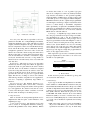
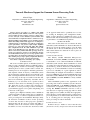
Fig. 1. 1) illustrates some high-level sensor dependent tasks identified within various embedded domains, 2) highlights common kernels
of computation that were identified, 3) shows conceptually how our sensor processing unit (SPU) integrates into an embedded system.
those nodes [1]. These processors range from simple 8-bit
microcontrollers (e.g. Atmel Atmega 128) to 32-bit microprocessors (e.g. Intel XScale processor family). However,
from an examination of a representative set of processor
Datasheets [4] [5] [6] [7], none of these processor were
found to have any special functionality to support sensor
processing tasks. The closest feature found was on the
Intel XScale processor family, an external interface for
a DSP coprocessor. Our work puts forth a lightweight
architectural extension for processing common sensor data
computations for which using a full blown DSP would be
an overkill.
Two features related to our work that are currently
found in either sensor network nodes and/or current high
performance processors are 1) waking up on the occurrence of an event, and 2) raising an exception when the
processor has surpassed a given temperature threshold.
Many processors/microcontrollers [8] [4] [5] [6], some of
which are currently used in sensor network nodes, have
the ability to go into a low power operating mode until an
interrupt indicates they should wake up. The Intel Centrino
chips also have the ability to come out of hibernation on
receiving data on their network interface (e.g. wake on
LAN technology [9]). Current chipsets such as the Intel
System Controller Hub can wake the main processor up
when a peripheral sends an event [10]. With respect to
thermal events, some microprocessors, such as the Intel
Atom Processor [11], have the ability to monitor their onchip temperature and response if this temperature surpasses
a given threshold (e.g. shutdown or transition into a lower
performance mode). The architecture of our light weight
SPU naturally allows interrupts to be used to notify the
main processor when simple to fairly complex combinations of sensors values are detected. This capability and its
potential implications are discussed further in Section IV
while some common kernels of computatio identified by
us are described in Section III.
III.. C OMMON K ERNELS OF C OMPUTATION
Due to the large and diverse set of domains in which
embedded systems are used, past works [2] [3] have tried
to identify common computational kernels that are used
across domains by abstracting away the specifics of individual applications. Similarly, we have tried to boil down
the diverse set of sensor processing tasks to a small set of
core kernels that are generic enough to find application in
many fields, and common enough to warrant the allocation
of processor chip real estate.
While many applications require massive processing of
sensor data using digital signal processing type algorithms,
there is a large base of applications [12] [13] [14] [15] that
consist of simpler processing tasks, and do not warrant the
overhead of having a full blown DSP. We have identified
and extracted five such tasks from the MiBench benchmark
and various other sources: Linear Equations, Moving Average, Average, Delta Value, and Threshold/Range Check.
Linear Equations: One of the simplest tasks that can
be performed on sensor data is the execution of a linear
mathematical operation on a single value or multiple values. In the automotive domain converting between radians
and degrees is identified as a common task in [3].
In the controls system domain the Proportional-IntegralDerivative (PID) controller is one of the most common
control algorithms used [16]. [17] and [14] give examples
of advanced PID controllers that can be boiled down to
calculating a set of linear equations involving sensor values
along with other computational functions.
Moving Average: Sometimes, sensors can be prone to
spurious spikes in their output. The moving average is
one method for reducing the effects of random “noise”
on sensor output. Over time measurements are averaged
together, and this average is used by the end application.
The impact of spikes in measurements are mitigated, while
actual changes in the physical quantity being measured are
eventually reflected by the average. The responsiveness of
the moving average can be tuned to reflect the known phys-