1
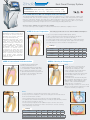
STEP 4 Disinfection
RFT2
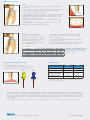
1. Use the RFT2 to perform disinfection of the apical and partial
coronal 2/3.
2. Place tip into handpiece and select settings from the table below.
This procedure is performed with 10% air flow and no water.
3. Insert RFT2 (1) mm short of the apex.
4. Activate laser and start moving the tip coronally, at approximately
1 mm/s. Maintain tip in contact with the side surface of the canal
wall during the entire pass. Use a brushing technique to deliver
YSGG laser energy to the surface.
Figure 8
5. Re-insert tip immediately and perform an additional pass over
the same area.
Figure 7
6. Repeat steps 3 through 5, two to three more times to ensure
disinfection of apical and partial coronal 2/3.
Figure 9
RFT3
7. Use the RFT3 to perform final
disinfection of the coronal 2/3.
8. Place tip into handpiece and select
settings from the table below. Use 10%
air flow as before (see step 2).
9. Insert RFT3 at the junction between
apical and middle third.
10. Activate laser and start moving the tip coronally,
at approximately 1 mm/s. Use the same techniques
as step 4 (disinfection).
11. Re-insert tip immediately and perform an additional
pass over the same area.
12. Repeat steps 9 through 11, three to four more times
to ensure disinfection of the remaining coronal 2/3.
Settings
Step 4
Tip
Power
Pulse Rate
Air
Water
Mode
Disinfection
RFT2
.75 W
20 Hz
10%
Off
H
Step 4
Tip
Power
Pulse Rate
Air
Water
Mode
Disinfection
RFT3
.75 W
20 Hz
10%
Off
H
Figure 10
Use any of your preferred techniques
and materials to fill the canal and
restore the tooth.
Calibration Factor
Single Use Non-Sterile Tips Included
1. Use only as specified in this guide.
2. Tip may break when excessive force is applied.
3. Dispose in sharps container after single use.
RFT2
Obturation & Restoration Placement
RFT3
RFT2
RFT3
Tip Diameter, μm
275
415
Tip Length, mm
25, 21
21, 17
Max Power
of Operation [Watt]
4.0
4.0
Calibration Factor *
0.55
0.85
* Laser Power recommended with procedural steps are values on the display.
The actual power output can be calculated by multiplying that value by
the Calibration Factor for each tip.
Disclaimer Only licensed professionals who have successfully completed training should use this instrument. Always start treatment at the lowest power setting and increase as required. Closely
observe the clinical effects and use your judgment to make appropriate adjustments to compensate for varying tissue compositions, density and thickness. Use your clinical judgment to decide
the clinical protocol and whether any additional laser or conventional instrumentation is required. It is important to note that sound principles of endodontic treatment have not been affected by
using this technique. Protocols that constitute correct endodontic treatment such as rubber dam isolation, irrigation, drying and obturation, etc. remain within the scope of the operator’s clinical
judgment and experience.
U.S. Patent Numbers: 4,940,411; 5,116,227; 5,151,029; 5,232,367; 5,257,935; 5,267,856; 5,324,200; 5,342,198. Other U.S. and Int’l Patents Granted and Pending
4 Cromwell • Irvine CA 92618 • 800.321.6717 • biolase.com
5201077 Rev. A (03/31/08)