1
Ready-Made Objects, Templates and Building Stones
•
Section 3 Standard Libraries
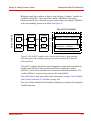
Objects that should be seen as templates. These template types are not
protected and they can therefore be copied to your application, or to your own,
self-defined library. They can then be modified to fit your specific
requirements. The SIL mark is always set to non-SIL in a copied object and
may be altered by the programmer (user) to an required SIL mark that must be
a part of the user SIL certification.
In a template type, there are core functions that are protected. These core
functions cannot be changed (with the exception of parameter connections), but
you can add other functions, both by using other types from the standard
libraries, and by adding code.
Typical template objects are the objects in Control loop solution library. Other
objects are Uni and Bi process objects in the Process Object Extended library,
which can be used to build process control objects for any uni- or bi-directional
object. See Group Start Library on page 70 and Control Libraries on page 71.
•
Low-level objects that can be seen as building stones to be used for building
more high-level, complex solutions. These objects can be used to add functions
to an existing template, or to build a complex solution from scratch.
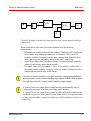
Typical building stones are types for signal handling, which can be added to the
output and input of, for example, control loops. See Building Complex
Solutions With Types on page 40.
If the standard libraries do not contain any type that fits one of your specific
requirements, you have two options:
•
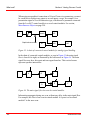
You can build your own type, based on objects from the standard libraries. If
the type is application-specific, you can define it directly in the application.
However, if it is likely that you in the future want to use it in other applications
as well, then you should create a library and store your type solution in this
library. Then, all you have to do to use the type in another application is
connect the library to that particular application.
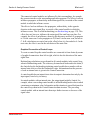
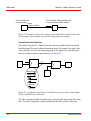
Say that you discover that you want to use a type in another application, but you
have defined it in an application only. Then you should simply create a library
and copy the type to this library (you can, of course, also copy it to one of your
existing libraries). Then you can connect the library to all applications where you
want to use the type and make sure that all instances refer to the library type. You
can then delete the original type definition from your application.
62
3BSE035981-600