1
Product Description
The XF Cell Mito Stress Test is the standard assay for measuring mitochondrial function in cells. The XF
Cell Mito Stress Test Kit is designed to evaluate mitochondrial function using the XFe and XF Extracellular
Flux Analyzers. The kit contains the reagents required to determine key parameters of mitochondrial
function (Refer the Definitions Box for more details).
The ability to assess mitochondrial function has enabled researchers to advance their understanding of
metabolism’s key role in cellular physiology, disease pathology, and etiology. This assay provides insight
into the cause of mitochondrial dysfunction and an in-depth understanding of metabolic pathways,
signals, and phenotypes.
Introduction
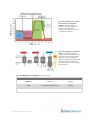
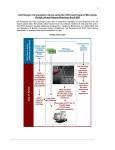
The XF Cell Mito Stress Test measures key parameters of mitochondrial function by directly measuring the
oxygen consumption rate (OCR) of cells (Figure 1).
The XF Cell Mito Stress Test uses modulators of respiration that specifically target components of the
electron transport chain (ETC) in the mitochondria to reveal key parameters of metabolic function. The
modulators (oligomycin, FCCP, and a mix of rotenone and antimycin A) are serially injected to measure
ATP production, maximal respiration, and non-mitochondrial respiration, respectively. Proton leak and
spare respiratory capacity are then calculated using these parameters and basal respiration.
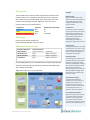
As illustrated in Figure 2 and described in Table 1, each modulator targets a specific component of the
ETC. Oligomycin inhibits ATP synthase (complex V) and the decrease in OCR following injection of
oligomycin correlates to the mitochondrial respiration associated with cellular ATP production. Carbonyl
cyanide-4(trifluoromethoxy)phenylhydrazone (FCCP) is an uncoupling agent that collapses the proton
gradient and disrupts the mitochondrial membrane potential. As a result, electron flow through the ETC
is uninhibited and oxygen is maximally consumed by complex IV. The FCCP-stimulated OCR can then be
used to calculate spare respiratory capacity, defined as the difference between maximal respiration and
basal respiration. Spare respiratory capacity is a measure of the cell’s ability to respond to increased
energy demand. The third injection is a mix of rotenone, a complex I inhibitor, and antimycin A, a
complex III inhibitor. This combination shuts down mitochondrial respiration and enables the calculation
of non-mitochondrial respiration driven by processes outside the mitochondria.
XF Cell Mito Stress Test User Guide
2.