1
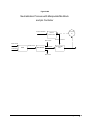
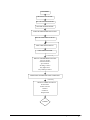
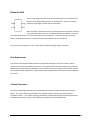
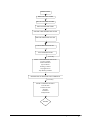
Structure In order to use DynaChem, the process to be simulated must be modeled as a series of Units connected in sequence. The connections between Units are known as Nodes and can generally be considered as pipelines through which streams flow from one unit to another. Either manual or automatic control valves can be included in these connections if required. Units The Unit of a process can be defined as any part of a process which can be isolated based upon homogeneity and equilibrium. These may include process equipment such as tanks and pipe sections but are also used to define schedules of mass/energy inflows to a process as a function of time. During a simulation, packets of mass/energy are introduced to a Unit over a series of time increments defined by the user. These packets of mass/energy are combined with the mass/energy already present in the Unit and the equilibrium condition determined. Based upon user defined Unit parameters (e.g., tank volumes, liquid levels, etc.) packets of mass/energy exiting the unit are determined and placed at collecting points called Nodes. Nodes Nodes can generally be considered as connecting pipelines through which stream flows from one Unit to another. Flow through these connections can be restricted or controlled with the addition of manual or automatic control valves. Thus, the transmission of mass/energy from one Unit to another is achieved by accepting packets of mass/energy from Upstream Nodes and depositing packets of mass/energy at Downstream Nodes. Node Order The computation order of the inner tier is defined by the user and is known as the Node Order. The specification of a Node in the computation order results in the Unit computation for which that Node is a Downstream Node. The Node Order specification is at the discretion of the user but can be manipulated to allow for process recycle and system dead time if required. OLI ESP User Guide Dynamic Modeling 517