1
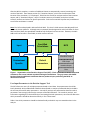
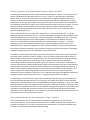
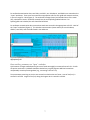
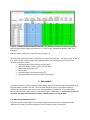
After the MCS is complete, a number of additional sheets are automatically created, containing the results of the MCS. These sheets consist of 1) “Iterations Output”, which lists the outcome of each iteration of the simulation, 2) “CFD Output”, which lists the results for each percentile of the iterations output, and 3) “Simulation Output”, which is a tabular summary of the MCS results that includes summary statistics and values for specific percentiles. Each time a new MCS is performed, an additional set of three worksheets is created. Note: The DST was developed in Microsoft Excel 2003. This User’s Guide assumes that Microsoft Excel 2003 is the chosen platform. Although menu commands (here designated in Italics) will differ for Excel 2007 and Excel 2010, the spreadsheet should be fully functional in these versions. However, the MCS Add‐In will not function in Excel 2000, or earlier versions of Excel. Input
Food Web
Calculations
MCS
;
Simulation Output
Contaminant
Specific
Default
Parameters
CFD Output
Iterations Output
Plots
Figure 1. Organization of the Decision Support Tool (DST). Each colored box indicates a separate
worksheet, and arrows indicate equations linking the worksheets. The grey boxes with dotted
borders show the additional worksheets that are produced upon performing the MCS, as
described in the text.
User Input Parameters to the Decision Support Tool
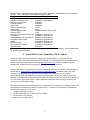
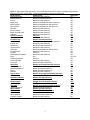
The DST allows user entry of multiple parameters based on local data. Some parameters should be locally obtained, while standardized or default values (based on analysis of statewide data) included in the tool may be used for other parameters. A sensitivity analysis was performed to determine which parameters most strongly influence the outcome of the SQO indicators. The sensitivity analysis, and information regarding the relative difficulty of estimating particular parameters, were used to determine which parameters should be determined locally in Tier II assessment. Table 1 lists which parameters should be obtained locally and which may use statewide values in the analysis. 2