1
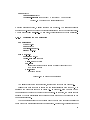
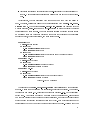
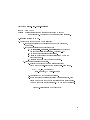
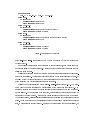
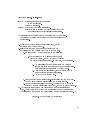
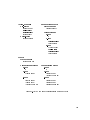
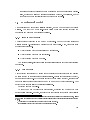
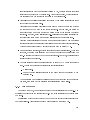
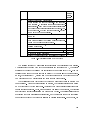
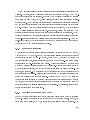
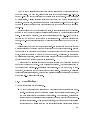
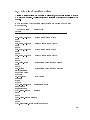
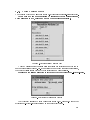
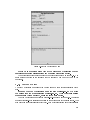
 Subprocedure. The name of the subprocedure performed by an abstract step. This
eld is empty if the step isn't abstract.
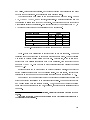
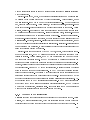
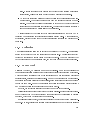
Operator. The operator that models the action performed by a primitive step. This
eld is empty if the step isn't primitive.
An operator models how an action changes the environment. An operator does
this by identifying the preconditions necessary for the action to produce a set of
state changes. Because operators can be reused in other procedures, an operator's
preconditions are independent of the current procedure. In the above example, the
operator would indicate that the valve can be opened whenever it is shut. However,
the operator should not contain procedure specic preconditions such as requiring
the alarm light to be illuminated.
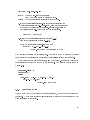
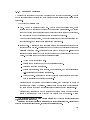
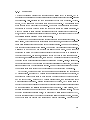
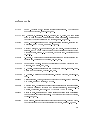
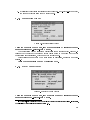
Control-preconditions. Control preconditions are procedure specic preconditions
for performing the step. In the above example, a control precondition should indicate that the valve should not be opened unless the alarm light is illuminated.
The precondition is needed because the environment allows the the valve to opened
whenever it is shut rather than when the light is illuminated. It appears that control
preconditions are likely to refer to indicators such as lights and gauges that humans
look at for visual cues.
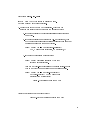
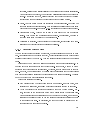
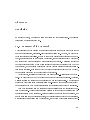
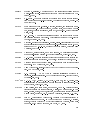
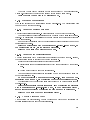
Mental-conditions. A mental condition is a condition that contains a mental at-
tribute, and a mental attribute is an attribute that is internal to Diligent rather than
present in the environment.
Diligent creates mental-conditions for sensing actions. A sensing action [AIS88,
RN95] gathers information from the environment without changing the state of the
environment. For example, a sensing action might involve checking to see whether a
light is illuminated or checking the value of a gauge. A human student might perform
a sensing action on a light by looking at the light or selecting it with a mouse.
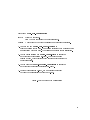
Diligent uses mental-conditions to guarantee that a step is performed. Diligent's
heuristics do this by putting all mental-conditions into the procedure's goal conditions. (Of course, the instructor can reject these goal conditions.5 ) If a mentalcondition were not in the procedure's goal conditions, then the mental-condition's
step would only be performed if the step's changes to the environment's state were
5
Because he is a domain expert, an instructor should be able to determine which goal conditions seem
valid or reasonable.
56