1
2
ROLAND HERZOG
• local-to-global mapping of the degrees of freedom,
• evaluation of the local element tensor (e.g., the local stiffness matrix).
The code which implements this functionality is automatically generated by the
form compiler from the high-level description in the .ufl file. By contrast, from
within a Python program, the form compiler is called automatically whenever necessary (just in time).
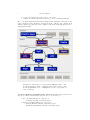
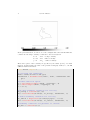
Figure 1.1. Interaction of components in FEniCS. UFL = Unified Form Language, FFC = Unified Form Compiler, UFC = Unified Form-Assembly Code. Highlighted are the components we
refer to this text.
1.2. Some Features and Limitations. FEniCS currently supports the following types of finite element function spaces (see [?, Section 4.3]):
• H 1 conforming FE spaces composed of:
– Lagrange elements of arbitrary degree
• H(div) conforming FE spaces composed of:
– Raviart-Thomas elements of arbitrary degree
– Brezzi-Douglas-Marini elements of arbitrary degree