1
CHAPTER 6 - EMI WARNING
All types of electrically powered vehicles, such as powered
wheelchairs and motorized scooters (in this text all types will be
referred to as “powered vehicles”) may be susceptible
to electromagnetic interference (EMI). This is from sources such
as radio and TV stations, amateur radio (HAM) transmitters, two-way
radios and cellular phones. The interference
(from radio wave sources) can cause the powered vehicle to release
its brakes, move by itself, or move in unintended direction. It can also
damage the powered vehicle’s control system. The intensity of the
interfering EM energy can be measured in volts per meter (V/m). Each
powered vehicle can resist EMI interfering electromagnetic energy
(EM) emitted up to a certain intensity. This is called its “immunity
level”. The higher the immunity level, the greater the protection. At
this time, current technology is capable of achieving immunity level,
which would provide useful protection from the more common sources
of radiated EMI. This vehicle as shipped, with no further modification,
has an immunity level of 20 V/m.
There are a number of sources of relatively intense electromagnetic
fields in everyday environment. Some of these sources are obvious
and easy to avoid. Others are not apparent and exposure is
unavoidable. However, we believe that by following the warning listed
below, your risk of EMI will be minimized.
The sources of radiated EMI can be broadly classified into three
types:
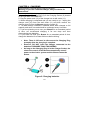
1. Hand-held portable transceivers (transmitters-receivers) with the
antenna mounted directly on the transmitting unit. Examples include:
citizen band (CB) radios, “walkie talkies”, security, fire and police
transceivers, cellular telephones and other personal communication
devices. ** NOTE: some cellular telephones and similar devices
transmit signals while they are ON, even when not being used.
2. Medium-range mobile transceivers Such as those sed inolice cars,
fire trucks, ambulances and taxis. These usually have the antenna
mounted on the outside of the vehicle .
3. Long-range transmitters and transceivers such as commercial
broadcast transmitters (Radio and TV broadcast antenna towers) and
amateur (HAM) radios.
NOTE: Other types of hand held devices, such as cordless phones,
laptop computers, AM/FM radios, TV sets, CD players, cassette
players and small appliances such as electric shavers and hair dryers,
29