1
Background
Many of us are dependent upon our small electronics ranging from cell phones to laptops
for functions varying from information gathering to long distance communication. Unfortunately
all of these devices are dependent upon electricity in the form of rechargeable batteries which
only last for a set period of usage time and then depend on a steady source of electricity for
recharging. On extended stays in areas which do not offer an electricity source, an
environmentally-friendly, sustainable, and easily implemented power source is needed.
The BEAST will be a solution to that problem intended specifically for long-term trips
into remote areas and visits to developing nations where a base camp is required. Military
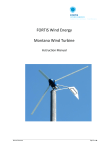
applications and disaster relief efforts are also key markets. The device will consist of a wind
turbine that can fit within or on a hiker’s backpack at a reasonable weight, be easily assembled in
the field with little technical prowess, and supply enough power to efficiently charge cell phone
and laptop batteries.
System Overview
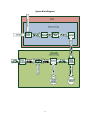
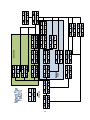
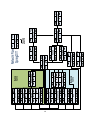
The finished wind turbine will deliver electricity to a NEMA Type B outlet (standard in U.S.
homes) by converting wind energy into mechanical rotational energy and then converting that
mechanical energy into electrical energy. The wind energy will be captured by blades that are
attached to a hub that is free to rotate. The hub will be elevated on a stand such that the lowest
point that the blades spin will be at least 2.14m above the ground. The rotation of the hub will
turn the shaft of an electricity generator and thus convert wind energy into electricity. The
produced electricity will then be stored in a battery and the battery will supply electricity to an
outlet via an inverter. An indicator will tell the user how much power is being produced
instantaneously and how much power is available in the battery. The battery pack will also be
removable for transportation or use away from the turbine.
For the wind turbine to be used the blades must be attached to the hub and the hub must be
attached to the top of a collapsible stand. The stand will have sections that are approximately 1m
in length and when fastened together achieve a height of at least 2.63m. Each section will have
attachment points for tethers that can be attached to the surroundings for stability. The wind
turbine and all of its components will be able to be collapsed into a space no greater than 85
liters and weigh no more than 23 kg.
During high winds the furling mechanism of the wind turbine will automatically turn it out of
the wind so that over-speed of the generator does not occur. Since it may be desirable to
disassemble the wind turbine when the wind is blowing it is recommended that a stick or
provided tool be used to manually turn the turbine out of the wind to aerodynamically brake the
unit.
The turbine will be a complete assembly of the turbine, blades, stand, tethers, battery
pack and circuitry.
3