1
sis—or cause damage to an expensive piece of analytical
instrumentation. To eliminate this concern, a less polar
extraction solvent or a mixture of solvents may work
better. Generally, if a particular solvent has worked well
for a traditional extraction procedure, it should also work
well for ASE. Mixing solvents of different polarities can
be used to extract a broad range of target compounds
present in the same sample. Solvent choice may also
depend on which solvent is compatible with the chosen
analytical technique. Most liquid solvents, including
water and buffered aqueous mixtures, can be used in the
ASE instrument.
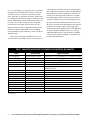
Table 1 lists some suggested ASE solvents for various food matrices and analytes. Please note that these are
only suggestions and other solvents or solvent mixtures
may work better for particular samples. In ASE method
development, the extraction temperature and choice of
solvent are the most important parameters to consider.
As mentioned previously, if an extraction procedure for
a particular sample already exists, then begin by using
the same solvent in the ASE instrument. In some cases,
the choice of solvent will be determined by the analytical
procedure. For example, when extracting polycyclic
aromatic hydrocarbons (PAHs) for GC or GC-MS analysis, dichloromethane (DCM)/acetone (1:1) is the recommended ASE extraction solvent. However, if HPLC
is the preferred analytical technique, acetonitrile is the
recommended ASE solvent.
TABLE 1. SUGGESTED ASE SOLVENTS FOR VARIOUS FOOD MATRICES AND ANALYTES
Matrix
a
Analytes Group
Fruits and vegetables
Fruits and vegetables
Fruits and vegetables
Grains and seeds
Grains and seeds
Grains and seeds
Environmental toxins (organic)a
Environmental toxins (inorganic)b
Antioxidants
Oils
Pesticides
Mycotoxins
Meats (beef, pork and poultry)
Meats (beef, pork and poultry)
Meats (beef, pork and poultry)
Meats (beef, pork and poultry)
Fish and shellfish
Fish and shellfish
Dairy
Dairy
Dairy
Snack foods
Snack foods and potatoes
Pesticides
Sterols
Ions: sulfates and nitrates
Antibiotics
Environmental toxins (organic)
Environmental toxins (inorganic)
Environmental toxins (organic)
Environmental toxins (inorganic)
Fats and lipids
Fats and lipids
Acrylamide
Suggested Solvents
DCM/acetone (1:1, v:v), hexane/acetone (1:1, v:v), toluene, ethyl acetate
Water
7% acetic acid in methanol, 0.1% TFA in methanol
Hexane, hexane/isopropanol (3:2, v:v), petroleum ether
DCM/acetone (1:1, v:v), hexane/acetone (1:1, v:v), toluene, ethyl acetate
Methanol/water (1:1, v:v), acetonitrile/water (1:1, v:v),
methanol/water/ H3PO4
Acetone/hexane (1:1, v:v), DCM/acetone (1:1, v:v)
Chloroform/methanol (2:1, v:v), hexane /isopropanol (3:2, v:v)
Water
Water
DCM/acetone (1:1, v:v), hexane/acetone (1:1, v:v), toluene
Methanol, methanol with 1% acetic acid
DCM/acetone (1:1, v:v), hexane/acetone (1:1, v:v)
Water
Hexane, hexane/isopropanol (3:2, v:v), petroleum ether
Hexane, hexane/isopropanol (3:2, v:v), petroleum ether
Water with 10 mM formic acid or acetonitrile (100%)
PAH, PCB, OCP, OPP, Dioxins
Anions and cations
b
Accelerated Solvent Extraction (ASE) Sample Preparation Techniques for Food and Animal Feed Samples