1
1
2
internet
Event
Correlator
External component
Test Environment
Fault
Replicator
FastFIX Server
Maintenance Platform
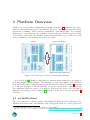
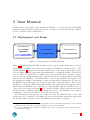
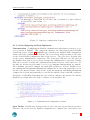
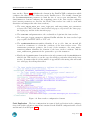
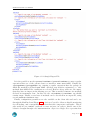
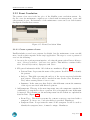
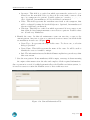
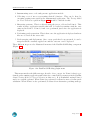
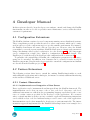
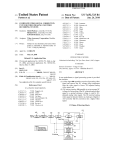
Figure 2.1: Conceptual overview of the FastFix platform.
As described in [11], FastFix components are structured into namespaces according to
their responsibility in the platform. The namespace of each code bundle can be identified
from the bundle name. Currently, the integrated platform contains 79 bundles1 belonging
to 5 different namespaces. In the following, we briefly explain all five namespaces and
give additional details in terms of code metrics. Details on the source code in terms of
interfaces and packages can be found in [11] as well as in the source code documentation2
(JavaDoc).
2.1 eu.fastfix.client
The client namespace contains bundles constituting the FastFix client component. The
FastFix client runs in the environment of the target application (i.e. in the application
Including bundles needed to group other bundles (“parent bundles”)
The project source code is available at SourceForge: https://svn.code.sf.net/p/fastfixrsm/code/trunk
Page 7 of 47
FastFIX platform will then identify
patterns and possible causes of error.
behaviour
The gathered information will be sent in real time to a
support centre while protecting user‘s privacy. Once
this information is available in the support centre, it will
be used to replicate errors, taking into account all the
gathered context information and, using correlation
techniques and error ontologies.
FastFIX component
Development Environment
Patch
Generator
User Profile
Reporting
Interface
FastFIX Client
Communication Infrastructure
Context
Observer
sensors
Software Application
Runtime
Communication Infrastructure
Operating
System
sensors
sensors
Runtime
Environ.
These mechanisms will be applicable to both new and
existing applications. The monitoring will also be nonintrusive and impose a minor, acceptable burden on
performance.
We will develop and set up mechanisms to acquire
all the necessary information about an application’s
execution including errors, context and user behaviour.
_ Monitoring software execution
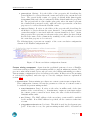
FastFix is a remote software maintenance platform. As Figure 2.1 illustrates, its components are distributed among two environments. First, the environment where the target
application is running, and second the maintenance environment where development,
maintenance, and testing tools are installed. Consequently, the FastFix system consists
of two main components: the FastFix client and the FastFix server. Both server and
client communicate and exchange data with each other.
FastFIX will provide a platform for software
maintenance and support, which will be applicable
to software application, regardless of their execution
environment. Using FastFIX will significantly reduce time
for failure cause identification, patch generation, and
patch deployment.
Even when FastFIX will not be able to automatically identify causes or generate patches, it will
provide valuable, semantic context information, about
both the execution environment and user interaction.
This will significantly facilitate maintenance tasks of the
software engineers.
_ Impact on software market
Patch generation and self-healing: determines which
patches are going to be generated, and how they
will be deployed to the application in the execution
environment.
Fault replication: provides a platform that allows the
replication of errors in as close to the real context as
possible.
Event correlation: determines how the gathered
information is used to draw conclusions about the kind
of problems the application is facing and what the
possible causes are. Event correlation has been widely
applied to ITC processes and Business Activity Monitoring,
but significant research is needed on its application to
software maintenance.
Context elicitation and user modeling: determines
exactly which and how information on an application’s
execution and user interaction is going to be gathered and
pre-processed independently from the application and its
environment.
FastFIX’s innovation is centered on four fun-damental
research activities:
_ Research lines
In some cases, the platform will be able to automatically
generate patches for errors. These patches will consist
of application modifications, changes in system
configuration, parameterization, or even functionality
limitation in order to avoid system or application
crashes. Patches will be sent back to the application’s
execution environment and will be applied
automatically, resulting in a self-healing software
application.
_ Self-healing
2 Platform Overview