1
The De Morgan Gazette 5 no. 2 (2014), 5–18
ISSN 2053–1451
ROBOTBASIC IN THE CLASSROOM
JOHN BLANKENSHIP
Introduction
Nearly a third of all students drop out of school† because they are not finding
education relevant, challenging, or exciting. The changing nature of work, technology,
and competition in the global job market often outpaces what our education system
provides for students‡ . The future will require a new workforce of problem solvers,
innovators, and inventors who are self-reliant and able to think logically§ . A key to
developing these skills is strengthening science, technology, engineering, and math
(STEM) competencies in every K-12 student¶ .
The top 10 “in-demand” jobs for 2010 did not even exist in 2004. More than 1/3
of top 60 future jobs will DIRECTLY require programming, robotics, or engineering
skillsk . Many of the remaining jobs will enjoy indirect benefits from the skills acquired
from these disciplines. Seven of the top skills that will be needed in the future∗∗ are:
•
•
•
•
•
•
•
Critical thinking and problem-solving
Collaboration across networks and leading by influence
Agility and adaptability
Initiative and entrepreneurialism
Effective oral and written communication
Accessing and analyzing information
Curiosity and imagination
Programming and Robotics
Programming robots has been shown to not only motivate students, but improved
many of the skills mentioned above. Even the military at West Point has used a
Lego robot and a robot simulation to teach such skills to freshmen†† , but with an
2010 Mathematics Subject Classification 97A80, 97B70.
c 2014 John Blankenship
† http://www.boostup.org/en/facts/statistics#fl.
‡ http://www.leadered.com/pdf/Academic_Excellence.pdf.
§ http://www.redstickrobotics.org/the-importance-of-stem-learning.html.
¶ http://www.redstickrobotics.org/the-importance-of-stem-learning.html.
k http://www.getdegrees.com/careers/tips/top-60-jobs-that-will-rock-the-future/.
∗∗ http://asiasociety.org/education/resources-schools/professional-learning/
seven-skills-students-need-their-future.
†† http://www.robotdiy.com/Downloads/articles/Using+robots+and+simulation+to+teach+problem+solving+
in+an+introductory+course+in+computing+and+information+technology.pdf.
6
john blankenship
appropriate programming language, there is no reason to wait so long to introduce
students to programming and robotics.
Students at the 5th grade level have been taught to program a robot using RobotBASIC. The excitement generated by such a class cannot be imagined until it is
seen in action. Understanding how to generate this excitement is very important.
Programming a robot can be a challenging task, even for college students, but
with an appropriate language, outcomes and expectations can be easily adjusted for
a wide variety of grade levels. Students quickly recognize the relevance of the problems to be solved because they get immediate feedback showing the need for new
knowledge† . Furthermore, the constant hands-on activities associated with robotics
keeps students engaged in active learning processes. In addition to these direct benefits, there are many indirect ones.
When robots are used in the classroom, students can work in small groups of 2
to 4 students to brainstorm ideas. This encourages the development of basic communication and inter-personal skills‡ such as the ability to collaborate and convey
complex ideas to a fellow students or colleagues. The use of robots in the classroom
also subconsciously introduces students to possible career paths they may well have
never considered§ .
Finally, programming can be a valuable learning tool in its own right. Any good
teacher will tell you that the teaching process itself imparts, to the teacher, a greater
understanding of the material being taught. When a student writes a program, they
are essentially teaching the computer how to solve the problem. In order to teach
the computer (write a program) students must investigate the problem, organize the
material, identify solutions, implement them in code, evaluate their effectiveness, and
improve upon them by recycling thorough this process¶ .
The advantages of including programming and robotics in a curriculum are summarized below.
•
•
•
•
•
•
•
Motivational projects
Immediate feedback
Active learning
Applicable over all grade levels
Improves communication and interpersonal skills
Increases awareness of career possibilities
Teaching the computer improves personal understanding
RobotBASIC
The Robot Simulator extension of RobotBASIC was originally programmed by
college Professor John Blankenship. The simulator was incorporated as a set of
† http://www.connectivism.ca/?p=16.
‡ http://tribotix.com/EducationInfo/WhyRobotics.htm.
§ http://tribotix.com/EducationInfo/WhyRobotics.htm.
¶ http://www.teachervision.fen.com/problem-solving/teaching-methods/48451.html.
robotbasic in the classroom
7
functions and commands into a powerful interpreted programming language written
by Samuel Mishal. The combination is a versatile language that is easy to learn and
fun to use, even by those new to programming. RobotBASIC is not, however, just a
beginner’s language. With over 800 powerful commands and functions, experienced
programmers can use RobotBASIC to handle complex problems.
The RobotBASIC programming language has features that makes it easy to add
programming and robotics to almost any curriculum. RobotBASIC has been designed to be especially effective when implemented in a multi-year program. Legacystyle commands allow even 5th graders to quickly grasp programming concepts. As
student’s skills and maturity increase, more complex commands can be introduced
so more complicated problems can be explored. By high school, students can be
introduced to the C-style syntax used in many modern languages. This progression
allows students to grow without having to constantly relearn new programming environments while maintaining continuity between classes. Additionally, it prepares
students for the cryptic syntax associated with the languages like C and Java that
are often used in college classes.
When a comprehensive approach is utilized throughout an entire curriculum,
teachers of many disciplines, and at every grade level, can offer programming assignments that support standard coursework. When implemented properly, there is
no need to add separate programming courses or significantly alter current coursework. Instead, programming is used to augment what is already being done. This
allows the computer to be viewed as a powerful tool (as it is in industry) instead of a
subject in and of itself. RobotBASIC’s easy-to-use graphics and powerful functions
make it easy to create exciting and enlightening assignments for classes involving
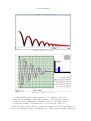
math, science, and physics. High school students can, for example, program a simulation of gravity (Figure 1) or the physics of a spring (Figure 2) to promote a more
complete understanding of the associated principles.
The RobotBASIC Simulator
RobotBASIC’s integrated simulator allows robotic programming to be explored
at nearly any grade level, without the need for costly hardware—although hardware
can be easily added at any time. The simulator’s extensive sensory abilities can
be very motivational because they allow a wide-variety of meaningful projects to
be explored. RobotBASIC’s willingness to work with teachers to create customized
assignments along with teacher training and support materials can make adoption
and integration trouble-free for both faculty and staff.
RobotBASIC’s simulated robot has far more capabilities than most educational
robots, allowing RobotBASIC to handle projects that are more complex and far
more stimulating for students. The sensors available on the simulator are:
•
•
•
•
Ultrasonic rangers (rRange) to measure the distance to objects on the screen.
Infrared detectors (rFeel) to determine if any objects are close to the robot.
Bumper switches (rBumper) to determine if the robot bumps into an object.
A Compass (rCompass) to measure the angular orientation of the robot.
8
john blankenship
Figure 1. Simulation of gravity
Figure 2. The physics of a spring.
•
•
•
•
A GPS (rGPS) to find out the current X, Y coordinates of the robot.
Line sensors (rSense) to detect the presence of a line drawn on the floor.
A Beacon sensor (rBeacon) to determine if the robot is facing a beacon.
A Camera (rLook) to determine the color seen in front of the robot
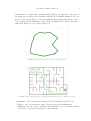
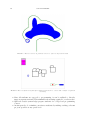
With all of these sensors, the robot can be programmed to follow a line (Figure 3),
solve a maze (Figure 4), hug a wall (Figure 5), or find its way through a cluttered
robotbasic in the classroom
9
environment to connect with a battery charger (Figure 6). These are only a few of
the many projects that can be handled with the RobotBASIC simulator. Robotic
projects are great teaching tools because students must brainstorm ideas in order to
solve exciting and meaningful problems. They get immediate feedback and have to
refine their methodology to achieve their goal.
Figure 3. The Robot uses sensors to follow a line on the floor.
Figure 4. After exploring the maze, a well programmed robot can move directly to the end.
A summary of the educational advantages of RobotBASIC is given below.
• Easy to use, yet powerful enough to create motivational assignments.
• Multiple versions of basic commands allow students to grow over time without
the need to relearn new languages or environments.
10
john blankenship
Figure 5. The robot can use its perimeter sensors to “feel” its way around a wall.
Figure 6. The robot finds its way through a cluttered environment to connect with a charger to replenish
its battery.
• Since all students are exposed to programming, it can be utilized to directly
support current curricula. This minimizes the training required for each teacher.
• Optional C-style syntax helps prepare students for college-level programming
courses.
• An integrated robot simulator motivates students by making exciting, relevant
projects possible at any grade level.
robotbasic in the classroom
11
Controlling Real Robots
Real robots with capabilities similar to those of the simulation can also be controlled from RobotBASIC over a wireless Bluetooth link. When a school desires to
include real robots in their programs it can be very cost effective because often only
one robot per school is needed. This is possible because programs developed for the
simulator can immediately be used to control a real robot that is powered by the
RobotBASIC Robot Operating System (RROS).
Students can work in small groups to develop ideas for accomplishing assigned
tasks, then each student can implement their own solution using their own simulated
robot. Once a student gets his or her simulation operating correctly, the teacher
simply plugs a USB Bluetooth transceiver into their computer to allow their program
to control the real robot.
RobotBASIC provides complete technical information for those that wish to design
and build their own RROS-based robots. The easiest way though, is to use the RROS
chip and PCB shown in Figure 7. The system supports a wide variety of sensors and
motors allowing robots to be built that range from simple to sophisticated.
Figure 7. The RROS chip and PCB makes it easy to build a robot regardless of the types of sensors and
motors used.
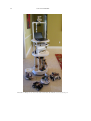
Figure 8 shows some of the robots that were used to test the RROS while it
was being developed. They range in size from less than 8 inches in diameter to a
large man-sized robot and are powered by several types of motors and utilize a wide
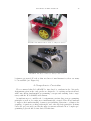
variety of sensors. The RROS PCB can also be mounted to a variety of commercially
available chassis as shown in Figures 9, 10, and 11.
Even with all of these capabilities, RobotBASIC is free. Schools have no acquisition costs, no upgrade fees, no site licenses—ever ! And, teachers and students
can download their own personal copy of RobotBASIC for preparing assignments
and doing homework. RobotBASIC comes with a 300 page HELP file and a huge
assortment of demo programs. There are also dozens of YouTube videos to help
12
john blankenship
Figure 8. Many robots were built and tested while the RROS was being developed.
robotbasic in the classroom
13
Figure 9. The RROS PCB mounted on a Magician Chassis.
Figure 10. The Rover 5 Chassis is ideal for outdoor use.
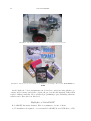
beginners get started. For those that need more formal instruction, there are many
books available (see Figure 12).
A Comprehensive Curriculum
We recommend that RobotBASIC be introduced to students in the 5th grade.
Assignments given in the early grades are designed to be exciting and motivational,
while introducing fundamental programming concepts and ensuring basic competency with the RobotBASIC environment.
As students move to middle school, assignments can introduce new programming
principles as well as becoming more mathematically oriented. This allows students
to improve their understanding of many topics including Cartesian coordinates, the
graphing of equations, working with angles, and other algebraic principles. In many
cases, the projects used can directly support current curricula. More complex programming topics should be introduced at this time.
14
john blankenship
Figure 11. The RobotBASIC RB-9 Chassis is currently under development.
Figure 12. Numerous books are available to provided more formal help, when needed. RobotBASIC is
FREE
At the high school level assignments can be used in courses involving physics, geometry, trigonometry, and science. Again, the projects should augment, rather than
replace existing curricula. More advanced programming topics, including alternate
syntax can be introduced at this level.
Highlights of RobotBASIC
RobotBASIC has many features. Here is a summary of some of them.
• No installation is required—you can run RobotBASIC from a USB-drive, a CD,
robotbasic in the classroom
•
•
•
•
•
•
•
•
•
•
•
•
•
•
•
15
or even from a web page. This means schools have no networking problems when
installing RobotBASIC.
Use variable typing (integer, float, and string) or totally untyped variables,
where any variable at any time can be changed to any type by simply assigning
it a new value. This feature makes RobotBASIC especially easy for beginners.
Standard GOSUB routines or callable function-like routines (Call/Sub) with
LOCAL variable scoping with by reference and by value parameters.
Use legacy INPUT and PRINT statements for quick and easy I/O (great for
introducing programming to non-programmers). Advanced students can use
GUI commands to create buttons, text boxes, edit boxes, list boxes, dialogue
windows, message boxes, radio buttons, check boxes, sliders, and more.
Use a Procedural programming model with GOSUB and CALL/SUB or an
EVENT-DRIVEN approach with commands like OnSlider. Use standard BASIC
syntax or a modified C-style syntax (i.e. ++, +=, !=, &&) This can be great
for teaching programming fundamentals to beginners before moving on to more
complex principles and syntax.
Increased productivity from numerous “helper functions” that facilitate sorting,
multimedia displays, flicker-free 2-D and 3-D animation, robot vision (including
web cam support), extensive BMP image manipulation, matrix math, both high
and low-level file I/O, the ability to send emails (SMTP) and communicate over
the Internet (UDP and TCP protocols), and much more.
Develop and debug programs in an easy-to-use INTERPRETER-based IDE (Integrated Development Environment), then COMPILE your programs to standalone EXE’s for easy distribution.
Ability to create includable LIBRARY files with ]include (even include binary
files to protect your algorithms). This makes it easy for teachers to provide
startup materials for student assignments.
An integrated Robot Simulator with numerous sensors such as an electronic
compass, ultrasonic distance measurement, IR perimeter sensing, line sensors,
a GPS, and more.
Control real robots using parallel, serial, and USB ports for wireless protocols
such as Bluetooth and Zigbee. Unique proprietary protocol allows simulator
programs (without modification) to control real robots (see our books and the
HELP file for complete details).
Direct support for the USBmicro U4x1 family of I/O modules that provide 1wire, SPI, and I2C Serial control of Digital MicroDevices as well as 16 lines of
TTL I/O.
Ability to spawn other executable files and pass them parameters.
Over 800 powerful commands and functions often allow a few lines of code to
provide the functionality of hundreds of lines in many other languages.
An extensive 300 page HELP file provides detailed information and numerous
programming examples.
Web page tutorials, sample programs, YouTube videos, and low-cost books provide additional help if needed. Improved editor with multiple file capability and
color-coded keywords.
RobotBASIC is free to schools, organizations, individuals—everyone!
16
john blankenship
The RobotBASIC Robot Operating System
The RobotBASIC simulator’s sensory capabilities allow it to be used in a wide
variety of projects. Once programs are working on the simulator though, it is highly
motivational for them to be used to control a real robot that has capabilities similar
to that of the simulator. In the past, building such a robot has been a daunting task
reserved only for those with significant knowledge and skill of both electronics and
low-level microcontroller programming.
Now schools can have a complete hardware/software solution in the form of a 24pin IC preprogrammed with the RobotBASIC Robot Operating System (RROS).
The RROS not only provides the physical interface needed for many motors and
sensors, it also provides the software required to seamlessly interface with all supported devices using the high-level RobotBASIC simulator-based commands and
functions. This means that the RROS not only makes it easier than ever before to
build a robot, it makes it easier to program one too.
Imagine being able to simply connect an electronic compass to the RROS chip
and then immediately determine a real robot’s orientation using the same commands used with the simulator—all without ANY low-level programming. Imagine
connecting infrared or ultrasonic sensors directly to the RROS chip to create a Virtual Sensor System capable of determining where obstacles are that might block
your robots path.
Controlling a robot’s motors is just as easy as acquiring its sensory information.
When simulator commands like rForward and rTurn are used, the robot won’t just
respond, it will respond intelligently, automatically ramping up and down when
speeds are changed, using compass readings and wheel encoder counts when possible
and appropriate.
These examples don’t begin to describe the power of the RROS. Download the
complete RROS User’s Manual from RobotBASIC.org and you will discover the real
power. . . of simplicity. If you do not have time to read the entire manual (around
250 pages) below is a summary of what to expect.
Highlights of the RROS
• Use a radio link (such as Bluetooth) or a direct serial link from a PC (if your
robot uses an embedded PC on board) for communication with RobotBASIC.
• The chip will directly drive DC motors up to a max of 1 amp each or continuous
rotation servo motors without external support. For bigger motors, the chip will
interface with and control a RoboClaw board allowing control of large (up to
30 amp) motors. The system will automatically slowly increase and decrease
the robot’s speed as it starts and stops to prevent jerky motion. As with other
aspects of the system all controlling parameters can be set from RobotBASIC
using the rCommand() function.
• The wheel counters (when present) automatically allow the robot to move spec-
robotbasic in the classroom
•
•
•
•
•
•
17
ified distances and rotations more accurately than an open-loop timed response.
If wheel counters are not present, there are commands that allow the user to finetune the timing loops used to control movements. The timing approach works
far better than you might expect, as long as most of the Robot’s movements are
adjusted based on other sensory data. Full control of your robot’s movements
is provided through simulator commands such as rForward and rTurn—all the
details are handled by the RROS. Additional commands allow you to fine-tune
and modify the movements to increase your robot’s capabilities.
Perimeter sensors are translated into appropriate rBumper() and rFeel() signals.
You may use a wide variety of sensors including, digital IR devices such as
Pololu’s Sharp GP2Y0D810 or GP2Y0D805. A more advanced technique is to
use analog style sensors so that a VIRTUAL sensory system can be automatically created for you. The VIRTUAL system utilizes perimeter ranges sensors
to create the data for rRange(), rFeel(), and rBumber(). You can use Ranging IR
sensors such as Pololu’s Sharp GP2Y0A21 or GP2Y0A02, or ultrasonic rangers
such as the Maxbotix Sonar Sensors or even Parallax’s PING sensors. Special
setup commands allow you to tell the RROS what motors and sensors you are
using. In all cases, the data will be collected and translated for use through the
RobotBASIC simulator commands. All of the above sensors are supported even
beyond typical expectations. For example, when six PING sensors are used for
perimeter sensing, they can be read simultaneously using a special algorithm—
providing superior sensory performance. Great care was taken to support a wide
variety of sensors from various manufacturers—ideally you can build a robot
your way and yet all the details are done for you.
Three digital line sensors are supported by the main IC chip. Digital in this
case simply means the sensor supplies a logical 1 or 0 as its output. This is true
for the Pololu line sensors that are called “analog” sensors. Their “digital” line
sensors use a digital port pin, but actually create an analog result based on the
time for a capacitor to discharge, and are NOT compatible.
A beacon detector such as Pololu’s Vishay TSOP34156 can be used to detect 15
different beacons as described in some of our books. The RROS IC automatically
translates all signals so they can be used through the rBeacon() function. We
even offer preprogrammed beacon chips for building your own beacons.
A servo-turret mounted ranging sensor is fully supported when digital perimeter sensing is utilized. It is NOT needed though when VIRTUAL sensors are
created from ranging sensors. When ranging sensors are used, the system automatically extracts both rRange() information and proximity information from
the perimeter sensors themselves.
One electronic compass, the HMC6352 compass module previously available
from Parallax, and still available from the RobotShop, Sparkfun, and JameCo,
is currently supported.
Many expansion features are present in the RROS. We think advanced hobbyists
will find it very versatile. It will, for example, allow you to connect one or more
microcontrollers (such as the Parallax Stamp, Arduino processors, or the Pololu
Orangutan controllers) to a special serial bus. These controllers can provide
camera or GPS data or handle any custom sensory system you wish. The RROS
18
robotbasic in the classroom
documentation provides all the details you need to handle normal operations
or to customize your system to meet advanced needs. We encourage companies
that distribute advanced sensors to offer RROS compatible versions and we will
certainly work with vendors to ensure that RobotBASIC users will have access
to a wide variety of options.
• The RROS can even be used with steerable robots such as those available from
Minds-i (some restrictions apply). Four wheel robots are very stable in outdoor
environments and have advantages over 2-wheel robots in some applications.
(Two-wheeled bots like our simulator are much better for the home/office environment).
• The RROS chip has a dual personality. When two RROS chips are used together, one of the chips can turn itself into an Arm Expansion that allows
RobotBASIC to control 5 servomotors (for shoulder, elbow, wrist, wrist rotate,
and hand open/close) over the standard communication link. The Arm Expansion also provides the ability to acquire additional analog and digital data so
that your arm can have appropriate sensory information (example: pressure at
the gripper’s fingertips, determining if something is in the hand, etc).
About the author
John Blankenship spent decades teaching electronics, programming, and robotics
and the college level. His love of teaching, and a desire to help students, inspired
him to co-develop the RobotBASIC programming language with Samuel Mishal.
You can use this link [† ] to view an interview with John, published by Circuit Cellar
Magazine:
Email: RobotBASIC at yahoo.com
† http://circuitcellar.com/community/interviews/a-love-of-teaching-a-lifetime-of-robotics-an-interview
-with-john-blankenship/