1
15
History of infrared technology
Less than 200 years ago the existence of the infrared portion of the electromagnetic
spectrum wasn’t even suspected. The original significance of the infrared spectrum,
or simply ‘the infrared’ as it is often called, as a form of heat radiation is perhaps less
obvious today than it was at the time of its discovery by Herschel in 1800.
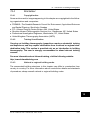
10398703;a1
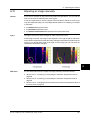
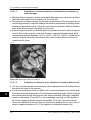
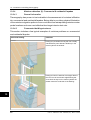
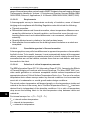
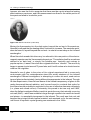
Figure 15.1 Sir William Herschel (1738–1822)
The discovery was made accidentally during the search for a new optical material.
Sir William Herschel—Royal Astronomer to King George III of England, and already
famous for his discovery of the planet Uranus—was searching for an optical filter
material to reduce the brightness of the sun’s image in telescopes during solar observations. While testing different samples of colored glass that gave similar reductions
in brightness, he was intrigued to find that some of the samples passed very little of
the sun’s heat, while others passed so much heat that he risked eye damage after
only a few seconds’ observation.
Herschel was soon convinced of the necessity of setting up a systematic experiment,
with the objective of finding a single material that would give the desired reduction in
brightness as well as the maximum reduction in heat. He began the experiment by
repeating Newton’s prism experiment, but looking for the heating effect rather than
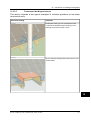
the visual distribution of intensity in the spectrum. He first blackened the bulb of a
sensitive mercury-in-glass thermometer with ink, and with this as his radiation detector
he proceeded to test the heating effect of the various colors of the spectrum formed
on the top of a table by passing sunlight through a glass prism. Other thermometers,
placed outside the sun’s rays, served as controls.
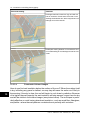
As the blackened thermometer was moved slowly along the colors of the spectrum,
the temperature readings showed a steady increase from the violet end to the red
end. This was not entirely unexpected, since the Italian researcher Landriani, in a
similar experiment in 1777, had observed much the same effect. It was Herschel,
15
Publ. No. 1558324 Rev. a267 – ENGLISH (EN) – March 12, 2008
123