1
GLOSSARY: KEY TERMINOLOGY AND CONCEPTS FOR USING AKT
Action
AKT
Attribute
Boolean search
Causal statement
Comparison
Comparison statement
Control structures
Data
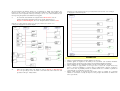
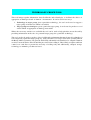
Diagram
Formal language
Formal Term
Knowledge
Knowledge base (Kb)
Link
Link statement
Local knowledge
Memo
Natural Language Statement
Navigate
Node
Object
Object hierarchy
Primitives
Process
Prolog (WinProlog)
Source
Subobject (of an object)
Superobject (of an object)
Synonym
Systems tools
Tool
Topic
Topic hierarchy
User defined tools
Value
WinAKT
A type of formal term used to refer to a process carried out by man for the purpose of
managing his crops or livestock etc. for example: weeding, planting.
Agroecological Knowledge Toolkit: a methodology and software for creating knowledge
bases.
A type of formal term used to describe an object, process or action. Attributes are generally
measurable e.g. height, colour, frequency, rate, gradient, temperature.
A keyword search mechanism for retrieving statements containing particular keywords.
Any combination of words may be used in conjunction with ‘and’ and ‘or’.
A statement about the causal relationship between two objects, processes or actions.
A type of formal term used in comparison statements.
A statement comparing the properties of two objects.
When working with tools: program segments within AKT which control when and upon
what knowledge primitives are used.
A set of observations which may be quantitative or qualitative.
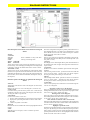
A way of graphically representing causal and link statements.
The restricted syntax (grammar) by which knowledge is coded into AKT.
Terms (words) - the key components in a formal language statement that do not belong to
the formal grammar.
The outcome, independent of the interpreter, of the interpretation of data or information.
An articulated and defined set of knowledge stored on a computer which can be accessed
and processed systematically.
a) A type of formal term used in link statements.
b) On a diagram – the connection between two nodes represented by an arrow.
A type of statement used to represent knowledge that cannot be represented by any other
type of statement.
Knowledge based on locally derived understanding, formed by experience and observation.
A facility within AKT which provides additional explanatory information about a formal
term, statement, diagram, topic or knowledge base.
A statement which has been automatically translated by AKT from the formal language to
a stylised English language translation.
A command used when working with diagrams that adds to a diagram all the nodes
immediately associated with a user selected node or statement.
Causal and link statements can be represented on a diagram by two nodes connected by a
link. Thus a node is the diagrammatic representation of one half of a causal or link
statement which appears as a rectangular or circular box. There are four types of node: i)
objects, ii) processes, iii) actions, and iv) attributes of either objects, processes or actions.
A type of formal term used to refer to a material or conceptual thing e.g. pests, soil, cows,
policy or household.
A way of organising knowledge about specific objects under more generic terms e.g.
Triplochiton scleroxylon, Milicia excelsa and Ceiba pentandra are all types of tree.
Small program segments within AKT employed for running a tool.
A type of formal term used to refer to a change or flux in the real world e.g. decomposition,
erosion.
An artificial intelligence programming language used for developing AKT software.
The origin of the information contained in a statement . There are two types of sources:
interview sources and reference sources.
An object falling below another object in an object hierarchy e.g. grass weeds may be a
subobject of weeds.
An object above another object in an object hierarchy e.g. weeds may be a superobject of
grass weeds.
A word with the same meaning as a formal term, frequently used to specify the
corresponding botanical name of a local name for a plant species.
Tools stored within AKT which can be used to interrogate and evaluate a knowledge base
A small computer program supplied with AKT that interrogates and reasons with the
knowledge base.
A collection of statements organised around a particular subject e.g. Weed management
and Grass weeds.
A collection of topics organised under a broader subject area e.g. Weed management and
Grass weeds both fall under the topic hierarchy Weeds.
Tools created by the knowledge base user that are stored separately to the main AKT
program in a file with an .mcr extension.
A type of formal term that is always attached to an attribute and describes that attribute e.g.
5kg, 20 ha, 3 months, yellow, tall, rapid.
The old name for AKT: Agroforestry Knowledge Toolkit for Windows.