1
For instance if there are equal events but with different scheduling types the one
with more priority is executed.
We have equal events when their ―TimeStart‖ and ―TimeStop‖ fields are intersected.
An event with scheduling type: department, will be applied to all devices associated with it. On the other hand an event with scheduling type device or SwitchPort
refers only to one device.
Moreover each device can belong only to one department. On the contrary the
scheduling type SwitchPort and device can refer only to one device.
The type device is easy to understand while the type ―switch port‖ is the switch interface.
SwitchPort scheduling is used when the admin wants to leave shutdown or activate a switch port.
For example an ―Emergency IP Phone‖ can be placed on each floor. Therefore
those phones must always remain active. On the other hand an interface can be
left on shutdown in order to fix a technical problem.
To sum up the scheduling can be set by
•
Administrator
•
Employees
The administrator is the only one able to see the application running.
Moreover he has the power to set all the scheduling types.
On the other hand employees can set only user type and device type through the
intranet. In fact after authentication, they will see their devices and apply scheduling.
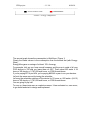
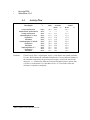
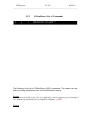
Picture 40 shows events associated to a device belonging to a Loccioni employee.
Device has the MAC SEP001BD4A05373 and it has three events.
Each event can be edited or deleted.
Picture 39: User's scheduling
The scheduler is truly a main features.
It can't make mistakes otherwise it will create chaos within a company.
Think about what could happen if devices are turned on or turned off without any
plausible reason.
Business problems could occur and employees time could be wasted.
In addition conflict between events should always be resolved unambiguously.
To sum up the foregoing, the better the scheduler is the more money it will save.
Without doubt a device turned off will not consume energy.
Even if an IP phone (The most frequent kind of device used in Loccioni's company)
does not consume a lot of energy in a big company it can make a difference since
there are a lot of IP phones.
In any cases devices are not only IP Phones, but UTM and its scheduler is able to
schedule all kinds of POE devices.
POE devices tested by UDT are:
•
IP Phone
On average consumes 7 W
•
Access point
On average consumes 25 W