1
Chapter 3: Logger operation
Logger memory
The logger uses non-volatile memory, which means it retains data indefinitely once power runs out.
Specifically, the logger uses a high-capacity Flash memory to store data, which can retain the data even
when the batteries are removed. This type of memory is very durable.
If the logger dies in the field from dead batteries, replace them and read out the logger immediately. Do
not relaunch the logger until the data has been recovered. If your logger is damaged, contact Onset
Computer because there is a chance the data can be recovered. Refer to Chapter 6 for information about
returning loggers for data recovery.
The logger contains 512K bytes of memory. Up to 10K of this memory is used to store the launch
configuration and deployment notes, leaving at least 502K bytes for data storage. The logger software
automatically estimates how long the logger will record data until the memory is full (the run time) based
on the logging interval and the number and type of sensors connected. In general, adding sensors
decreases running time while increasing the logging interval increases running time. In most applications,
battery life limits the duration of the data logging before memory capacity.
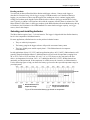
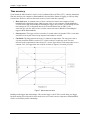
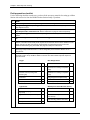
The following figure shows the expected run time for several logging intervals based on the total number
of bits in place, which is determined by adding together the bits per sample for each sensor measurement
parameter in your system. For example, a Micro Station with the following sensors is using 56 total bits.
1 Temperature
X
8
=
8
1 Wind Speed
X
16
=
16
2 Temperature/RH
X
16
=
32
Total number of bits
56
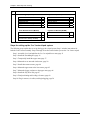
At a logging interval of 5 minutes, the memory run time for a Micro Station using 56 bits would be
approximately 250 days (based on Figure 8). See the sensor’s manual for the number of bits each type of
sensor uses.
Figure 8: Memory run time
HOBO Micro Station User’s Guide
19