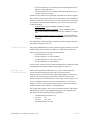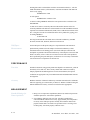
1
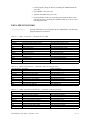
Table 8—8
*TK04 “extended results file”: *.ERG files.
Short description
Header:
Filename
Comment
Time
Start time
End time
LET
Std. Dev.
Table 8—9
Description
SAM Evaluation Parameters
Root name + serial (sample ID)
Comment, used to identify sample
Time interval minimum (s)
Start of evaluation (s)
End of optimal time interval (s)
Nat. log. of time
Limit of std. dev. (optional; 0.0003)
Data file designation
TKSAM.EXE
[TK04 Results] rootname_serial
[TK04 Raw Data] comment
[TK04 Results] eval_interval_min
[TK04 Results] eval_time_start
[TK04 Results] eval_time_end
[TK04 Results] eval_let
[TK04 Results] eval_limit_sd
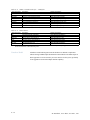
Valid solutions.
Short description
TC
LET
Start time
Time
End time
Std. Dev.
Description
Calculated thermal conductivity
Natural logarithm of time at max. therm.al condition
Start of approx. time interval (s)
Length of approx. time interval (s)
End of optimal time interval (s)
Standard deviation of fit
Data file designation
[TK04 Results] calculated_tc
[TK04 Results] let
[TK04 Results] time_start
[TK04 Results] time_length
[TK04 Results] time_end
[TK04 Results] std-deviation
Notes: *ERG files are optional. They are created by extended evaluation and are required only for graphical evaluation. They
can be recreated from *.DWL files at any time.
Database Model
8—14
A database model and integration into the database are difficult to implement
without writing an ODP sample identification routine linked to the TK04 output. A
better approach is to write an entirely new user interface for the system, preferably
for an upgraded version with multiple-channel capability.
PP Handbook , Peter Blum , November, 1997