1
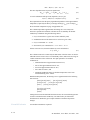
algorithm that automatically finds the optimal time interval (Erbas, 1985). More
information is provided about each in the following sections.
EN VIRONMENTAL EFFECTS
In situ thermal conductivity is a function of in situ temperature and pressure
conditions. Corrections may be applied to laboratory measurements on cores,
based on in situ information and theoretical and empirical relationships. Data in
the ODP database are not corrected for in situ conditions.
USE OF THERMAL CONDUC TIVITY
Thermal conductivity is an intrinsic material property for which the values depend
on the chemical composition, porosity, density, structure, and fabric of the material
(e.g., Jumikis, 1966). In marine geophysics, mainly thermal conductivity profiles
of sediment and rock sections are used, along with temperature measurements, to
determine heat flow. Heat flow is not only characteristic of the material, but an
indicator of type and age of ocean crust and fluid circulation processes at shallow
and great depths.
8.2. Thermcon-85 System
EQ U I P ME N T
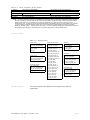
The Thermcon-85 system consists of the following components:
• Thermcon-85 unit,
• calibrated needle probes,
• personal computer,
• TC-PC control and data reduction program, and
• calibration file for TC-PC.
The Thermcon-85 unit was purchased from Woods Hole Oceanographic
Institution. It is under the control of PROM-based programming, and an RS-232
serial interface is available. One to five needle probes can be connected to the rear
panel. An eight-channel multiplexer selects the appropriate input for each
measurement. See the Thermcon-85 manual for more details.
The needle probes are either assembled at ODP or purchased preassembled. In
either case, they contain factory-calibrated thermistors.
The TC-PC program was developed at ODP in 1991 using Quick Basic (v. 4.5) and
runs on a PC clone. The following programs are involved:
• TCMENU: controls the overall data acquisition process;
• COLLECT: communicates with the Thermcon-85; performs drift study;
collects raw data and writes raw data file; monitors “bad data conditions”
(warnings not written to data file);
8—2
PP Handbook , Peter Blum , November, 1997