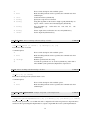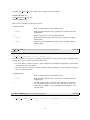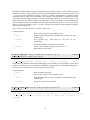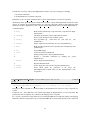
1
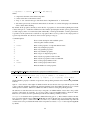
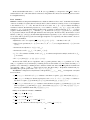
S’s contracts and that the composite environment of each subcomponent U satisfies the assumptions of U ’s contracts.
We perform this verification compositionally only reasoning with the contracts of the subcomponent independently
from the specific implementation of the subcomponents or specific environment of the
S composite component.
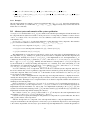
Given a component S and a decomposition ρ = hSub, γi, a set of contracts C ⊆ S 0 ∈Sub(S) ξ(S 0 ) is a refinement
of C, written C ≤ρ C, iff the following conditions hold:
1. for any implementation I of S induced by the implementations {IS 0 }S 0 ∈Sub(S) of the sub-components of S and
the decomposition ρ, if, for all S 0 ∈ Sub(S), for all C 0 ∈ ξ(S 0 ) ∩ C, IS 0 ∈ Imp(C 0 ), then I ∈ Imp(C) (i.e.,
the correct implementations of the sub-contracts form a correct implementation of C);
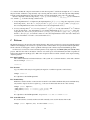
2. for every subcomponent S 00 of S, for every contract C 00 ∈ ξ(S 00 ) ∩ C, for any environment E 00 of S 00 induced
by the decomposition ρ, the environment E of S and the implementations {IS 0 }S 0 ∈Sub(S)\{S 00 } of the subcomponents of S, if E ∈ Env(C) and, for all S 0 ∈ Sub(S) \ {S 00 }, for all C 0 ∈ ξ(S 0 ) ∩ C, IS 0 ∈ Imp(C 0 ),
then E 00 ∈ Env(C 00 ) (i.e., for each sub-contract C 00 , the correct implementation of the other sub-contracts and
a correct environment of C form a correct environment of C 00 ).
C
Patterns
The Othello language is an expressive and complex language. This can be a problem for a user non specifically trained
with the formal languages. On one side, it is possible to write contracts that do not represent the wanted requirement.
On the other side, it can happen to write a specification that represents a unnecessary hard satisfiability problem.
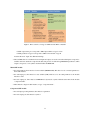
For this reason, we list here several constraint patterns, mostly inspired by the SPEED [SPE] and CESAR [CES]
projects. The list is the result of an analysis of the use cases developed so far both internally and with our partners in
Safecer [Saf] and Forever [FoR] projects. With a few exceptions all those realistic contracts can be expressed using
only these patterns.
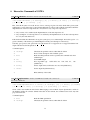
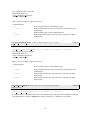
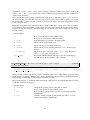
P01: Initial condition
The condition that must hold in the initial state of the system. It is a common mistake to write such constraint
instead of always condition.
condition
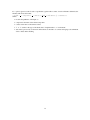
P02: Invariant
A good condition will always hold (typically the negation of condition represents some bad state).
always condition
It is equivalent to the CESAR pattern F3.
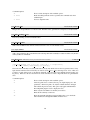
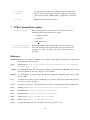
P03: Bounded Delay
Each time a certain event has occurred, another event will occur within a minimum delay and a maximum delay.
Very useful to express reactions to signals (e.g. a safe state is entered each time an error has occurred).
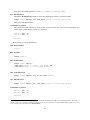
always (event1 implies (
(time_until(event2) >= interval_lower_bound) and
(time_until(event2) <= interval_upper_bound)
))
It is equivalent to the CESAR pattern R3:
Delay between event1 and event2 within interval
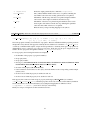
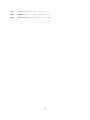
P04: Assured Reaction
If a certain event has occurred, another event will eventually occur. Used in discrete time models.
always (event1 implies [not] in the future event2)
32