1
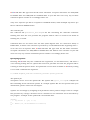
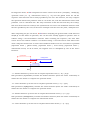
Another proposed method is the Berg-von Hippel Heterology Index (HI), based on the
relative frequency of the observed base with respect to the dominant (consensus) base at
each position (Berg and von Hippel 1987):
L
⎛ P (l ) + 1 / N ⎞
⎟⎟
BvH = HI = ∑ ln⎜⎜ cons
l =1
⎝ P (lobs ) + 1 / N ⎠
1/N is again a correction factor for bases with zero frequencies in the collection
As a result of their formulation, both ranking methods discard information from the other
motif base frequencies. As explained in (O'Neill 2003), this can lead to erroneous scoring,
where the same score may be given to little or heavily conserved positions since
information about the redundancy of each position (the information from the rest of bases
at that position discarded by both methods) is not used. To correct this, O’Neill proposed
averaging this kind of methods with the know redundancy index of the collection (O'Neill
1989), so that the final score was given by:
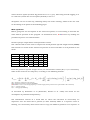
L
Rsequence ·BvH = ∑ Rsequence (l )·BvH (l )
l =1
L
Rsequence ·Ri = ∑ Rsequence (l )·Ri (l )
j
l =1
An even more interesting approach was also proposed by O’Neill to solve some of the
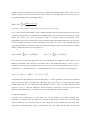
different problems of the methods described above. The differential Rsequence (R’sequence) is a
method to score putative binding sites based on the successive evaluation of the Rsequence
before (Rsequence -) and after (Rsequence +) assuming that the site is a member of the collection.
−
(
+
−
Rsequence ' (l ) = Rsequence (l )· Rsequence (l ) − Rsequence (l )
)
Computing then the difference between both Rsequence values provides a measure of how well
does the putative site sit within the collection. If the site does not agree with the motif
profile generated by the collection, the expanded Rsequence (Rsequence+) will decrease with
respect to Rsequence- and the difference will be negative. Conversely, if the site agrees well
with the motif profile, Rsequence+ will increase and the difference will be positive.
Cut-off and tagging
A priori, every subsequence of the same size as the motif is a putative binding site.
Therefore, as FITOM scans the sequence, it must discard false positive sites and save only
what it considers true positives. This is done using one of the ranking methods described
above and a threshold that, again, is provided by the user. Since the specific cut-off value