1
28. EFFECTS
CONSTRAINTS ON BURN-TIME AND PROPELLANT MATCHES
Burn-time-match and propellant-match constraints are named 'match burn time …' and
'match propellant …', with suffixes '-a', '-b', etc., as required by the number of constraints.
The number of burn-time-match or propellant-match constraints will be one less than the
number of stages (or mated groups) that have been designated to have the same burn time
or propellant mass.
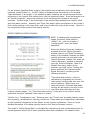
CONSTRAINT VIOLATION INDICATIONS
If a scaled constraint is not satisfied within the error tolerance ('Solution Error Tolerance' in
the Optimizer Parameters window), one or more asterisks will appear beside its name. The
number of asterisks indicates the magnitude of the error:
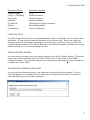
*
**
***
****
greater
greater
greater
greater
than
than
than
than
tolerance
10 x tolerance
100 x tolerance
1000 x tolerance
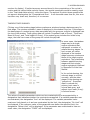
CHANGE HISTORIES OF THE VARIABLES
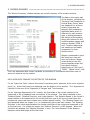
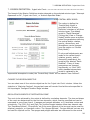
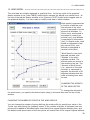
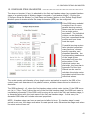
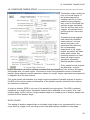
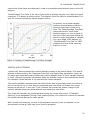
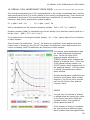
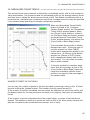
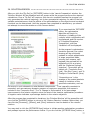
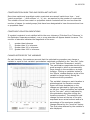
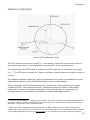
On each iteration, the maximum amount that the optimization procedure can change a
variable is equal to that variable's perturbation magnitude multiplied by the "box size" (refer
to the 'Optimizer Parameters' section).
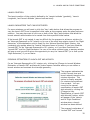
The perturbation magnitude should not be
great enough to allow an unreasonably
large change in the variable on a single
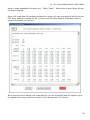
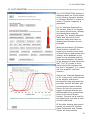
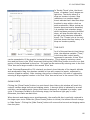
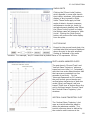
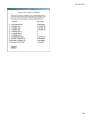
iteration. Clicking a variable's button in
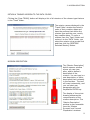
the 'Effects' window displays a plot of the
variable's change history during the
iterative solution procedure.
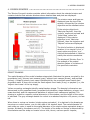
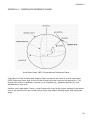
The variable's change on each iteration is
plotted against the iteration number.
Upper and lower boundaries on the
change are indicated by light gray lines
on the plot. These boundaries are defined
by the "box size", which is adjusted by
the optimization algorithm during the
iterative procedure. The variable's total
change is shown at the top of the plot,
expressed as an actual amount and as a
percentage of the maximum possible
change allowed by the "box-size" history.
The final value attained by the variable is
also displayed.
86



![[en] - User manual, [de] - Betriebshandbuch, [fr]](http://vs1.manualzilla.com/store/data/005845053_1-6d1995608e49c7f1600fcad0c20a630a-150x150.png)