1
Focused Discussion: Major Motions of the Planets
(Heavenly Motions)
Leader:
Reporter:
Skeptic:
Skeptic:
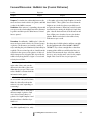
Purpose: To describe the positions of the sun and
selected, naked-eye planets along the ecliptic and to
infer general patterns in their motions from graphs.
Prediction: How does the sun move relative to the
stars as seen from the earth?
Skeptic:
right, it moves in visibility from the evening sky to the
morning sky.
Note that the angular distances of the planets from
the sun change with time. The angular distance
between the sun and a planet on any given date is
called the planet’s elongation. If you scan down the
graph, you should notice that certain planets stay
near the sun; others don’t.
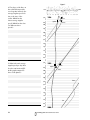
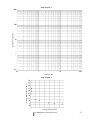
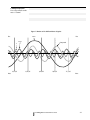
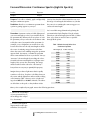
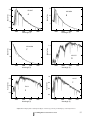
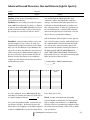
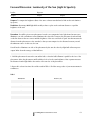
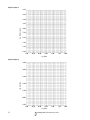
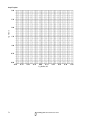
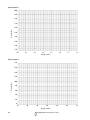
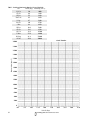
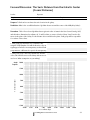
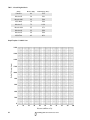
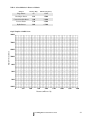
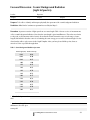
Procedure: You have two types of graphs (Figures
1 and 2) showing the positions of the planets. Both
indicate time running down the page; the dates at
the left are given in 10-day intervals (the start of a
year is given on the right). The vertical extent covers
a little more than a year, and the horizontal span is
360°. The line with the solid dot represents the
motion of the sun, which is labeled first.
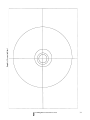
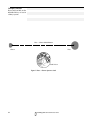
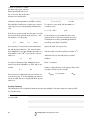
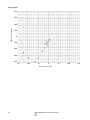
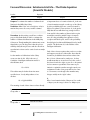
In the Zodiacal Graph (Figure 2), the planetary positions run across the page horizontally to the
left through the constellations of the zodiac (see the
diagram at the top of the page; each constellation
of the zodiac is drawn and labeled; can you identify
any?). Once around the zodiac is a complete circle of
360°. The solid line through the center of the constellations is the path of the sun in the sky relative to the
stars—the ecliptic. Note that the constellations of the
zodiac are those that lie along the ecliptic.
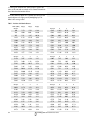
One set of graphs is labeled “Planet Positions Relative
to the Sun” (Figure 1). Here the sun’s position is fixed
and runs down the middle of the page. Note that the
planets are visible in the evening sky to the left of the
sun’s line, and in the morning sky to the right. When
seen in the evening sky, a planet is east of the sun; it
sets after the sun sets. When seen in the morning sky,
a planet is west of the sun; and it rises before the sun
rises. When a planet crosses the sun’s line from left to
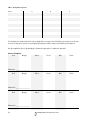
The legend for each line indicates the planets plotted
and the year. Note that some planets take longer than
others to complete one circuit of the zodiac. Those
that do so quickly have a faster angular speed than the
others. That is, they move a certain angle on the sky
in less time, or for the same time interval, they move
a larger angle.
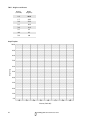
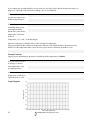
Part I. Examine Figure 1 first. You need to determine the scale, so that you know that 1 mm = x degrees on
the paper. What is your value for x? (Hint: How many degrees span the graphs horizontally?)
1. Which planet always
appears close to the sun in
angular distance?
Learning Zone © 1998 Michael Zeilik
21