1
Chapter 1. Common API Elements
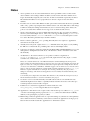
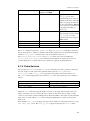
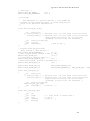
Unfortunately, the original control API lacked some features needed for these new uses and so it was
extended into the (not terribly originally named) extended control API.
1.9.2. The Extended Control API
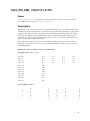
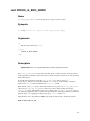
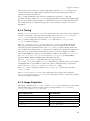
Three new ioctls are available: VIDIOC_G_EXT_CTRLS, VIDIOC_S_EXT_CTRLS and
VIDIOC_TRY_EXT_CTRLS. These ioctls act on arrays of controls (as opposed to the
VIDIOC_G_CTRL and VIDIOC_S_CTRL ioctls that act on a single control). This is needed since it is
often required to atomically change several controls at once.
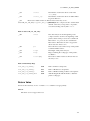
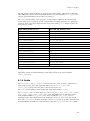
Each of the new ioctls expects a pointer to a struct v4l2_ext_controls. This structure contains a
pointer to the control array, a count of the number of controls in that array and a control class.
Control classes are used to group similar controls into a single class. For example, control class
V4L2_CTRL_CLASS_USER contains all user controls (i. e. all controls that can also be set using the
old VIDIOC_S_CTRL ioctl). Control class V4L2_CTRL_CLASS_MPEG contains all controls relating to
MPEG encoding, etc.
All controls in the control array must belong to the specified control class. An error is returned if this
is not the case.
It is also possible to use an empty control array (count == 0) to check whether the specified control
class is supported.
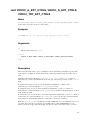
The control array is a struct v4l2_ext_control array. The v4l2_ext_control structure is very similar to
struct v4l2_control, except for the fact that it also allows for 64-bit values and pointers to be passed
(although the latter is not yet used anywhere).
It is important to realize that due to the flexibility of controls it is necessary to check whether the
control you want to set actually is supported in the driver and what the valid range of values is. So
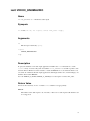
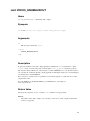
use the VIDIOC_QUERYCTRL and VIDIOC_QUERYMENU ioctls to check this. Also note that it is
possible that some of the menu indices in a control of type V4L2_CTRL_TYPE_MENU may not be
supported (VIDIOC_QUERYMENU will return an error). A good example is the list of supported
MPEG audio bitrates. Some drivers only support one or two bitrates, others support a wider range.
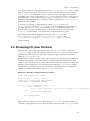
1.9.3. Enumerating Extended Controls
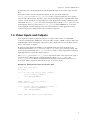
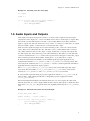
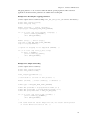
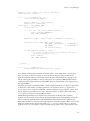
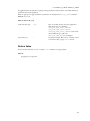
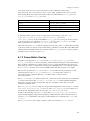
The recommended way to enumerate over the extended controls is by using VIDIOC_QUERYCTRL in
combination with the V4L2_CTRL_FLAG_NEXT_CTRL flag:
struct v4l2_queryctrl qctrl;
qctrl.id = V4L2_CTRL_FLAG_NEXT_CTRL;
while (0 == ioctl (fd, VIDIOC_QUERYCTRL, &qctrl)) {
/* ... */
qctrl.id |= V4L2_CTRL_FLAG_NEXT_CTRL;
}
The initial control ID is set to 0 ORed with the V4L2_CTRL_FLAG_NEXT_CTRL flag. The
VIDIOC_QUERYCTRL ioctl will return the first control with a higher ID than the specified one. When
no such controls are found an error is returned.
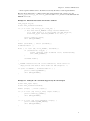
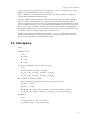
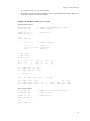
If you want to get all controls within a specific control class, then you can set the initial qctrl.id
value to the control class and add an extra check to break out of the loop when a control of another
control class is found:
15