1
Trane C.D.S. eLearning Series
TRACE 700 Load Design Output Interpretation
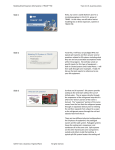
give you a clue to where the coils are located. Now if we want to see what the terminal box reheat coil sizes are, we can look at the zone checksums. What’s important here in general is that we need to look at information that is relevant to the system we have chosen and the inputs we have modified related to the output. The checksums is a “catch‐all” for outputs where some items may or may not necessarily apply. TRACE also makes assumptions based on the ASHRAE fundamentals as a guideline on how certain coil sizes are calculated – they may not be exactly what your methodology is so call into our support line if you have questions regarding TRACE’s calculations. NEXT VIDEO Moving on to the psychrometrics report, we can take a look at the specific report relevant to our cooling coil. In this case, we have a system level cooling coil so only the system level report is available. This is where we can view the different state points and plot them on a psychrometric chart if we wanted to visually view it. Here we can see what the space condition is and the resulting relative humidity as well as the calculated supply air temperature and sensible heat ratio. We can then make a judgment call on whether or not our SHR makes sense based on our inputs as well as the resulting dry bulb and wet bulb conditions off of the coil. What’s great about this report is the ability to dissect an air system and interpret results for either troubleshooting or optimizing a system. It could be a situation where we need to look at the ventilation state points to see if an ERD is properly pre‐conditioning OA or if we need further dehumidification on our system to remove more moisture out of the space or spaces. Lastly, we can look at the system component selection report and view how many coils, fans, and systems we have in our particular building. It also gives us total coil and fan sizes so we can use this for a selection process. This is easier to read than the checksums and it is highly recommended to use this report for equipment selection and then validate these values through the other reports. If we were selecting equipment looking at the cooling coil information here, the questions to be asked here are… can we get a rooftop unit in this size? Are the entering conditions realistic? What about sensible and latent capacities? These are all important questions when looking at this type of report. ©2015 Trane a business of Ingersoll Rand
8