1
Other environments developed for robot control ([1][2][3][5][14]) lack the flexibility required for the design and implementation of reconfigurable systems. The design of these programming environments is generally based on heuristics rather than on software architecture models, and lends itself only to single-configuration systems. The environments also do not make clear distinctions between module interfaces
and module content, thus lacking a concrete framework which would allow development of modules independent of the target application
and target hardware.
In this paper, we propose a method of using state variables for systematically integrating reusable control modules in a real-time multiprocessor environment. Our design can be used with both statically and dynamically reconfigurable systems. Section II describes the design
issues to be considered, and some of the assumptions we have made about the target environment. Section III gives the architectural details
of our control module integration. Section IV describes an efficient implementation of the state variable table mechanism, which has been
integrated into the Chimera II Real-Time Operating System [23]. Finally, Section V summarizes the use of state variables for module integration in a reconfigurable system.
II. DESIGN ISSUES AND ASSUMPTIONS
In order to design a general mechanism which can be used to integrate control modules in a multiprocessor environment, some architectural
knowledge of the target hardware is required. We assume an open-architecture multiprocessor system, which contains multiple general purpose processors (such as MC68030, Intel 80386, SPARC, etc.), which we call Real-Time Processing Units (RTPUs), on a common bus (such
as VMEbus, Multibus, Futurebus, etc.). Each processor has its own local memory, and some memory in the system is shared by all processors.
Given an open-architecture target environment, the following issues must be considered:
Processor transparency: In order for a software module to be reusable, it must be designed and written independent of the RTPU on
which it will finally execute, since neither the hardware nor software configuration is known apriori.
Task synchronization: Sensors and actuators may be operating at different rates, thereby requiring different tasks to have different frequencies. In addition, system clocks on multiple processors may not be operating at the exact same rate, causing two tasks with the
same frequency to have skewing problems. The module integration must not depend on task frequencies or system clocks for synchronization.
Data integrity: When two modules communicate with each other, a complete set of data must be transferred. It is not acceptable for
part of a data set to be from the current cycle, while the rest of the data set is from a previous cycle.
Predictability: In real-time systems, it is essential that the communication between modules is predictable, so that worst-case execution
and blocking times can be bounded. These times are required for analysis by most real-time scheduling algorithms.
Bus bandwidth: In an open-architecture system, a common bus is shared by all RTPUs. The communication between modules must be
designed to minimize the bus traffic.
implementation efficiency: The design must lead to an efficient implementation. Communication mechanisms which incur large
amounts of overhead are not suitable for the high frequency tasks, and therefore cannot be used.
To address these issues, we propose a state variable table mechanism which allows the integration and reconfiguration of reusable modules
in a multiprocessor, open-architecture system.
III. DESIGN OF STATE VARIABLE TABLE MECHANISM
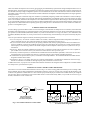
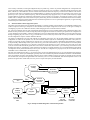
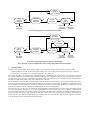
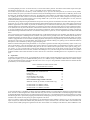
The structure of our state variable table mechanism is shown in Fig. 2. It is based on using global shared memory for the exchange of data
between modules, thus providing communication with minimal overhead. A global state variable table is stored in the shared memory. The
variables in the global state variable table are a union of all the input port and output port variables of the modules that may be configured
into the system. Tasks corresponding to each control module cannot access this table directly. Rather, every task has its own local copy of
the table, called the local state variable table.
Global State Variable Table
x
input ports 1
xn
:
control
module
:
y1
output ports
ym
communication with
sensors, actuators,
and other subsystems
local state
variable table
local state
variable table
local state
variable table
local state
variable table
task
module
A1
task
module
Aj
task
module
K1
task
module
Kj
Processor A
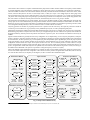
Fig. 1: Port automaton model of a control module
Processor K
Fig. 2: Structure of state variable table mechanism
for control module integration