1
Programming Methodologies in GCLA
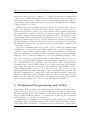
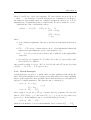
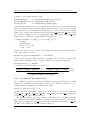
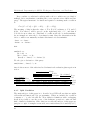
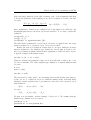
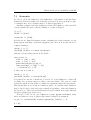
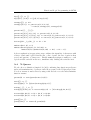
To execute a program, a query G is posed to the system asking whether
there is a substitution σ such that Gσ holds according to the logic defined by
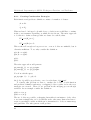
the program. The goal G has the form Γ ` c, where Γ is a list of assumptions,
and c is the conclusion from the assumptions Γ. The system tries to construct a
deduction showing that Gσ holds in the given logic.
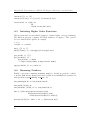
GCLA is also general enough to incorporate functional programming as a
special case.
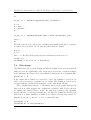
For a more complete and comprehensive introduction to GCLA and its theoretical properties see [5]. [1] contains some earlier work on programming methodologies in GCLA. Various implementation techniques, including functional and
object-oriented programming, are also demonstrated. For an introduction to the
GCLA system see [2].
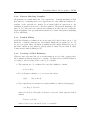
2.1
GCLA Programs
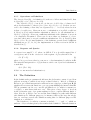
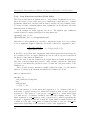
A GCLA program consists of two parts; one part is used to express the declarative
content of the program, called the definition or the object level, and the other part
is used to express rules and strategies acting on the declarative part, called the
rule definition or the meta level.
2.1.1
The Definition
The definition constitutes the formalization of a specific problem domain and in
general contains a minimum of control information. The intention is that the
definition by itself gives a purely declarative description of the problem domain
while a procedural interpretation of the definition is obtained only by putting it
in the context of the rule definition.
2.1.2
The Rule Definition
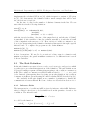
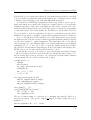
The rule definition contains the procedural knowledge of the domain, that is the
knowledge used for drawing conclusions based on the declarative knowledge in
the definition. This procedural knowledge defines the possible inferences made
from the declarative knowledge.
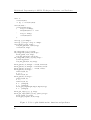
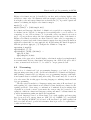
The rule definition contains inference rule definitions which define how different inference rules should act, and search strategies which control the search
among the inference rules.
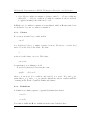
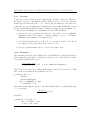
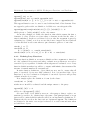
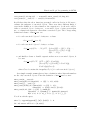
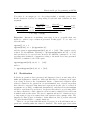
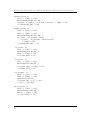
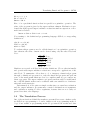
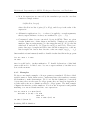
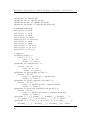
The general form of an inference rule is
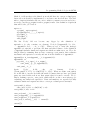
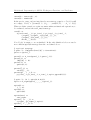
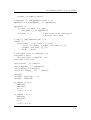
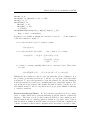
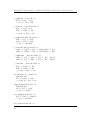
Rulename(A1 , . . . , Am , P T1 , . . . , P Tn ) ⇐ P roviso,
(P T1 → Seq1 ),
...,
(P Tn → Seqn ),
→ Seq.
3