1
United States) that designers wanted to issue
AutoCAD drawings to clients and contractors, but
were reluctant to do so for fear of modifications to
those drawings after approval [4].
Data Encryption
Data encryption plays a major role in e-business as
well as within an organization in the process of
passing messages between users. We often take email
for granted and send confidential messages via email.
But if we were to carry out the same process manually,
we would take so many security precautions.
2. Background Theory
We start by introducing some concepts that are used
throughout this paper.
2.1 Security Services
Data Integrity
A level of assurance that ensures information has
not been deliberately or inadvertently modified or
replaced in transit or storage.
Authentication
The process of proving one’s identity.
Non-repudiation
The capability to demonstrate that an action such
as the sending of a message was performed by a
person with a particular identity.
The actual process of how these tasks are
accomplished will be discussed consequently.
2.2 Secret Key Cryptography
DESede
This is also known as Triple-DES or multipleDES. This algorithm uses multiple DES keys to
perform three rounds of DES encryption or
decryption. The added complexity increases the time
required to break the encryption as well as the time
required to encrypt or decrypt data.
PBEwithMD5andDES
This algorithm uses a password, a byte array
known as a salt and an iteration count along with an
MD5 message digest to produce a DES secret key.
This key is used to perform DES encryption and
decryption.
Blowfish
This algorithm is best used in applications where
the key does not change often. It requires a lot of
memory.
2.3 Public Key Cryptography
One of the most important breakthroughs in
cryptography during the 20th century was the
development of public key encryption. Public key
algorithms (or asymmetric key algorithms) use
separate keys for encryption and decryption. The
encryption key is referred as the public key and the
decryption key is called the private key. That is
because when data is encrypted using the encryption
key, you need the decryption key for the decryption of
the data. Hence one can make his/her encryption key
known to the world at large and therefore it is called
the public key. On the other hand, one should protect
his/her private key because data can be decrypted with
it. The important feature in public key cryptography is
that the sender and receiver do not have to share keys.
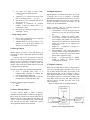
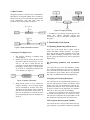
Figure 1 shows how public key cryptography
works.
In some encryption algorithms, the encryption key and
the decryption key is the same, or the decryption key
can be calculated from the encryption key. These
algorithms are known as secret key algorithms (or
private key algorithms/symmetric key algorithms).
The encryption key must be kept secret and the sender
and receiver must coordinate the use of their keys.
Following are some popular secret key algorithms [1]:
DES
This is the Data Encryption Standard algorithm.
There are known ways to attack this encryption. But
they require a lot of computing power to do so.
Figure 1: Operation of public key cryptography
RSA ( Rivest, Shamir, Adleman)
The most famous public key algorithm –
developed in 1977. The following is a summary of
how RSA works [2]: