1
•
•
•
•
•
Two large (100 digits or more) prime
numbers p and q are generated with
n = pq
A public key e is selected as an integer such
that e is relatively prime to
(p-1)(q-1)
The private key d is computed such that ed
mod ((p-1)(q-1)) is 1
Encryption is performed on plaintext
numbers m that are smaller than n by
calculating me mod n
Decryption is performed on cipher-text c by
calculating cd mod n
Disadvantages of RSA
•
•
RSA is 100 to 1000 times slower compared
to secret key algorithms [2]
Although RSA has not been broken, if an
efficient way to factor large numbers was
discovered, it could be easily broken.
2.4 Message Digests
Message digests are used to secure data integrity. In
other words, to detect whether data has been modified
or replaced.
A message digest is a special kind of function
referred to as a one-way (hash) function. A one-way
function is easy to calculate, but difficult to reverse.
Message digests take messages or data as inputs and
compute values referred to as hash values that are used
as fingerprints to the messages.
Good message digests have the following properties.
• Given a particular hash value, it is
computationally infeasible to compute the
message that produced that value
• It is computationally infeasible to find two
messages that yield the same hash value.
Examples of Message Digest Algorithms
• SHA1
• MD5
2.6 Digital Signatures
Digital signatures are mainly used to prove to you that
a message sent to you is created by a particular
individual or an organization. If the receiver can verify
the digitally signed message from the sender, then the
receiver can make sure that the contents of the
message are correct and authentic.
Digital signatures have the following properties
similar to real world signatures [2].
• Unforgeability – because the signer uses his
private key to sign, only he can sign with that
key
• Verifiability – because the signer’s public
key is openly available, anyone with access
to the message and signature can verify that
the message was signed by the signer and that
neither the message nor the signature has
been altered.
• Single use – A signature is unique to a
particular message.
• Non repudiation – After a signer has signed a
message and the message and signature have
been sent to others, the signer cannot claim
that he did not sign the message.
• Sealing – A signed message is digitally
sealed. It cannot be altered without
invalidating the signature.
2.7 Digital Certificates
When you use public keys of others to encrypt data or
verify their digitally signed documents, there is no
way to make sure that the public key belongs to the
particular person that you are referring to. This is
where digital certificates come in. Digital certificates
are messages signed by a Certification Authority (an
entity that is trusted to verify that other entities are
who they claim to be) that certify the value of an
entity’s public key.
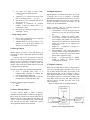
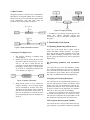
Figure 2 illustrates the use of digital signatures.
2.5 Secure Message Digests
A secure message digest is called a Message
Authentication Code (MAC). A MAC has the property
that it cannot be created solely from the input data. It
requires a secret key that is shared by the sender and
receiver. Hence an intermediate party cannot change
both the data and the MAC without the receiver
detecting that the data has been corrupted.
Figure 2: Use of digital signatures