1
DOCK 6.1 User Manual
51 of 65
http://dock.compbio.ucsf.edu/DOCK_6/dock6_manual.htm
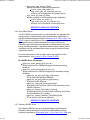
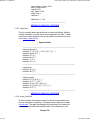
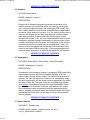
atom_model [u] (u, a):
# Flag for how to model of nonpolar hydrogens
u = United atom model. Hydrogens attached to
carbons are assigned a zero VDW well-depth
and the partial charge is transferred to the
carbon.
a = All atom model. Hydrogens attached to
carbons have regular VDW well-depth and
partial charge is not modified.
attractive_exponent [6] (int):
# Exponent of attractive Lennard - Jones term for VDW potential
repulsive_exponent [12] (int):
# Repulsive of attractive Lennard - Jones term for VDW potential
distance_dielectric [yes] (yes, no):
# Flag to make the dielectric depend linearly on the distance
dielectric_factor[4.0] (float):
#Coefficient of the dielectric
RETURN TO TABLE OF CONTENTS
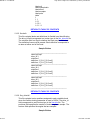
3.2. Docktools
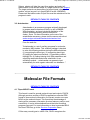
Docktools is a suite of programs that are available to create grids used
by Dock3.5 score function in DOCK 6 which is an implementation of
the scoring function available in the older version of DOCK i.e.,
dock3.5.54. These programs can be used to generate steric,
electrostatic and ligand and receptor desolvation grids. Dock3.5
scoring functionality in DOCK 6 is an alternate scoring approach to
electrostatic interaction energy and also includes different grid-based
methods for calculating ligand and receptor desolvation. Docktools
consists of chemgrid, solvmap, solvgrid, grid-convert and
grid-convrds. This section will briefly review the theory behind each of
the programs and the describe the usage.
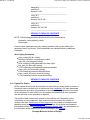
3.2.1. CHEMGRID
AUTHOR: Brian K. Shoichet
DESCRIPTION:
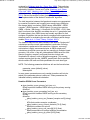
This program chemgrid produces values for computing force field
scores and bump checking. The force field scores, or molecular
mechanics interaction energies are calculated as van der Waals and
electrostatic components and stored on grids. The calculations are
based on the theory presented in the Grid section above. However
only the steric interaction energy grids are used in DOCK 6 as a part
of Dock3.5 Score. The electrostatic interaction calculation differs from
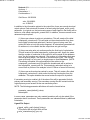
Energy Scoring in the following aspects. For calculating the
electrostatic interaction, the electrostatic potential of the receptor
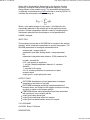
calculated using the linearized form of Poisson-Boltzmann equation:
9/18/2007 2:30 PM